
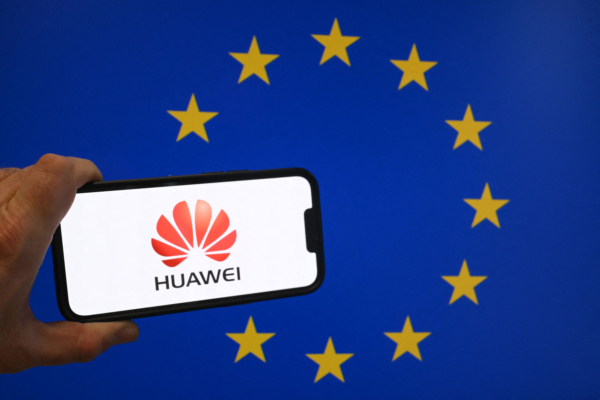
The European Union is set to propose the gradual removal of Chinese-made equipment from key infrastructure in the EU, banning companies like Huawei and ZTE from participating in areas such as telecommunications networks, solar energy systems, and security scanners.
EU officials disclosed this information to the Financial Times. The European Commission has declined to comment, and Huawei has not yet responded to requests for comment.
Officials have stated that the specific timeline for phasing out these equipment will depend on risk assessments by suppliers to the EU and specific industries. The proposed timeline will also consider costs and the feasibility of alternative suppliers. Currently, over 90% of solar panels installed in the EU are produced in China.
According to sources familiar with the matter, the EU is expected to present this cybersecurity proposal on Tuesday, January 20. This proposal will later be discussed by the European Parliament and EU member states. The proposal aims to shift the current voluntary mechanism of “restricting or excluding high-risk suppliers from network construction” to mandatory enforcement by EU member states.
The implementation of previous recommendations has been inconsistent, with some European countries still relying on “high-risk” suppliers. Last summer, Spain signed a €12 million contract with Huawei to provide hardware for storing phone interception data authorized by judges for use by law enforcement and intelligence agencies.
An early draft version of the proposed Cybersecurity Act indicates that “country-specific solutions have proven insufficient to achieve trust and coordination across the entire market.” This draft is subject to potential modifications.
This move comes as the EU is reforming its security and technology policies. The EU is reassessing its reliance on major tech companies from the US as well as “high-risk” Chinese suppliers. Some EU officials are concerned that these Chinese suppliers could be utilized for gathering sensitive data.
The US has long prohibited Huawei from participating in the construction of its telecommunications networks. As early as June 2020, the Federal Communications Commission (FCC) formally designated Huawei and ZTE as threats to national security, prohibiting US companies from using $8.3 billion in government funds to purchase equipment from these companies.
In November 2019, the FCC voted 5-0 to classify Huawei and ZTE as national security risks, requiring rural operators to remove and replace Huawei and ZTE equipment used in existing US networks.
In recent years, the EU has increased efforts to curb Chinese companies’ participation in key European industries. The European Commission has launched investigations into train manufacturers and wind turbine manufacturers, and in 2024, carried out a raid on the European office of the Chinese company Nuctech.
Nuctech produces body and luggage scanning equipment used at airports and ports and is a company controlled by the Chinese government. In 2020, the US blacklisted Nuctech, citing security threats posed by the company.
In December 2024, officials at a Polish airport announced that, for security reasons, Warsaw Chopin Airport would discontinue the use of security scanners manufactured by Nuctech.