
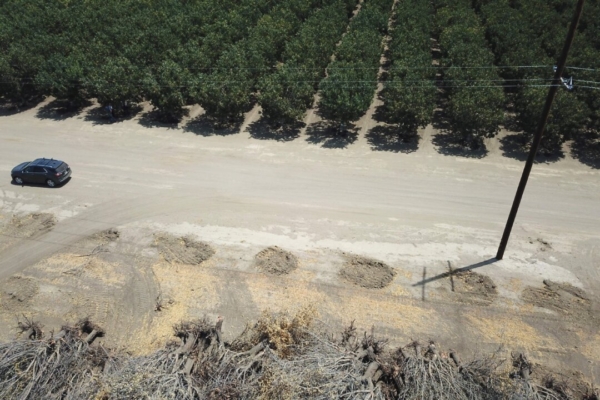
Amid the global trend of seeking stable returns on capital, California agriculture has become a hot target for institutional investors, with high-value crops such as almonds attracting significant funding. However, the CEO of an agricultural company has warned that uncertainties in water resources, high interest rates, and a rising number of agricultural bankruptcies are casting a shadow of risk over this farmland investment boom.
According to a report from the California Department of Food and Agriculture, California produces about half of the vegetables and over three-quarters of the fruits and nuts in the United States.
In 2024, California farms generated a record-breaking $61.2 billion in cash income, marking the first time in the state’s agricultural history to surpass the $60 billion mark. The substantial profits have attracted a large influx of institutional investors.
Cannon Michael, a sixth-generation farmer and agricultural leader, recently stated in an interview with California Insider that “California agriculture has a proven record of good investment returns, which has attracted institutional investors.”
Michael is the president and CEO of Bowles Farming Company based in Los Banos, California. This large family-operated farming enterprise owns 10,000 acres of fertile land in the San Joaquin Valley, cultivating over 300 different crops, mostly high-value fruits, vegetables, and nuts.
Michael pointed out that institutional buyers of farmland mostly invest in almonds, a crop that thrives in California’s unique climate and growing conditions.
According to USDA data, almond growers in California generated $5.66 billion in cash income in 2024, accounting for approximately 80% of the global production. By November 2025, exports had reached 631 million pounds, with domestic shipments totaling 193 million pounds and a remaining inventory of 1.26 billion pounds.
Michael explained that California maintains its leading position in the global almond market due to its consistent production of high-quality almonds, triggering a buying spree from institutional capital. Between 2018 and 2023, land transactions for almond cultivation in California exceeded $6.5 billion.
However, in recent years, agricultural bankruptcy filings in California have significantly increased. The American Farm Bureau Federation reported that in 2024, California led the nation with 17 agricultural bankruptcy cases.
Michael attributed the trend of rising bankruptcy filings to high interest rates, low crop prices, increasing production costs, water resource shortages during drought years, and mismanagement (such as overreliance on a single crop) that persisted into the first half of 2025.
He emphasized that the success of a farm in a given year depends on many factors, with product prices being one of them. Once prices decline, all other risks are magnified. “With the overall weakening of prices for all agricultural products, the situation has become very dire for the agricultural community,” Michael said.
The availability of exclusive water resources in California has a significant impact on land prices and crop yields. In the San Joaquin Valley, water primarily comes from surface water and groundwater storage. Water rights and accessibility have become key elements in every land transaction.
Michael stated that many large farm investors in California must learn and understand the availability and supply of water resources. He said, “Many people buy land without a stable water source, and some fail in their investments due to water supply issues. When investing in California farmland, the primary concern is always where the water comes.”
Many institutional buyers purchase land solely for growing almonds. “Sometimes, people buy land at vastly inflated prices without water security, resulting in not only bearing very high land holding costs but also lacking sufficient water resources to ensure almond yields, thereby unable to achieve economic benefits. These are painful lessons that people are learning,” Michael added.
Michael highlighted that agriculture is a long-term investment, conflicting with the concept of institutional investors holding assets for 8 to 10 years before selling them.
He mentioned that some institutional investors, in pursuit of short-term profits, over-extract groundwater, leading to land subsidence in some areas, a worrying situation.
Michael also provided advice for investing in California farmland. He mentioned that investors should first identify the agricultural regions most suitable for their target crop types and then select a partner who understands agriculture and can guide the entire process.
He stressed the importance of conducting due diligence and “spending time on-site.” He said, “You know, this is very different from buying stocks or something like that… This is an asset with many details and variables.”
He also reminded investors to view farmland investments with a long-term perspective, considering historical trends in crop prices, “rather than expecting crop prices to rise indefinitely.”