
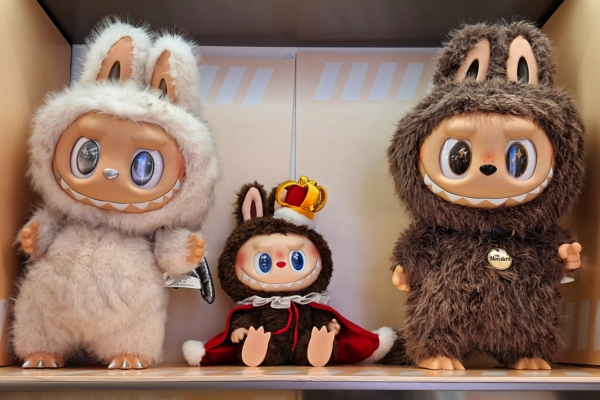
China Labor Watch (CLW), a labor rights organization based in New York, released the results of an investigation on Tuesday (January 13) revealing issues such as employing underage workers and violating labor rights in Chinese factories producing the popular toy Labubu.
According to the report published on the official website of China Labor Watch, Shunjia Toys, a core supplier of Pop Mart International Group located in Xinfeng County, Ganzhou City, Jiangxi Province, was found to have employed 16-18-year-old underage workers in the production of Labubu toys. The factory was reported to have failed to provide the required special protection for these young workers, forced them to sign blank contracts, subjected them to excessive overtime, withheld wages, and lacked adequate safety protection.
In 2025, China Labor Watch conducted a three-month on-site investigation at the Shunjia Toys factory, interviewing over 50 employees, including three underage female workers. The factory employs over 4500 workers, with approximately 30% recruited through labor agencies.
The investigation revealed that underage workers were assigned to the same assembly line positions, production targets, and working hours as adult workers, including overtime schedules. While Chinese law allows 16-18-year-olds to work, it mandates special protections such as prohibiting hazardous work, limiting overtime and night shifts, and requiring mandatory health check-ups.
Workers interviewed reported routinely working over 100 hours of overtime per month, far exceeding the Chinese labor law’s limit of 36 hours. During peak order periods, employees worked more than six days a week, sometimes continuously for over 14 days. The basic monthly salary for regular employees was 1800 yuan (approximately $256), excluding bonuses; while temporary workers were paid 15 yuan per hour, often having insurance and management fees deducted, resulting in incomes below the legal minimum wage in Jiangxi Province in 2024. The advertised monthly salary of 4000 yuan in recruitment ads by the company significantly differed from the actual conditions.
Furthermore, workers were often required to sign blank labor contracts with only personal information filled in, leaving essential terms such as contract duration, job responsibilities, salary, and social insurance blank, without explanations, and completing the form within five minutes was mandatory.
The investigation also revealed that the factory did not provide protective gear like masks for workers handling potentially toxic materials and dusty production lines. Workers faced difficulties in taking sick leave or annual leave, lacked effective union representation or grievance mechanisms, and experienced issues such as verbal harassment from management.
Li Qiang, the Executive Director of China Labor Watch, commented that these issues reflect systemic problems in China’s manufacturing industry: in response to fierce price competition and increasing demand, companies prioritize speed and cost control over strict adherence to labor regulations.
He noted that while Shunjia Toys’ official annual production capacity was 12 million units, the actual output might exceed this, with some orders outsourced to local small factories like Jiachang Toy Factory.
In response to the allegations, Pop Mart stated that the company values the welfare and safety of workers in its supply chain. The company is currently investigating the matter and pledged to require relevant partners to comprehensively rectify according to legal regulations if the accusations are substantiated, and further strengthen audit and supervision mechanisms.
Labubu toys, as a core product of Pop Mart’s “The Monsters” series, contributed 4.8 billion yuan (approximately $690 million) in revenue in the first half of 2025, driving strong growth in the company’s overseas business. Pop Mart’s CEO, Wang Ning, previously stated at the mid-year performance conference on August 20, 2025, that achieving an annual revenue of 30 billion yuan (approximately $4.3 billion) was not difficult.
China Labor Watch urged Pop Mart to establish a worker reporting hotline, improve factory condition transparency, disclose the complete supply chain structure to effectively supervise and reduce labor risks.
The organization emphasized that such issues are prevalent in China’s manufacturing industry, but as a globally popular toy export brand, Pop Mart has a responsibility to promote compliance in its supply chain factories and improve worker conditions.