
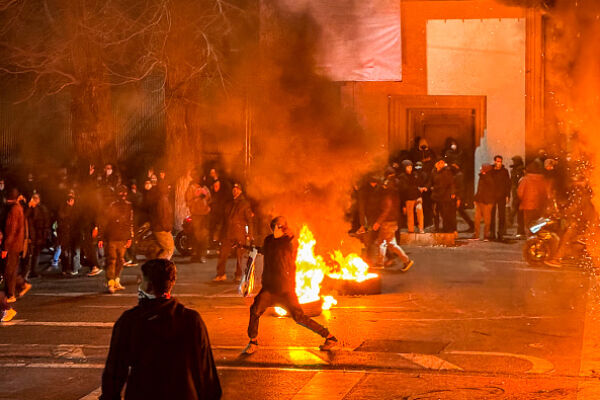
Iran’s large-scale anti-government protests have entered the third week, with protesters’ dissatisfaction with the current regime showing no signs of weakening. A resident of Tehran, the capital of Iran, expressed that both the poor and the wealthy are currently facing hunger and are burning with anger towards the current government.
The protests that erupted in Tehran have torn the city apart, as some people flee in the midst of deadly chaos while others rush back home after work to change clothes and take to the streets. The resident, who requested anonymity for safety reasons, told CNN that the days are unusually quiet until the protests erupt again in the evenings.
“People working at cafes will tell you they finish work at six, then rush back home to change and hit the streets,” he said. Despite some easing of the protests since the weekend, the situation in Tehran remains grim. The resident added that some hospitals are overflowing, and cemeteries are refusing new burials due to overcrowding.
“The scale of the massive protests on Thursday and Friday nights last week was huge,” the resident said. “People of all ages came out – young people with their parents, professionals from all walks of life, from all corners of the city.”
“The violence on Saturday was very severe, and many people stayed home, not venturing out anymore,” the resident added. According to the resident, some people dissatisfied with the current situation are joining the anti-government protests alone, so they can easily escape government crackdown without worrying about the safety of friends or family.
Most people are simply tired of the internal situation in Iran. “The situation is really bad; people are hungry and angry,” he said. “Even the wealthy struggle to make ends meet, let alone the poor and lower-class citizens.”
The large-scale protests in Iran began on December 28 last year, triggered by a sudden devaluation of the country’s currency. Since then, the protests have turned into the largest anti-government protest movement in the country since 2009. Every night, tens of thousands of protesters take to the streets nationwide, shouting slogans like “Death to the dictator,” directly targeting Iran’s Supreme Leader Ayatollah Ali Khamenei.
Last Thursday night, Iranian authorities cut off the national internet and mobile communications, isolating Iranian people from the outside world. Human rights organizations have accused the Iranian government of using media blackout to brutally suppress the protesters.
According to reports from the US-based Human Rights Activists News Agency (HRANA), more than 2,000 people have died in the protests, with over 90% being protesters, and more than 16,700 people have been arrested.
A joint statement led by “UN Watch” from 17 countries’ 30 non-governmental organizations on Tuesday reported that the death toll from the protests in Iran has now exceeded 12,000 people.