
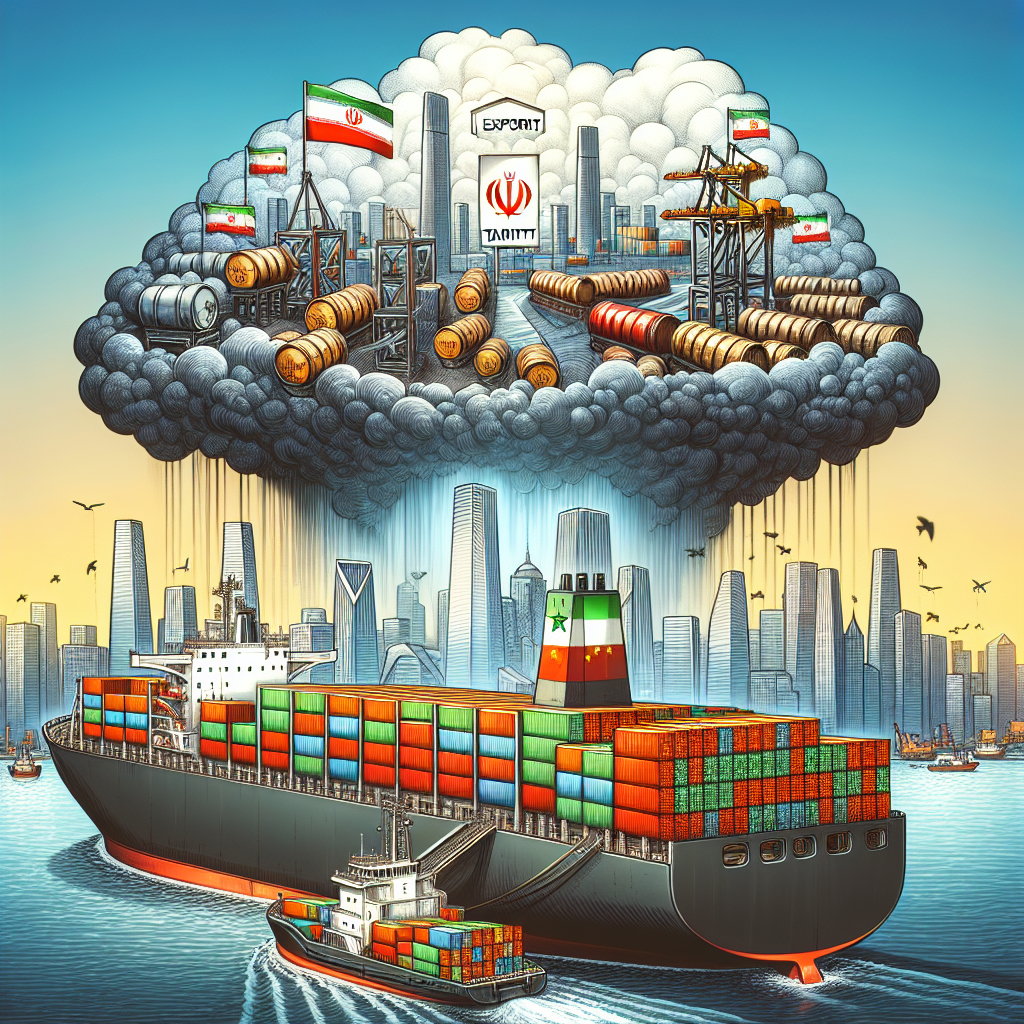
Why is it said that the increase of tariffs on Iran’s trade partners by the United States will have the biggest impact on Beijing? Apart from shadow oil, more than a third of non-oil exports are destined for China. In addition, nearly 40% of Iran’s imports come from China as well.
On Monday (January 12), U.S. President Trump announced a 25% tariff on all countries trading with Iran, which will take immediate effect.
This move comes at a time when Iran is experiencing the largest and longest anti-government protests in years. The Iranian authorities have brutally suppressed protesting civilians, resulting in hundreds of deaths and over 10,000 arrests. Some reports even suggest that the death toll has exceeded a thousand.
This new tariff policy will pose significant risks to China. It is not yet clear whether the new U.S. tariff policy only applies to goods, whether it covers services such as banking and shipping, indirect commercial contacts, or sets a minimum threshold for doing business with Iran.
Firstly, this will add an extra 25% to the cost of Chinese exports to the U.S., possibly bringing the total tariff to 45% or even higher on top of existing rates, thereby reducing the competitiveness of Chinese goods in the American market.
According to data from the United Nations Trade Information and Negotiation Advisor Office (TINA), in 2024, Iran’s global non-oil export reached $12.9 billion, with over a third of it destined for China. During the same period, nearly 40% ($8.95 billion) of Iran’s imports also came from China, highlighting the depth of the economic relationship between the two countries.
Secondly, Iran’s top ten export products are mostly fuel-related, and China is a major buyer of Iranian oil. Following an attack on Iran with U.S. assistance in the summer of 2025, Chinese buyers are concerned about potential impacts on Iran’s energy export facilities. The majority of Iran’s sanctioned crude oil flows to private “teapot” refineries in Shandong, China.
Data from the Belgian Brussels-based energy tracking company Kpler shows that in 2025, China received approximately 80% of Iran’s crude oil exports.
Due to its nuclear program, Iran still faces international sanctions, including an embargo on Iranian oil. To maintain the circulation of sanctioned oil, Iran relies on a complex network of shadow ships, including ship-to-ship transfers – often taking place in Southeast Asia or the waters of the Gulf – and relabeling oil cargoes to appear as products of other countries such as Malaysia or the UAE.
Tracking data from the U.S. non-profit organization United Against Nuclear Iran shows that in 2025, China imported 19.5 million barrels of oil from Iran. According to the U.S. Energy Information Administration (EIA), this shadow trade brings in approximately $43 billion ($37 billion euros) in unreported income for the Iranian government annually.
This income is a lifeline for the Iranian economy, supporting the isolated regime struggling with sanctions, long-term inflation, and rapid currency devaluation. Iran also exports food to other countries, including pistachios and tomatoes, but still requires large amounts of imported food. Food accounts for about a third of Iran’s total imports, especially corn, rice, sunflower seeds, edible oils, and soybeans.
Other major trading partners of Iran may also be affected by this new 25% tariff, including Turkey, India, the UAE, and Pakistan.
The new U.S. tariffs may also jeopardize the fragile trade truce agreement reached between the U.S. and China in October 2025. At that time, both sides suspended new tariff hikes, China lifted export restrictions on rare earth elements to the U.S., and committed to buying a large amount of U.S. soybeans, thus avoiding a full-blown trade war.
Additionally, this increases the uncertainty of whether Trump will visit Beijing as scheduled in April. Analysts had previously expected the U.S. president to announce a comprehensive trade agreement with China during this trip.
On Tuesday (January 13), Beijing labeled the new tariff as “illegal unilateral sanctions.” At the same time, channels connected to official sources tried to downplay the China-Iran relationship.
Reuters reported on Tuesday that a Chinese scholar who provides Iran policy advice to the Foreign Ministry in Beijing said, “The relationship between China and Iran is not as close as the public imagines.” Due to lack of authorization to accept media interviews, the scholar requested anonymity.
The report states that analysts suggest that Trump’s attempt to sever Iran’s global trade links may deepen scrutiny of China’s Belt and Road Initiative. Iran is a crucial strategic hub for China to enter the Middle East under the Belt and Road Initiative.
Moreover, over the past year, China has been purchasing far more oil than its domestic demand and storing it.
Tom Reed, Vice President of Kpler responsible for China’s crude oil business, said that China’s reserves of heavy crude oil will sustain until March. After that, China will need to look for alternative sources, which will no longer include Iran or Venezuela, targeted by Trump.