
In 2026, over 20 car companies in China have announced price cuts and sales promotion policies, including joint venture brands like BMW, Tesla, Toyota, as well as domestic Chinese brands like BYD. Industry insiders believe that the trend of price reductions in the Chinese car market will continue throughout 2026.
The first to announce a price cut promotion was BMW China. On January 1st, BMW China announced a comprehensive reduction in the official prices of 31 flagship models, including sedans, SUVs, and electric vehicles. The flagship all-electric model i7 M70L saw a price drop of 301,000 yuan, while the China-made M235L broke the 300,000 yuan mark for the first time, and the 2-Series four-door coupe was reduced to 208,800 yuan, marking a new low in prices for BMW’s locally produced models. This news was widely reported by various media outlets in mainland China, including The Paper.
Subsequently, other joint venture car companies also began to follow suit in lowering selling prices, including FAW-Volkswagen, FAW-Toyota, Changan Mazda, Dongfeng Nissan, Dongfeng Honda, GAC Toyota, and more, with discounts ranging from 10,000 to 50,000 yuan.
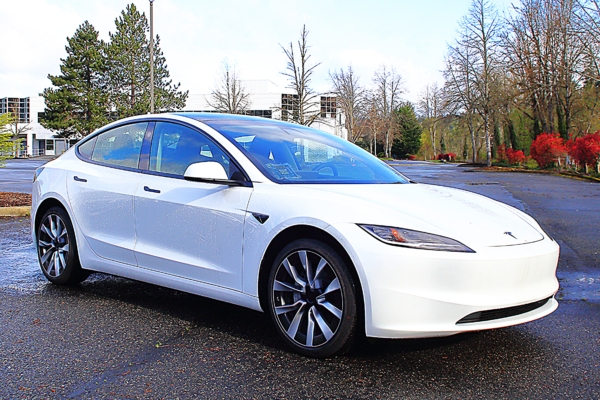
According to a report by “Yicai” on January 10th, FAW-Toyota offered a limited-time discount of 50,000 yuan for the Prado; GAC Honda offered a terminal discount of around 55,000 yuan for the Accord, and GAC Toyota provided a terminal discount of about 40,000 yuan for the Camry. FAW-Volkswagen’s Magotan and Cadillac XT4, among others, all had special price discounts. Tesla China also introduced a 7-year low-interest and 5-year zero-interest car purchase plan. At the same time, electric vehicles from joint ventures also saw price reductions. For instance, FAW Toyota’s bZ3 was offered at a limited-time price of 93,800 yuan, previously priced at 169,800 yuan for the 2024 model. GAC Honda’s P7 had a terminal discount of 50,000 yuan, and GAC Toyota’s ix3 offered a limited-time discount of 10,000 yuan.
In addition to joint venture brands, local Chinese car brands are also promoting sales with various promotional packages. Brands like Xingtu, Sang Jie, Zhi Jie, Shen Lan, and GAC Aion have introduced promotions for over forty models. Xingtu’s 2026 model “Lan Yue Surpass Version” offers a limited-time cash discount of 30,000 yuan, Sang Jie H5 provides a limited-time cash subsidy of 9,000 yuan, Zhi Jie R7 offers a limited-time cash subsidy of 5,000 yuan, GAC Aion provides an additional manufacturer’s swap subsidy of 5,000 yuan, and Xiaomi YU7 offers a limited-time “3-year zero-interest” across the range.
The report mentioned that since January 1st, over twenty car companies have launched limited-time promotional activities for more than 75 models: some models offer direct cash subsidies, some are sold at fixed prices, some models follow a strategy of providing 3 or 5 years interest-free finance, while others combine trade-in subsidies. In comparison, joint venture car companies offer larger direct cash discounts and greater price reductions.
Additionally, in the past two days, nearly 10 new cars have been introduced in China almost simultaneously, intensifying competition in the automotive market.
The Paper believes that the luxury car market in 2025 was highly competitive, and “balancing brand premiums with market share has become a challenge for all participants.”
Many institutions and experts predict a downturn in the automotive market in the first quarter of 2026. The investment strategy for the automotive industry in 2026 released by Citic Securities mentioned that the probability of continuing the old-for-new policy is high in 2026, but the industry may still face a period of overextended demand in the first quarter.
A marketing professional from a traditional car company told “Yicai”: “Competition in the automotive market in 2026 will only grow fiercer, not easier.” Cui Dongshu, the Secretary-General of the China Passenger Car Association, also believes that the momentum of price reductions by car companies will continue in 2026.