
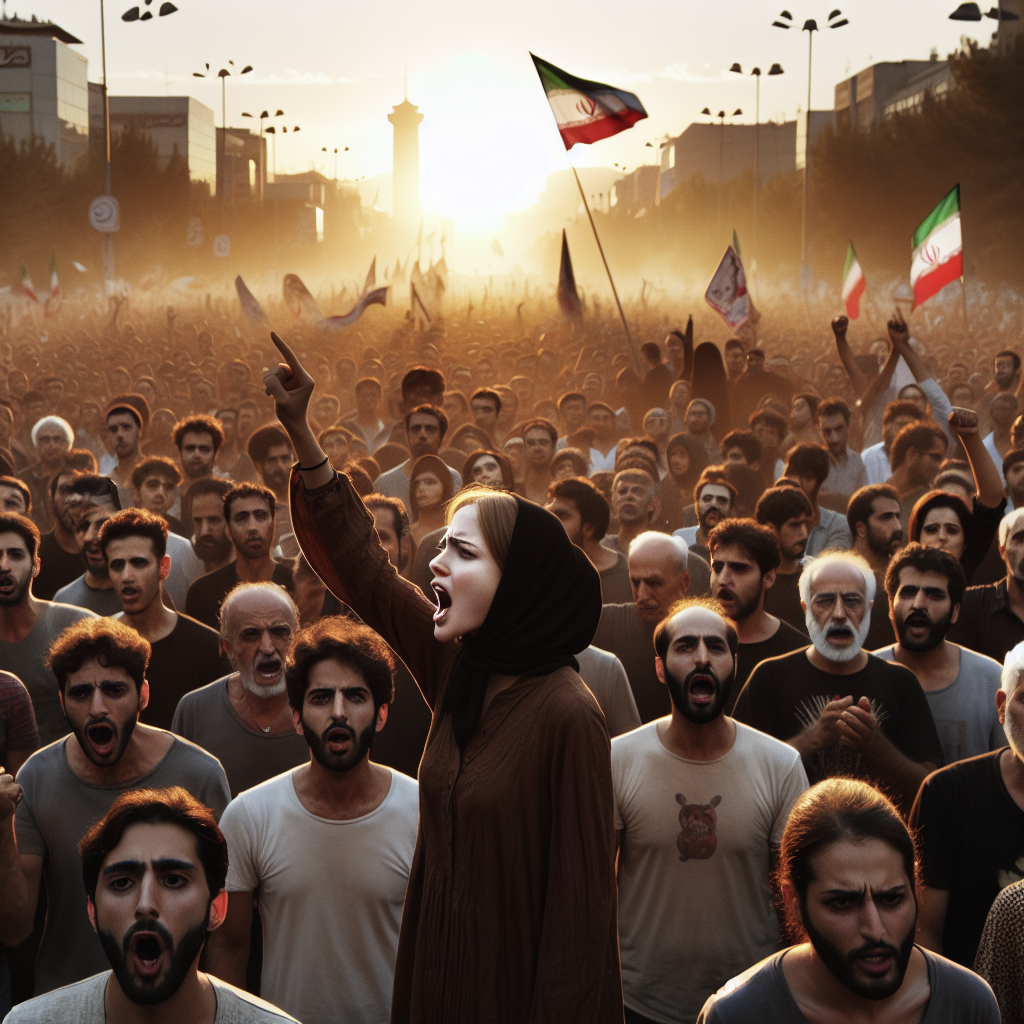
Iranian protests sparked by economic crisis have entered their 14th day despite the Tehran authorities imposing a nationwide 48-hour internet shutdown, attempting to suppress demonstrations in an information vacuum. However, the Iranian people are not deterred by the high pressure, as the protests continue to spread to more cities. US President Trump promptly expressed his support, stating that Iran is showing an unprecedented desire for freedom.
According to videos leaked on Friday evening, the streets of Amol were packed with enraged citizens. Protesters lit bonfires late into the night, echoing chants of “down with the dictator,” and even the tear gas from security forces could not disperse the dense crowds. Such scenes unfolding in Iran, which has long been ruled by Islamic authority, were unimaginable just a few days ago.
In the northwest stronghold of Tabriz, protesters not only marched in large groups but also risked gunshots to dismantle and damage government-installed surveillance cameras on the streets either with their bare hands or makeshift tools. This brave act is seen as a direct retaliation against the government’s “digital authoritarianism” to protect the identities of protesters from being traced.
Amid the escalating tensions in Iran, President Trump directly addressed the Iranian people on social media, stating, “Iran is showing a thirst for ‘freedom,’ perhaps like never before. The United States stands ready to assist at any time!!!”
Prior to this, Trump had issued a clear warning at the White House on Friday, emphasizing that the US is closely monitoring the situation, stating, “If they (the Iranian government) start killing people, we will take action. It doesn’t mean we’re going to send troops, we’re going to hit them hard at the core.”
Behind the protests lies the extreme economic hardships caused by mismanagement by the Iranian authorities. A 30-year-old resident of Tehran told CNN that life has become unsustainable, stating, “Nobody can afford anything anymore. Prices are almost rising every hour, and no one knows how this will end.”
The looming threat to survival has fueled the Iranian people’s desire for and pursuit of freedom. A 47-year-old man from Tehran, speaking to CNN, bluntly stated that the internet blockade seems to have backfired because boredom and frustration are driving more people to the streets.
Amid the cover of information blackout, bloodshed and clashes have sharply increased. According to the Human Rights Activists News Agency (HRANA) as of Friday, at least 65 protesters (including 9 minors) have been killed nationwide.
However, according to a doctor quoted by Time magazine, just on Thursday night in Tehran, “217 protesters were killed.” The number of people arrested in all of Iran has now exceeded 2,277.
Ironically, while the entire population is being silenced, Iran’s Supreme Leader Ayatollah Ali Khamenei has been able to use specific government lines to issue a series of 12 tweets on X platform, labeling protesters as “US spies” and “thugs.”
Alp Toker, director of internet security monitoring agency NetBlocks, pointed out that the Iranian regime’s “black box” internet strategy aims to prevent the truth from spreading abroad and restrict international scrutiny.
Currently, some individuals are attempting to maintain very limited communication with the outside world through Elon Musk’s Starlink terminal.