
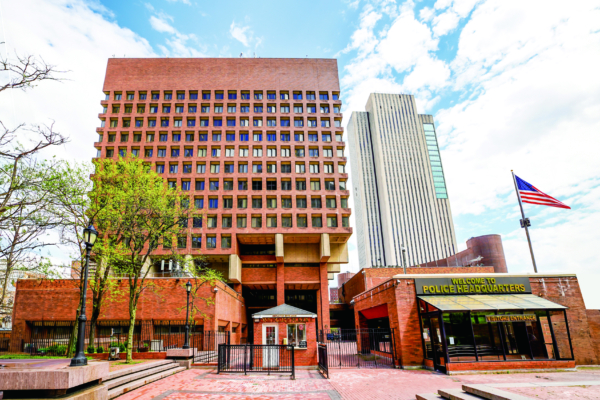
When it comes to the New York City Police Department (NYPD), many people get excited and say, “I know, I see police officers in NYPD uniforms every day.” Indeed, for the average citizen, the concept of “police” seems to be ubiquitous and highly visible. However, upon closer examination, describing this concept concretely can feel quite challenging, as it is neither clear nor definitive.
Have your friends ever asked you questions like:
– Are there really “plainclothes police” in real life?
– In what situations can I seek help from the police?
– What are the dispatch standards in New York City? How is police manpower deployed?
– Are the police in the subway the same as those patrolling on the streets?
– What are the equipment carried by police officers used for? Are they heavy?
Behind these questions lies both curiosity about the special profession of police officers and an exploration of the largest city police department in the United States: the NYPD. It is important to note that the NYPD’s police force is larger than that of most states in the United States and even many large cities combined. In addition to approximately 34,700 active-duty uniformed officers, there are nearly ten thousand auxiliary police officers, school safety agents, traffic enforcement agents, civilian staff, and other support teams.
Despite the size of the force, meeting the public safety needs of a supercity with a population of 8.8 million is not an easy task. Trying to fully explain all the responsibilities it carries out is also quite challenging. In this article, let’s observe the NYPD from the perspective of an ordinary person – to get a glimpse into this police organization that stands out in the United States and around the world.
For many citizens, the immediate response to an incident might be to seek out the police. However, at the level of urban governance, this understanding is not entirely accurate. This is because the core responsibilities of the NYPD focus on “public safety,” “criminal activities,” and “emergency risk management.” To determine whether you can seek help from the NYPD, consider the following:
If you are experiencing violence, threats, home invasions, or any situation that you believe may immediately result in bodily harm, do not hesitate to dial 911 for assistance. The NYPD will promptly respond to such requests for immediate rescue.
For sudden events that do not currently pose a threat to personal safety, such as theft, vandalism, fraud, stalking, or harassment, typically fall under criminal cases requiring you to file a report with the NYPD to obtain a case number and initiate subsequent processing. If some time has passed since the incident, residents can first contact their local precinct to provide details of the case and understand any requirements for filing a report or providing additional information. For situations that do not involve immediate risks to personal safety and are uncertain if they fall within police jurisdiction, concerns can be reported through the 311 municipal service system for the city government’s assistance in determining whether police intervention is necessary or to refer the matter to other relevant departments.
This can easily lead to misunderstandings, as some might think they have reported the incident to the police, but the police did not respond. This is because in typical daily situations such as noise disputes between neighbors, housing maintenance disputes, or certain municipal violations, these matters do not fall under direct police jurisdiction but are handled by other city departments. Pushing all issues onto the police can result in delays in receiving necessary assistance during actual emergencies.
The NYPD operates as a highly specialized system. After an incident occurs, various roles typically come into play on site. Patrol officers from precincts are usually the first to arrive, responsible for initial incident handling, maintaining order at the scene, and determining if additional police resources are needed. Detectives and specialized units mostly appear once a case enters the investigation stage, responsible for evidence collection, questioning, and case linkage. In specific areas like the subway system or public housing, there are specialized officers familiar with the scene to enhance their response speed.
This division of labor can create a sense of “different police officers every time they come.” Often, frontline officers must first prevent additional risks, direct traffic, stabilize the scene, before deciding if the case should enter the investigation chain. That’s why the initial responding officers engage in documentation and exclusion measures first rather than immediately initiating a pursuit like in movies.
The change in the crime rate in New York City in recent years can be divided into three stages. Before the pandemic, from 2018 to 2019, public security remained relatively stable with crime rates reaching historic lows. During the pandemic from 2020 to 2022, amidst drastic changes in public order and city operations, violent crime noticeably increased. In 2023 to 2024, various violent crime indicators began to decline, but property crimes, mainly theft, remained relatively high, contributing significantly to the sense of insecurity among many residents.
As crime incidents in recent years become more random and methods more complex, the NYPD has initiated a high-tech upgrade in security management. Internally, crime and security data are no longer solely based on statistical figures but on a big data-driven policing management mechanism: CompStat. CompStat is generally regarded as a computerized system centered around comparison and statistical data analysis that utilizes high-frequency, fine-grained data for tracking, analysis, prediction of trends, and deploying actions and accountability checks based on the data.
With the launch of CompStat 2.0, the police have made certain data public through an interactive platform, allowing citizens to have a more concrete understanding of “what is happening where” and adjustments in security strategies.
Data is becoming a bridge connecting police decision-making and public oversight.
In New York City, police officers are not unbridled enforcers of “freedom.” Behind their uniforms, equipment, vehicles, and operational methods lie clear procedures and limitations. One of the most tangible aspects for citizens is the body-worn cameras (BWC) carried by officers on duty.
For patrol officers, wearing cameras and recording enforcement actions are standard procedures; according to public explanations by the NYPD, specific incidents that need recording should be fully documented from start to finish. Even if citizens ask if the BWC can be turned off, officers may not do so, especially when there are ongoing safety risks or suspects present. The NYPD has publicly stated the general retention period for recorded videos, with most videos being stored for 18 months, possibly longer in the case of significant incidents.
The purpose of this practice is not just to unilaterally supervise police behavior but to provide a dual protection: leaving verifiable records for citizens and offering factual basis for officers’ actions during contentious incidents. For the public, this means that law enforcement is no longer just a matter of one word against another but has been integrated into a traceable, reviewable system. The authority of the police has not been revoked but is now placed more clearly within regulated procedures.
Looking back on the crime trends in recent years, it becomes evident that public perception of safety does not always align with the figures: a decrease in violent crime does not offset the unease caused by frequent property crimes. The heightened exposure of individual incidents may also amplify the general perception of risk. In this reality, the challenge in police work lies not only in reducing the number of incidents but also in explaining what is unfolding and why resources are being deployed accordingly.
From this perspective, the role of the NYPD is not merely that of enforcers but an integral part of the city’s governance system: it must continually maintain a balance between rapid response, procedural constrains, and public understanding.
For many citizens, the process of reporting an incident may not be complicated, but the complexity often arises afterward. For instance:
– Insurance companies may request incident reports as proof;
– Employers or schools may require incident records;
– Landlords, banks, or lawyers may inquire if the police have been notified.
At such times, you may often face a practical issue – “I reported the incident, but I don’t have anything in hand.” This is because not every report necessarily corresponds to a criminal case report. However, for citizens, it is not a matter of receiving “nothing at all.”
Residents can usually apply to their local precinct for an “incident verification document” to validate that the police did indeed receive the report and respond to the scene. While this document is not a criminal report, it is sufficient in practice to meet most administrative and insurance requirements.
In films and TV shows, providing clues to the police often entails stepping forward, undergoing questioning, or becoming embroiled in subsequent events. Therefore, many citizens hesitate to provide clues out of concern for their own safety.
To address this situation, the NYPD and the city government have established an anonymous reporting mechanism, such as the Crime Stoppers hotline. Its initial design aims to allow citizens to provide crucial information related to public safety without revealing their identity or assuming personal risks. Anonymous tips like these are common in situations involving illegal firearms, significant violent crimes, and the like. The police will only verify and evaluate the veracity of the tip itself, without focusing on the identity of the tipster.
New York City Resident Hotlines: 911 (Emergency), 311 (Non-Emergency)
New York City Police Department Website:
https://www.nyc.gov/site/nypd/index.page
CompStat 2.0 – Police Administration System Website:
https://compstat.nypdonline.org/
Crime Stoppers Hotline and Website:
800-577-TIPS (8477)
https://crimestoppers.nypdonline.org/?AspxAutoDetectCookieSupport=1#/