
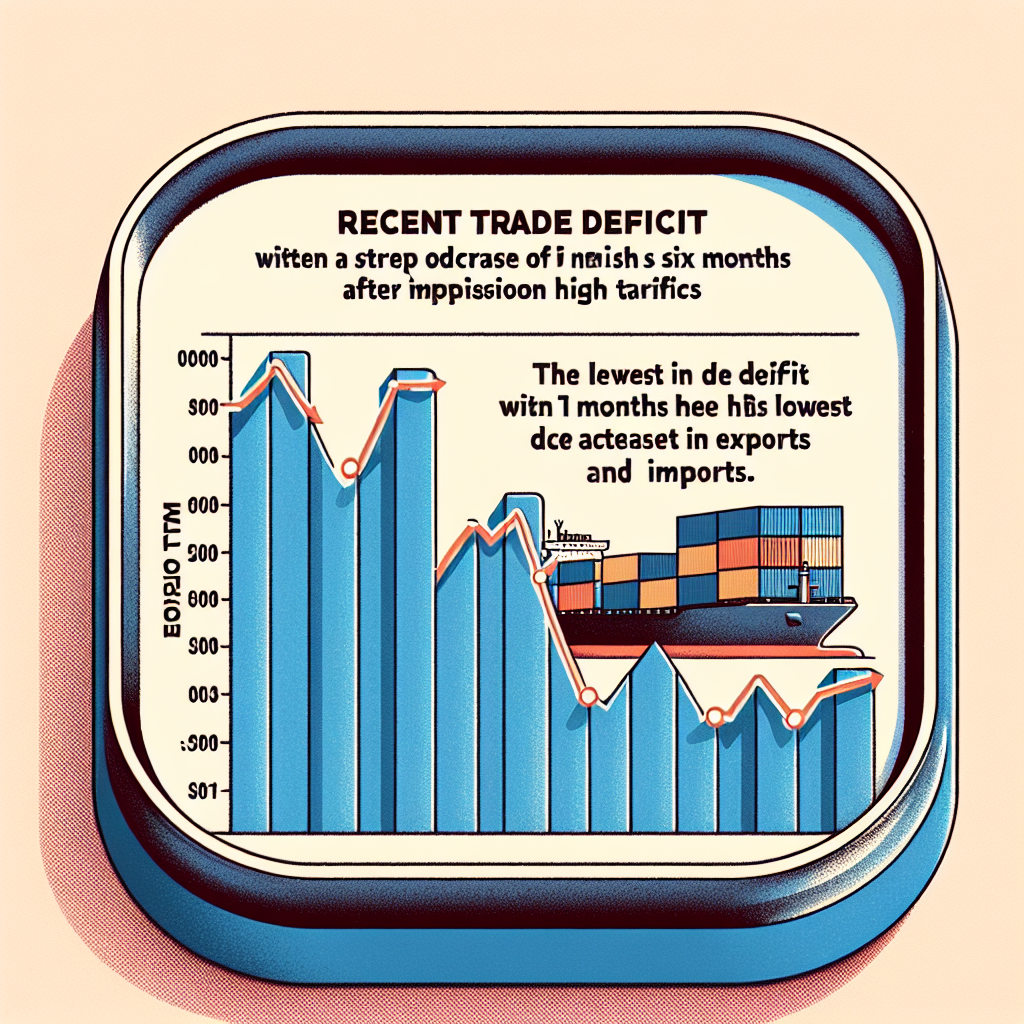
The latest data released by the U.S. Department of Commerce on Thursday (January 8) showed that after six months of President Trump’s tariff hike, the U.S. trade deficit has dropped to the lowest level since mid-2009.
Due to an increase in exports and a decrease in imports, the U.S. trade deficit in October was $29.4 billion, a 39% decrease from the previous month. Exports increased by 2.6% while imports declined by 3.2%.
This marks the lowest level since the second quarter of 2009, when the U.S. was just emerging from the shadows of the financial crisis and the Great Recession.
The latest data also reflects the trade activities since President Trump implemented the “Freedom Day” tariffs in April 2025, alleviating concerns previously raised by economists and policymakers. The data shows a strong market for U.S. products and, as Trump has signed trade agreements with several countries, he has backed down from many of his most severe tariff threats.
The trade deficit so far this year is still 7.7% higher than the same period in 2024.
Chris Rupkey, Chief Economist at Fwdbonds, pointed out in a report that U.S. trading partners are continuing to purchase more U.S. goods and services.
“So far, with productivity continuing to support economic growth, the predicted U.S. economic downturn has not materialized,” he wrote. The slowdown in the U.S. trade deficit “will provide much-needed support for the fourth-quarter economic growth, which has been severely affected by the federal government shutdown.”
According to another report released by the U.S. Bureau of Labor Statistics on Thursday, productivity in the third quarter increased by 4.9%.
The increase in productivity helped drive down unit labor costs by 1.9% in the third quarter, far exceeding expectations. This indicates that the labor market has not exerted upward pressure on inflation.
Matthew Martin, Senior Economist at the Oxford Economics Research Institute, stated in a report, “The latest data shows that businesses are successfully creating more value with less labor, further confirming the notion of ‘jobless expansion’.”
He said, “Productivity will be the key factor determining economic growth and inflation dynamics. If tax cuts, deregulation, and technological advancements including artificial intelligence can continue to accelerate productivity growth, then economic growth can accelerate without triggering unnecessary inflation.
Despite soft hiring, data released by the Department of Labor on Thursday shows that layoffs remain at a low level.
As of the week ending January 3, the number of initial claims for unemployment benefits was 208,000, with the four-week moving average decreasing to the lowest level since April 27, 2024.