
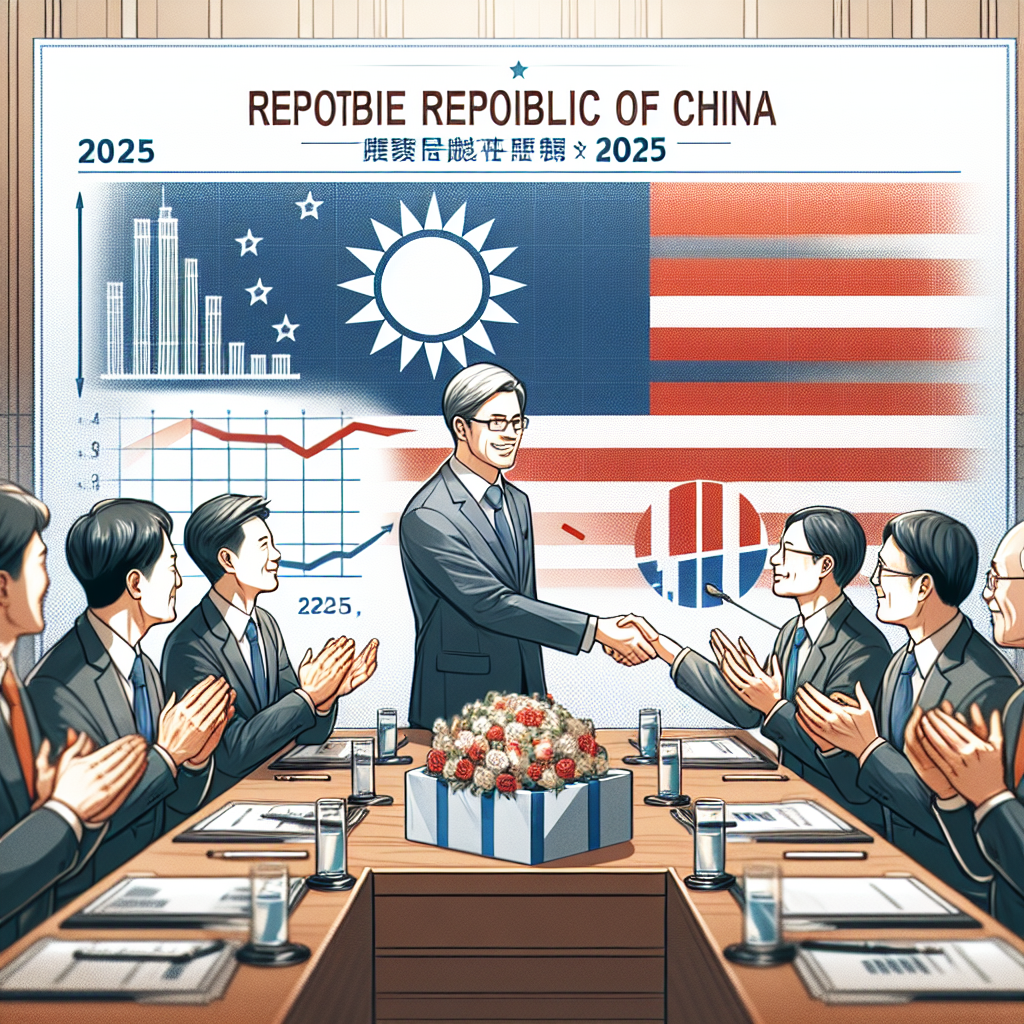
Today, President of the Republic of China (Taiwan) Lai Ching-te met with the “Chinese National Chamber of Commerce for Importers and Exporters” to address the state of Taiwan’s economy. Reflecting on 2025, Lai highlighted Taiwan’s robust economic growth, achieving a historic high in export volume with an estimated economic growth rate of 7.37%. Moving into 2026, a crucial year is ahead, calling for continuous enhancement of industrial capability built on existing foundations.
President Lai expressed delight in reconvening with industry leaders at the start of the new year, emphasizing the vital role of importers and exporters in Taiwan’s global economic presence. He acknowledged their contribution to Taiwan’s economic development, positioning them as key drivers in propelling the nation onto the world stage and facilitating international trade exchanges.
In the face of global economic shifts and challenges in 2025, President Lai noted that Taiwan stood out with a forecasted economic growth rate of 7.37%, outperforming the International Monetary Fund’s global growth projection of 3.2%. Taiwan’s export performance shone brightly, nearing $578.5 billion USD by November last year, marking a historic high and demonstrating Taiwan’s competitiveness and industrial momentum in the global market.
These achievements, President Lai attributed to the tireless efforts of past generations in expanding Taiwan’s global market presence, embracing a spirit of resilience and innovation. Emphasizing Taiwan’s reputation as a practical, reliable, and trustworthy partner on the world stage, he underscored Taiwan’s indispensable role in the global supply chain network.
Acknowledging current challenges such as global supply chain restructuring, adjustments in US tariff policies, and risks stemming from digital transformation, net-zero transitions, and geopolitical factors, President Lai assured the government’s unwavering support as a solid anchor for the industry’s progress.
Furthermore, President Lai outlined government initiatives like the “Invest in Taiwan Three Major Plans” and measures to enhance economic and national security resilience to bolster business capabilities, reinforce supply chain resilience, and stabilize industrial development. The Ministry of Economic Affairs has already rolled out a $460 billion NT “Export Supply Chain Support Plan,” offering subsidies for research and development transformation, export loans, credit guarantees, and overseas order acquisition to strengthen companies’ financial flexibility and technological prowess.
Through a $116 billion NT “Small and Medium-sized Enterprise Diversified Development Plan,” the government is steering digital and net-zero transformations, channel expansions, and combined initiatives like inclusive financial loans, tax incentives, and credit insurance mechanisms to align more businesses with international trends and elevate overall competitiveness.
With 2026 marking a pivotal year, President Lai emphasized the need to build on current foundations to enhance industrial strength continually, ensuring the accumulation of positive outcomes. He called for unity across party lines and society, aiming to pool greater resources collectively and drive Taiwan forward.
Looking ahead, President Lai pledged to deepen international economic and trade cooperation, expand diverse markets, and remain attentive to industry insights. By aligning policy planning with actual needs and collaborating with the industry to mitigate external risks and seize new opportunities, Taiwan strives to position itself more securely and advance further within the global supply chain network.