
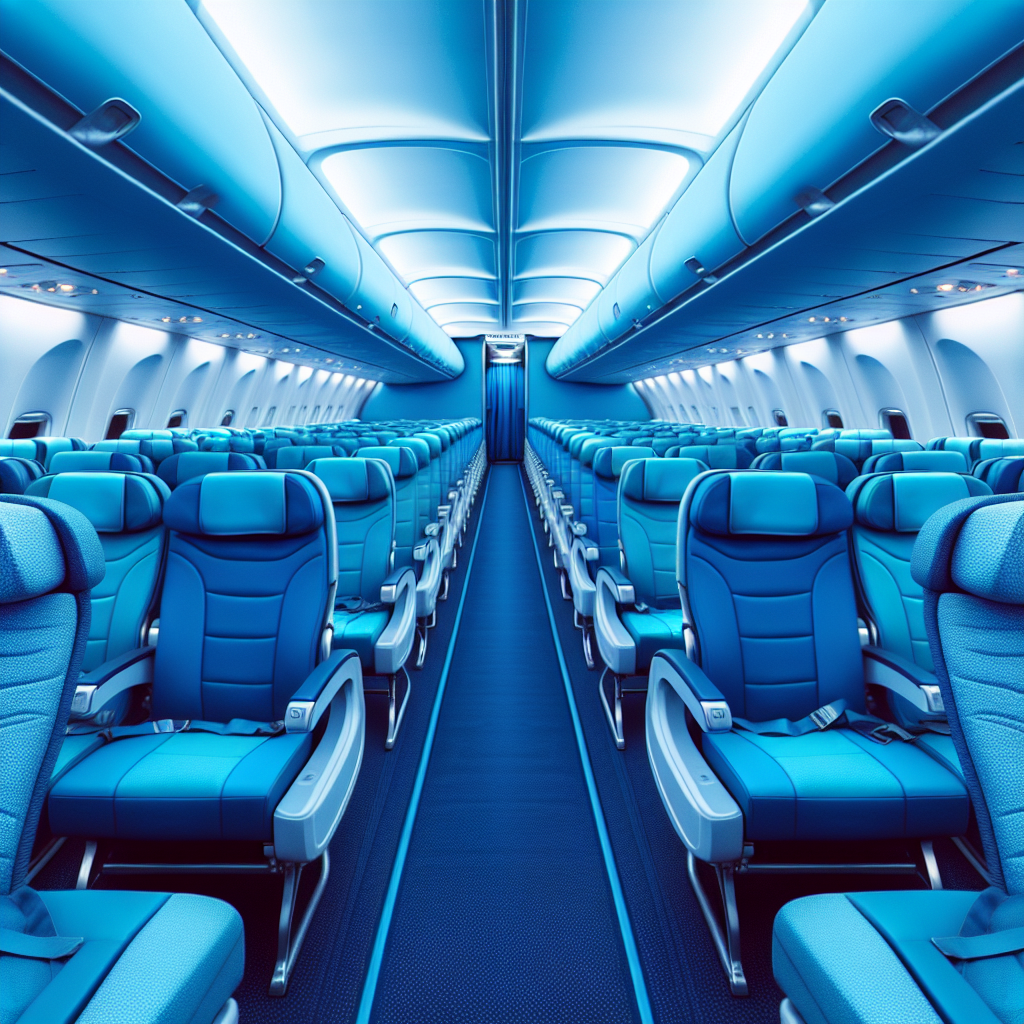
When you board a plane, you may notice that many airlines have blue seats. While a few airlines may have seats in colors that match their overall image, the majority tend to have blue seats, differing in shades. Experts have provided explanations for this trend.
According to Reader’s Digest, airplane seats are generally blue, with a few exceptions like the red seats of Virgin Atlantic Airways and the green seats of Aer Lingus.
Several experts have offered insights as to why airplane seats are predominantly blue:
Flight turnovers leave limited time for seat cleaning, so airlines opt for colors and materials that can withstand high passenger traffic.
Rishi Kapoor, CEO of Nanak Flights in Canada, explains that the choice of blue seats is practical as stains are less visible on a blue background, reducing the need for frequent seat replacements.
To ease passenger anxiety during flights, many airlines use blue seats for their calming effect.
Kapoor said, “Despite statistics showing flying is the safest mode of transportation, many passengers still feel stressed on planes. Blue seats may seem insignificant, but they are a key factor in making flights the preferred way to travel.”
Boeing, the aircraft manufacturer, confirms the use of color psychology in airplane design. Their statement notes that blue is often associated with tranquility.
Designer Virginia Tripp at Boeing stated that colors in the cabin mimic natural patterns, creating a relaxed outdoor ambiance for passengers.
Airlines strive to maintain a cool cabin environment, which sometimes leads to very cold temperatures. Blue seats play a role in this strategy. Tripp explained, “Colors also affect people’s perception of humidity, temperature, and scent.” Blue conveys a sense of freshness and cleanliness while providing a cool sensation.
Travel expert Sara Rathner from NerdWallet mentioned that airlines may choose blue seats to align with their brand, citing U.S. airlines’ use of blue and red in logos as a patriotic gesture.
The website Color Psychology explains the meanings of different colors, noting that blue fosters feelings of trust, reliability, and confidence, crucial for brand identity.
British Airways veteran designer Nigel Goode echoed similar sentiments about color choices in aviation, emphasizing the use of soft tones to create a home-like, relaxing atmosphere for passengers.
Goode mentioned that blue is a conservative, non-controversial, corporate color symbolizing trust and safety, used by longstanding airlines like British Airways.
The intensity of a color also affects perception, with light colors giving a sense of spaciousness and dark colors feeling more confined.
Color Psychology emphasizes the unrivaled power of colors in communication, capable of evoking emotions, eliciting responses, and altering thought patterns consciously or subconsciously.
Colors can influence emotions, blood pressure, appetite, and overall lifestyle, establishing a significant impact on individuals, whether innate or learned.
In an effort to reduce environmental pollution and costs, future airplane seats will be made of bioplastic instead of traditional plastic materials.
作者: 未知
日期: 未知