
Iranian citizens’ ongoing protests against the economy have led to clashes with Iranian security forces, resulting in casualties on both sides. Chinese state media have labeled the protesters as “thugs,” sparking backlash from Chinese netizens who argue that the protesters should be recognized as heroes of the people. This situation has garnered significant attention.
Since the protests erupted in the Iranian capital of Tehran on December 28, 2025, the situation has escalated into violent conflicts. Videos have shown protesters in southern Iran forcefully removing the gates of government buildings. Iranian authorities have resorted to strict crackdowns and mass arrests to suppress the protests.
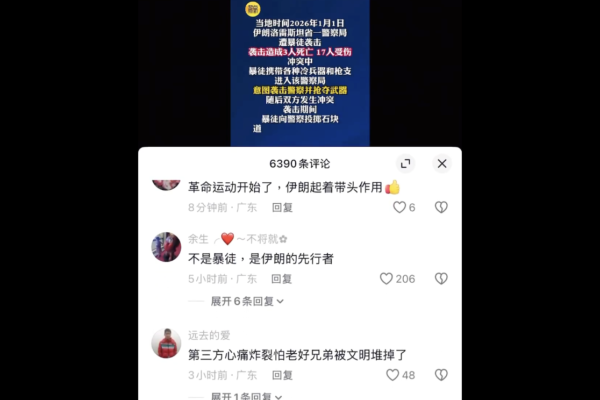
Both protesters and security forces have suffered casualties during the clashes. As of January 2, according to reports from human rights organizations, at least 7 people have died. The Fars News Agency in Iran reported that on January 1, an attack on a police station in Azna City, Lorestan Province in western Iran resulted in 3 deaths and 17 injuries.
Iranian official media have described the protesters as “thugs,” with Chinese state-run media and multiple mainland Chinese outlets directly citing this description, referring to the attack on the police station in Lorestan Province as being carried out by “thugs.”
On January 2, “起點新聞,” an outlet with ties to Shaanxi officials, released a video report on Douyin that quoted Iranian official media, leading to a flood of critical comments from netizens.
Netizens expressed sentiments such as, “Iranians are not thugs, they are revolutionary fighters against oppression,” and “The era of tyranny must come to an end.” Messages praising the bravery of the Iranian people and comparing them to heroes resonated strongly among online communities.
A mainland Chinese anchor, on January 3, also adopted the “thug” rhetoric, prompting many netizens to urge for a correction in labeling, emphasizing the protesters as pioneers of a revolution. Some criticized the anchor for distorting facts and causing harm to the Iranian people, labeling the oppressive organizations as the true “thugs.”
Overseas netizens on X platform commended Chinese netizens for their outspokenness in challenging the narrative. With the ongoing internet censorship, the resilience of dissenting voices signifies the immense public discontent. There were expressions of looming confrontation between the authorities and the people, drawing parallels between the situations in Iran and China, and indicating a shift in public sentiment against the ruling regime.
In recent days, numerous Chinese cities have canceled New Year’s Eve celebrations citing “risk prevention.” The decision to halt light shows, countdown events, and fireworks displays has been attributed to concerns over potential social unrest and protest risks amid China’s declining economy and rising unemployment rates.
Chinese-Canadian writer and veteran commentator Sheng Xue remarked to Epoch Times that the ability of Iranian citizens to persist in their resistance despite government crackdowns is a source of fear for the Chinese Communist Party (CCP). The CCP is wary that Iranians may serve as a model or inspiration for Chinese citizens in their fight against oppression.