
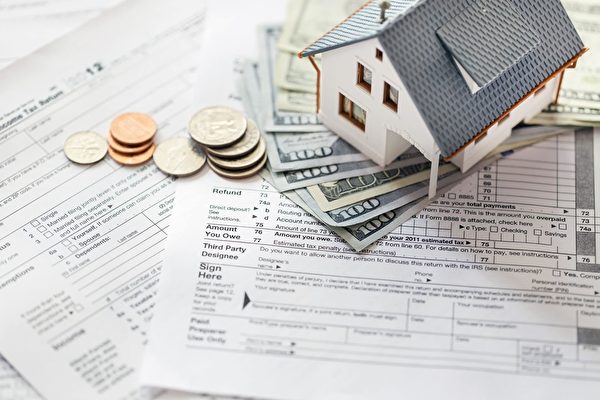
A petition called the “Save Proposition 13 Act of 2026” is currently being circulated to protect taxpayers, with the aim of entering the 2026 midterm elections. The initiative, proposed by the Howard Jarvis Taxpayers Association (HJTA), aims to safeguard the properties and businesses of Californians from being excessively taxed by the government.
In 2024, a similar initiative collected millions of signatures, but the Governor and the state legislature later filed a lawsuit, arguing that it would result in billions of dollars in revenue loss for the state and local governments. The California Supreme Court removed the initiative before it could be voted on by the public.
The HJTA’s renewed grassroots initiative, dubbed by the state attorney general as the somewhat biased “Limits Ability of Voters and State and Local Governments to Raise Revenues for Government Services,” is currently gathering signatures.
In 1978, California voters passed Proposition 13 with a 62.6% approval rate. This state law stipulates that property taxes are capped at 1% based on the property value assessment from 1976, with an annual increase in property value not exceeding 2%, including inflation.
The law also requires that any increase in state tax rates or the introduction of new taxes, or if local governments wish to add special taxes (such as for addressing homelessness or road repairs), must receive over two-thirds of approval from the voters.
The HJTA press release stated that despite the clear intent of the voters, the California courts have sided with the government and special interest groups, creating significant loopholes that weaken these protective measures. The HJTA mentioned a case in 2017 where the California Supreme Court decision in the “California Cannabis Coalition v. City of Upland” case “created ambiguity and loopholes” that implied that if a tax increase measure is a “citizens’ initiative” rather than proposed by a governmental entity, laws like Proposition 13 might not apply.
This allowed special interest groups to draft “citizen” tax increase initiatives that could pass with a simple majority vote. As a result, various taxes violating state laws have been imposed on Californians, resulting in billions of dollars in losses for residents. Nearly all appellate courts have utilized this loophole, allowing new taxes that violate state laws to take effect.
Property owners in California are particularly concerned about the skyrocketing real estate transfer tax, imposed when real estate is transferred, regardless of profit or loss, based on the market value of the property. For decades, even before the passage of Proposition 13, the tax on real estate transactions was limited to $1.10 for every $1,000 in valuation (0.11%). The HJTA argues that additional taxes constitute “equity theft,” which Proposition 13 explicitly prohibits any transfer tax exceeding 0.11%.
In the 1990s, California courts allowed charter cities (cities with adopted local charters) to levy local taxes on real estate transfers as long as the revenue is used for general purposes. The HJTA’s initiative aims to close this loophole and prohibit any real estate transfer tax exceeding the 0.11% allowed by laws in place before Proposition 13.
The HJTA pointed out that due to these legal “loopholes,” several cities in California have been imposing transfer taxes as high as 5.5% of the market value of real estate, such as Los Angeles. The association’s initiative argues that these current transfer taxes should be abolished.
Compared to the 2024 initiative, this year’s initiative has three key differences. Firstly, it only focuses on one provision of state law, while the previous initiative covered multiple state law provisions. Secondly, this initiative only addresses loopholes in Proposition 13, while the previous initiative also included new taxpayer protection measures.
Thirdly, this initiative specifically deals with taxes on real estate or property ownership and sales taxes based on the court ruling in the “California Cannabis Coalition v. City of Upland” case; it does not involve other types of taxes or fees.
For nearly 50 years since the passage of Proposition 13, the focal point of the ongoing debates and struggles has been “whether to make it easier for the government to raise taxes.” The HJTA believes that Californians should have the power to control taxation.
The “Save Proposition 13 Act” emphasizes the provisions of Proposition 13 – all local special taxes must receive a two-thirds majority vote to pass without exceptions. It also calls for the prohibition of real estate transfer taxes exceeding 0.11% and the repeal of the additional transfer taxes currently levied.