
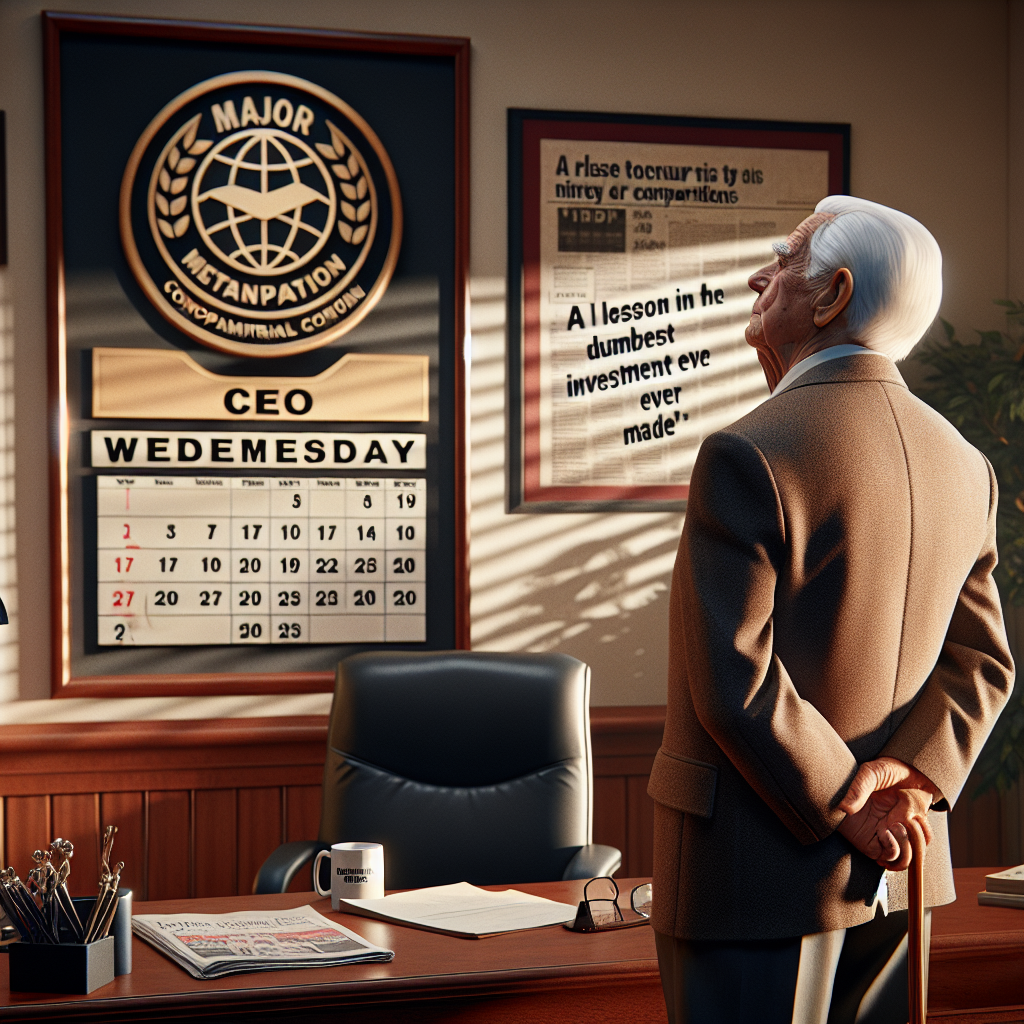
After serving as the CEO of Berkshire Hathaway for sixty years, Wednesday (December 31) marked Warren Buffett’s last day before stepping down. He described the role as a lesson in “the dumbest investment he ever made” in his lifetime.
At 95 years old, Buffett will continue as the Chairman of the company’s board and plans to continue his frequent visits to the headquarters in Omaha, just as before. While it’s not a complete retirement, it does signify the end of his personal “investment legend era.”
Buffett mentioned that going forward, he will take a more low-key approach and remain quiet, transferring all decision-making power to the new CEO Greg Abel. Abel, who has been Vice Chairman since 2018, has overseen non-insurance businesses for an extended period.
Every day, millions of people engage in buying and selling investments, but no one has been able to consistently maintain a stellar investment record like Buffett, let alone achieve such a remarkable track record over such a long period of time.
Buffett’s investment strategy, centered around “float” and a portfolio of diverse companies, transformed a textile mill into a massive corporate empire valued at over $1 trillion.
Currently, Berkshire owns stocks in banks, railways, insurance companies, as well as various companies such as Apple Inc., Coca-Cola, and DQ Ice Cream. Since Buffett took over as CEO, the company’s stock price has surged by over 5.5 million percent, while the S&P 500 index during the same period has returned a mere 39,000 percent. In other words, if you invested $100 in Berkshire stock in 1965, it would be worth nearly $5.5 million today.
Buffett is not only a practitioner of investment but also a master of investment philosophy. He continuously learns and improves, turning past mistakes into valuable experiences over his 60-year successful career, making it a testament to the continuous pursuit of wisdom and practice.
Humorously, Buffett once described his investment philosophy as striving to invest in businesses that even fools can run because sooner or later a fool will take over.
Seth Klarman, the Chief Executive Officer of Baupost Group and a renowned figure in the investment world, in an article titled “How Buffett Did It” on December 18, 2025, stated that Buffett embodies and interprets traditional American values—free markets, democratic governance, patriotism, and enduring common sense.
During times of market panic, Buffett always publicly announces buying orders when popular stocks plunge, while expressing confidence in the market, national finances, and capitalism to boost market confidence. He has always been an unabashed supporter of America, believing that in the long run, situations will eventually turn around for the better.
With a personal wealth exceeding $150 billion, Buffett ranks among the wealthiest individuals globally. Despite his immense wealth, he remains unburdened by money.
Buffett has donated stocks valued at around $208 billion and instructed his children to donate almost all of the remaining assets in the future, continuing his charitable commitments.
Throughout his adult life, Buffett has resided in the same house in Omaha, maintaining the same circle of friends for decades. He has not indulged in collecting luxury cars, yachts, buying expensive artworks, or acquiring multiple vacation properties.
In essence, Buffett’s vast wealth has not changed him, a rarity among most wealthy individuals.
Klarman mentioned that at least to some extent, Buffett’s enduring popularity stems from his unwavering humility, clear cognition, pure curiosity, and eternal gratitude towards life’s circumstances.
Throughout his entire professional career, Buffett has experienced market booms and busts, financial crises, world wars, nuclear threats, the COVID pandemic, witnessing numerous businesses go through cycles of birth, prosperity, decline, and demise. However, regardless of the circumstances, Buffett has always moved forward steadily and composedly.
He modestly stated, “The work is simple, but not easy.”
At the 2025 shareholder meeting, Buffett remarked, “The luckiest day of my life was the day I was born in America…. We are an incredibly lucky country, and I am an incredibly lucky person.”
In early December, Berkshire announced an additional layer of management structure, appointing the CEO of NetJets to help coordinate its 32 consumer and service business units, indicating a transition to a new management approach for Berkshire.
CNBC’s veteran Berkshire/Buffett reporter Becky Quick mentioned on Wednesday (December 31) that Abel has been in charge of the non-insurance operations for “many years” during “most of the time,” handling many issues that Buffett preferred not to deal with in an “excellent manner.”
She believes that Buffett and his ownership of 30% of the company’s stock will to some extent assist Abel in preventing anyone from saying, “You’re not Warren Buffett, this isn’t your company.”
According to Quick’s observations, Abel’s leadership style leans more towards centralized management, differing from Buffett’s historically advocated “highly autonomous” style. Nevertheless, Buffett himself has acknowledged that Abel’s management style fosters greater autonomy among managers.
In Buffett’s final year as CEO, Berkshire’s 2025 full-year performance lagged behind the S&P 500 index.
The market’s reaction to Buffett stepping down has been mixed. Berkshire Class A shares initially dropped by 14.4% after news of Buffett’s year-end departure in May, but partially rebounded by year-end, surpassing $750,000 per share.
In 2025, Berkshire’s stock accumulated a nearly 10.9% increase, trailing the S&P 500 index by about 7 percentage points.
The S&P 500 index nearly entered a bear market in April following President Trump’s announcement of tariff increases but later rebounded, accumulating a 16.4% increase in 2025.