
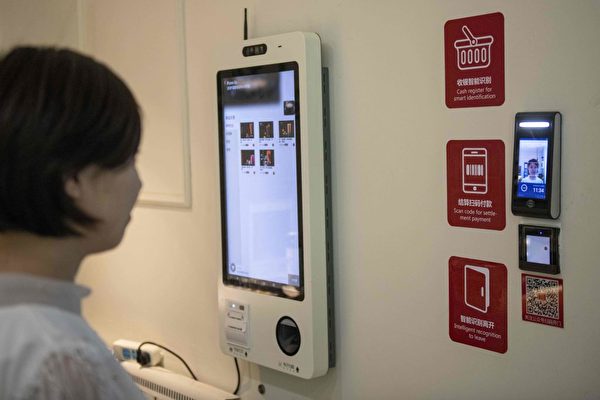
Shenzhen Futian, Luohu, Liantang, Huanggang, and the Hong Kong-Zhuhai-Macao Bridge and other mainland ports have currently implemented an “AI Face Recognition” smart customs clearance system. Residents of Hong Kong and Macau, under certain conditions, no longer need to present the “Mainland Travel Permit for Hong Kong and Macau Residents” (commonly known as the “Home Return Permit”) to complete entry and exit procedures. However, Hong Kong citizens have reported incidents of being identified as someone else during the facial recognition process at customs.
Recently, a man from Hong Kong shared his personal experience on the social platform Threads. He recounted an incident where he attempted to use the facial recognition system at the Huanggang Port without carrying his Home Return Permit. However, the system identified him as a “different person”, leading to being detained for investigation by border staff, nearly getting stuck at the port. Fortunately, with the help of a friend, he was able to successfully pass through customs. Reflecting on the incident, he noted: “This was a lesson learned, always remember to carry your documents when crossing the border.”
The man mentioned that during his attempt at the Huanggang Port using facial recognition, the system initially failed to recognize his facial information. After several attempts, the device finally completed the identification process, but displayed the personal information of an unknown individual.
He described how he tried to take off his glasses, rearrange his hair, and only then did the system show “identification successful”. However, his fingerprint verification subsequently failed. His friend had already passed through customs and upon looking back at the device screen, they noticed the displayed information did not match the man’s identity, prompting them to alert him of the abnormality.
Border staff then intervened to investigate and requested the man to provide identification for verification. Due to not having his Home Return Permit, he was unable to immediately prove his identity, and was escorted to the side for further processing. Eventually, after his friend retrieved his documents, he was able to successfully complete the clearance procedures.
The man emphasized post-incident that this experience made him realize that facial recognition for customs clearance cannot completely replace physical documents. He stressed the importance of always carrying identification when crossing the border.
The incident sparked widespread discussions among netizens with many sharing similar encounters. Some netizens mentioned facing similar problems at the Liantang port where they were also identified as a “different person” and had to resort to using documents for clearance. Others reported cases where the system displayed completely unfamiliar names, including identities from Taiwan.
Some netizens speculated on reasons for facial recognition failures, such as system errors, improper positioning, or the presence of individuals with similar appearances. People also highlighted that facial recognition is just one method of identity verification and should be supplemented with other verification methods.
Many netizens and those involved in the incidents emphasized that while “AI Face Recognition” speeds up the customs clearance process, physical documents remain crucial in cases of system identification errors, equipment malfunctions, or manual inspections. For travel to the mainland, it is recommended to always carry your Home Return Permit to prevent any disruptions to your itinerary.