
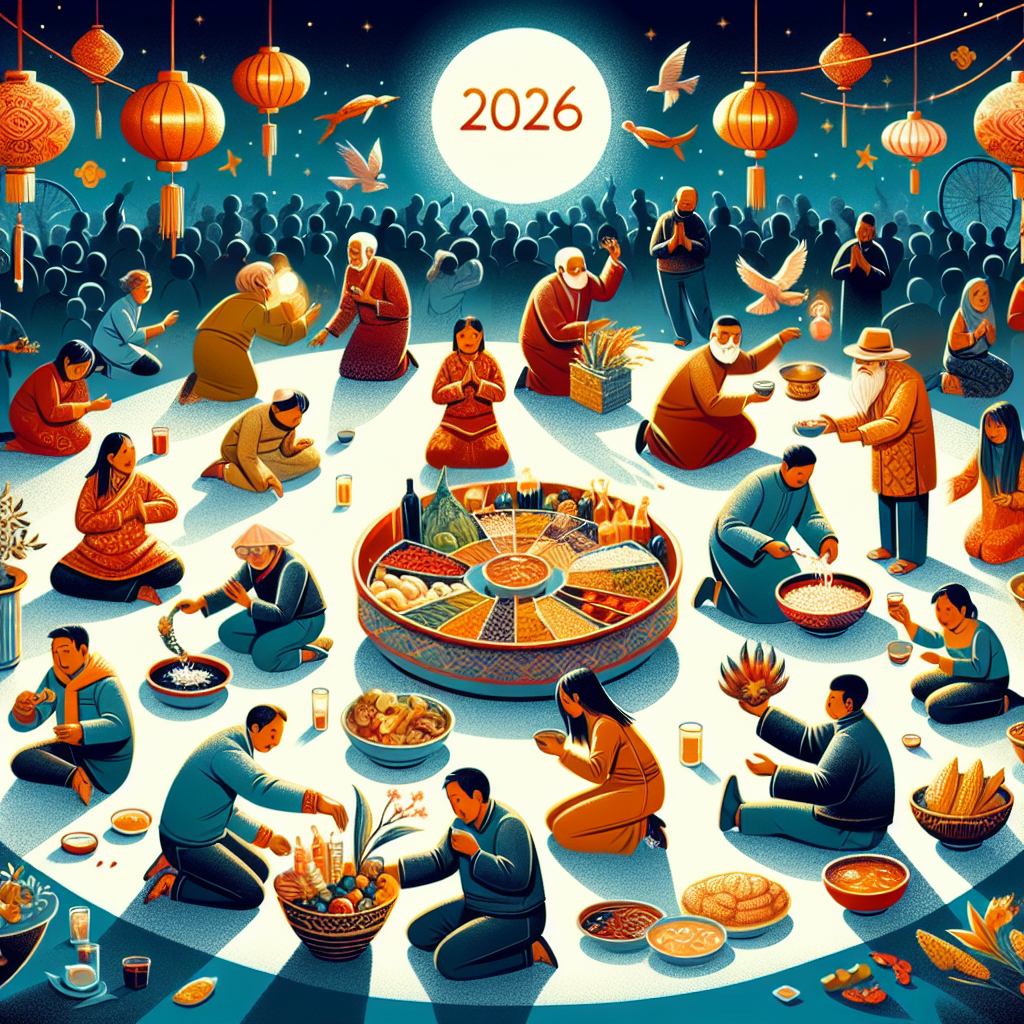
On New Year’s Eve, in addition to parties and spending time with family, people around the world engage in seemingly quirky, and sometimes even “hardcore,” rituals to ensure a successful year ahead in 2026.
In many cultures, food is not only a part of celebrations but also symbolizes wealth and love.
Eating 12 grapes under the table:
This is a tradition originating from Spain and spread in Latin America. According to Vogue, each grape represents one wish for the new year. Some believe that eating grapes under the table increases the chance of finding “true love.”
Circular food for prosperity:
In the southern United States, the traditional dish “Hoppin’ John” combines black-eyed peas with greens symbolizing money, aiming for wealth. Italians eat lentils with pork, which resemble coins, to attract wealth.
New Year’s soba noodles:
In Japan, people traditionally eat toshikoshi soba on New Year’s Eve. The thin and easily breakable soba noodles symbolize longevity and cutting away the misfortune and troubles of the past year, aligning with the Western belief of cutting negative energies for luck.
Taboos:
Avoid eating lobster. Food historian Linda Pelaccio warns that lobsters walk backward, symbolizing setbacks in luck and goals for the new year.
If eating grapes isn’t enough, people worldwide partake in various physical action rituals for good luck:
Crystal ball and confetti drop:
In Times Square, New York, the Waterford Crystal Ball, symbolizing hope, slowly descends. The theme for 2026 is “The Gift of Harmony,” aiming to pray for global peace and unity. Subsequently, colorful confetti weighing 3,000 pounds showers down, with many containing wishes written by people worldwide on the Wishing Wall, symbolizing the collective manifestation of millions of wishes at the stroke of midnight in the New Year.
Breaking dishes at neighbors’ doorsteps:
In Denmark, people throw old plates at friends’ doorsteps. The more broken pieces at the door, the better the social relations and luck for the New Year.
Running around the streets with an empty suitcase:
Planning a trip to Miami in 2026? Latin Americans practice walking around the neighborhood with an empty suitcase, believed to attract more travel opportunities.
Knocking walls with bread:
In Ireland, people knock the walls with hard bread to drive away evil spirits, ensuring abundant food for the new year.
Jumping seven waves:
In Brazil, people gather on beaches wearing white clothing, signifying purity. At midnight, they jump over seven waves, making a wish with each jump, believed to receive blessings from the sea goddess for a smooth year ahead.
According to InStyle magazine, the color of underwear worn on New Year’s Eve is crucial for wish fulfillment:
Red:
Brings passion and love.
Yellow:
Symbolizes wealth, suitable for those desiring a raise.
Green:
Symbolizes freedom and life.
If you want to buy these “lucky gear” at the last minute, note that Target closes at 9:00 PM on New Year’s Eve, and Victoria’s Secret typically closes in the evening.
According to Chinese tradition, doing laundry or cleaning on January 1st may wash away good luck. Sweeping the floor can sweep prosperity out the door, while laundering clothes can wash away your romantic fortunes. Therefore, it’s recommended to postpone household chores until January 2nd.
In the United States, New Year’s Day is a “legal holiday.” With the USPS, banks, and government offices closed, it provides the perfect excuse for people to delay trivial tasks until January 2nd and enjoy a day of complete relaxation.
In Taiwan, a unique blend of technology and customs showcases distinctive rituals for good luck:
Digital blessings:
Michael Liu, former CEO of Taipei 101, notes that as the building’s facade counts down to display “2026” and “Happy New Year,” it’s traditionally believed to manifest positive energy, projecting the wishes of all Taiwanese on the skyline, conveying resilience and hope.
Seizing the opportunity:
People gather in Taimali, Taitung, to welcome the “first dawn of the year” in Taiwan, believing in capturing the strongest good luck energy for 2026.
Competing for incense and lighting lamps:
Traditional temples hold “opening the temple gates” ceremonies, with people racing to insert the incense first to pray for priority blessings, and lighting “light of brightness” lamps to seek a bright future, disaster relief, and dispelling misfortune.