
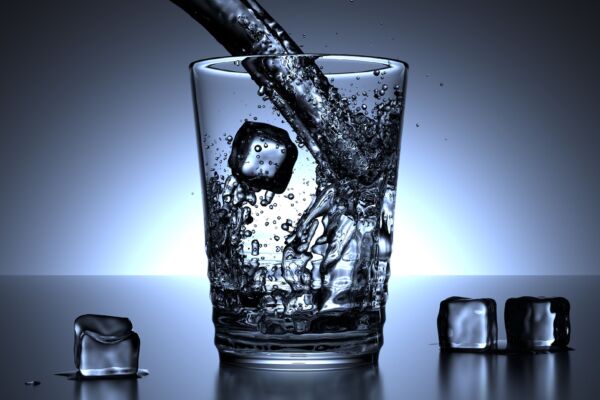
When you order a drink at a restaurant or bar, you may notice that the ice cubes they provide are crystal clear, looking much better than the slightly cloudy ones you take out of your home fridge. So, how are these transparent ice cubes made? Let’s take a look at what the experts have to say.
Professor Polly Burey of the University of Southern Queensland in Australia wrote on The Conversation website that transparent ice cubes are actually made with regular water, with the difference lying in the freezing process. This starts with understanding the physics and chemistry principles behind it.
Burey explains that the typical method of making ice at home involves pouring water into an ice tray, placing it in the freezer compartment of the refrigerator, and allowing the water to freeze. As the water begins to freeze, the ice forms inward in various directions, encapsulating floating substances in the water such as air bubbles, dissolved minerals, and gases.
During the freezing process, numerous tiny air bubbles and other impurities are pushed towards the center of the ice cube, where they get trapped inside, resulting in the slightly cloudy appearance of the final ice cube. When light shines on the ice cube, scattering occurs, causing the trapped bubbles and impurities to collide in the center of the ice cube, creating the cloudy appearance.
Research has shown that even using filtered, boiled, or distilled water to make ice can still result in a cloudy appearance. This is because the key to producing clear ice cubes does not lie in the water quality, but rather in the freezing method. The main technique for successfully making transparent ice cubes is “directional freezing.”
“Directional freezing” involves allowing water to freeze in a single direction, rather than in various directions simultaneously as in a regular ice tray. This way, air and impurities are pushed in the opposite direction of the freezing water, keeping the ice cube clear with only a small portion appearing slightly cloudy.
This means that the sides of the ice tray need to be insulated to direct the freezing of water in one direction, typically from top to bottom. This is because heat transfer and the phase change from liquid to solid occur more quickly on the exposed top surface than on the insulated sides.
Burey suggests that the simplest way to make transparent ice cubes at home is by using an insulated container. You can use a small cooler (ice bucket), insulated cup, or even commercially available insulated ice trays designed for making clear ice cubes.
Fill the insulated container with water, place it in the freezer, and check on it periodically. When all the bubbles and impurities have concentrated at the bottom to form a cloudy area, you can either discard this water before the ice completely freezes or allow the ice to freeze completely, then cut off the cloudy part with a serrated knife, and finally cut the ice into small pieces for use in drinks.
Commercially available insulated ice trays often come with instructions on how to remove the cloudy part. By following these instructions, you can enjoy clear ice cubes.
Transparent ice cubes not only look beautiful but also have a higher density and melt more slowly because they lack air bubbles and impurities. This also means they can gently dilute beverages without adding unexpected flavors that may contaminate the drink.
Furthermore, transparent ice cubes are less likely to shatter, making it easy to cut them into various shapes to enhance the visual appeal of your drinks.
It is worth noting that a previous ice technician revealed that the ice cubes added to beverages in restaurants and hotels could make you sick, so it’s best not to add ice cubes to avoid discomfort.
This is because after inspecting a large number of ice machines, it was found that the water in most of the tanks was dirty, with rust stains or dirt, and this water was used to make ice cubes. With ice machines rarely being cleaned, people are advised to think twice before using these ice cubes.