
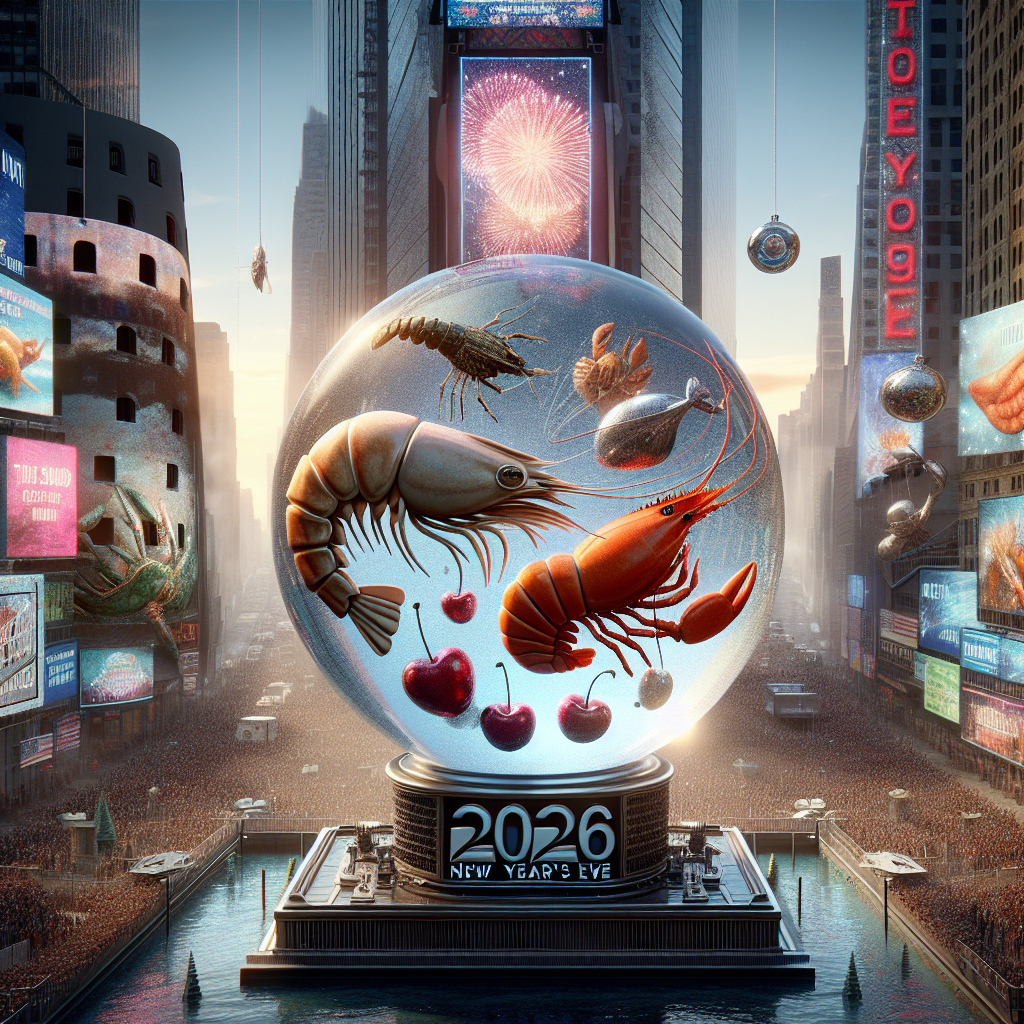
On the eve of New Year’s Day in 2026, as the iconic giant crystal ball slowly descends in Times Square, New York, the “New Year’s Eve Drops” across the United States have showcased creative local features that are uniquely tailored to each region.
From enticing giant prawns to sparkling cherries, luminous cowboy boots to a queen sitting inside a high heel, these seemingly whimsical traditions often carry the underlying logic of promoting local specialties and boosting winter tourism through brand marketing. They also deeply connect to the historical background and cultural identity of the respective communities.
According to reports from “USA Today,” many towns in the United States choose to create giant models of their most representative agricultural products to drop down at the stroke of midnight.
Boise, Idaho:
Known as the “Potato State,” Boise drops a giant glow-in-the-dark potato. While it looks realistic, it is actually made of polystyrene resin and hand-painted.
Amelia Island, Florida:
As the birthplace of modern shrimp trawling, Amelia Island drops a giant LED custom shrimp. Madison Jozsa, the public relations director for the tourism bureau, stated that this choice makes logical sense.
Whiting, Indiana:
Once a hub for Polish immigrants, the city of Whiting pays tribute to Polish culture by dropping a 10-foot-long pierogi model into a “boiling pot.”
Lebanon, Pennsylvania:
In a more “hardcore” fashion, Lebanon used to drop a 12-foot-long real bologna sausage instead of the delicate crystal ball in New York. Due to hygiene reasons, a glowing model is now used. However, the local sausage factory still donates an equal weight of real sausages to charity, transforming this rugged rural tradition into community philanthropy.
Sister Bay, Wisconsin:
Sister Bay drops a 300-pound sparkling cherry to attract winter tourists. Ellie Soderberg-Guger from the Sister Bay Information Center told “USA Today” that this tradition not only attracts visitors but also has earned the region multiple tourism awards and government funding.
Apart from food, some cities opt for symbols representing their identity or culture.
Key West, Florida:
Known for its “visual spectacle” on New Year’s, Key West has been dropping an 8-foot ruby-red giant high heel for over two decades, with a performer inside. Descending slowly onto Duval Street, the performer waves to thousands of spectators below and provides live commentary, becoming a lucrative tourist attraction.
Raleigh, North Carolina:
The “City of Oaks” drops a 1,200-pound giant acorn made of copper and steel.
Nashville, Tennessee:
The “Music City” naturally drops a 16-foot LED giant musical note accompanied by a 90-second fireworks display.
Prescott, Arizona:
Prescott drops a 6-foot glowing cowboy boot from the historic “Whiskey Row” building.
In some regions, animals (either models or live ones) become the centerpiece of the celebrations.
Bethlehem, Pennsylvania:
As the birthplace of the famous Peeps marshmallow chick, Bethlehem drops a 400-pound glowing yellow chick. Interestingly, to accommodate family audiences, it drops early at 5:15 PM so that parents do not have to keep their young children awake late to experience the New Year countdown.
Fayetteville, Arkansas:
Home to the strangest “Possum Drop” in the United States, Fayetteville’s event has shifted from a live possum to a model due to animal protection protests, yet it continues to attract attention with its local charm.
This transformation of “eccentric traditions” into “city calling cards” has become an effective means for small towns to generate traffic and boost the local economy in the digital marketing environment of 2025.