
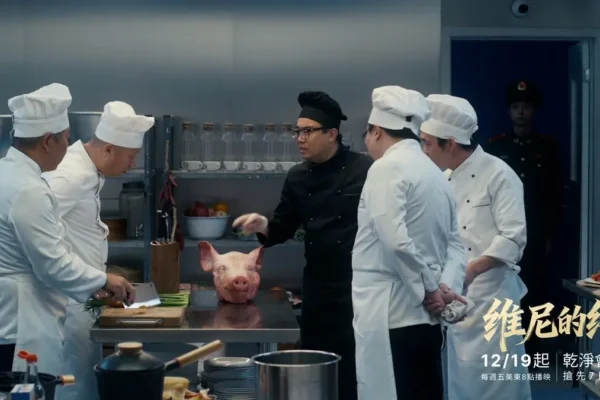
Recently, under the strong recommendation of a friend, I, who have never been interested in political dramas, took a look at the trending short film “The End of Winnie” (“維尼的終局”). In today’s world where the CCP’s “cross-border suppression” and “unrestricted warfare” prevail, even countries, high-level politicians, and mainstream media are willing to submit to the CCP for their own benefit. Only media like New Tang Dynasty Television, with firm anti-communist stance, dare to blatantly expose the “evil nature of the Communist Party” in a tone of dark humor and satire. It is praiseworthy and deserves active support!
In the second episode, I heard Lady Li utter two sentences that were righteous and chilling at the same time: “Do not fail the country, do not fail the people.” If these words came from loyal officials and upright generals, how noble and resounding they would be. However, in the context of the CCP teetering on the brink of collapse and the magical realities happening within the walls, these eight words have become the most ironic and sorrowful footnote of the entire drama.
History always repeats itself. The more brutal and incompetent rulers are, the louder they shout about righteousness and morality. Lady Li’s words accurately outline the essence of authoritarian systems: utter shamelessness. When power is unchecked, rulers not only monopolize resources but also monopolize the authority to interpret “morality”. They can reach into the pockets of the people while affectionately claiming it is for the “greater good of the country”.
What we see in mainland China today is a massive meat grinder after resource scarcity. When the national treasury is no longer full, the scythe of the authorities no longer discriminates. It is a cruel food chain: first are the merchants. The once economic engines, beneficiaries of reform and opening up, have now become the first fat sheep to be slaughtered. Even prominent figures like Jack Ma have to choose to fade away from the stage to survive.
Next are the common people. Failed real estate projects, risky financial products, frozen accounts for no reason – the life savings of ordinary people become sacrifices to fill the fiscal black hole. Lastly, the scythe will eventually swing towards officials within the system. No one is safe, even those executing orders will eventually be sacrificed. The so-called “Do not fail the country, do not fail the people” translates to: “To maintain my power, I can betray everyone.” The people living under this system are innocent and suffering.
Turning our gaze back to Taiwan, we see democracy and freedom as natural as breathing. We have the right to oversee the government, the right to express discontent on the streets without fear of disappearing the next day. This happiness and peace were hard-won by generations. However, this comfort has seemingly dulled the crisis sensitivity of some Taiwanese.
In Taiwan’s political arena, we see another strange scene. While the authoritarian system across the strait is crumbling and its people are struggling to survive in frequent protests, some politicians in Taiwan, for personal political gain, continue to glorify that system and even eagerly want to “submit” to it. These politicians use freedom of speech to undermine freedom, use democratic tolerance to sell the poison of totalitarianism. They cooperatively engage in cognitive warfare with the CCP, deceiving and paralyzing the people, portraying the other side as a promised land flowing with milk and honey while turning a blind eye to the glaring social dilemmas and human rights abuses.
Some Taiwanese people’s selective naivety has become easily manipulable in the eyes of politicians. Perhaps due to minor dissatisfaction with the status quo or being deceived by false information, some actually believe that dancing with the wolf can bring about peace, that a government cruelly oppressing its own people will treat us kindly across the strait. This is as absurd as watching a neighbor’s house on fire but still thinking about seeking shelter there.
Watching the manipulated characters in the drama, and seeing the young faces shouting in the lockdowns, kneeling in front of banks to retrieve their savings, and raising A4 papers in white coat protests in real news, what we feel is not schadenfreude, but deep compassion. They, like us, should have a life of equal dignity. Their suffering is entirely because they were born under the wrong system. That system is like a giant black hole, devouring trust, kindness, and justice, leaving only lies and fear. Can we still head towards that?
“The End of Winnie,” although wrapped in humor and satire, its core is serious and heavy. It is like a mirror that reveals the ugliness and fear of authoritarians, as well as the brilliance and weaknesses of human nature. Watching this drama, for Taiwanese viewers, is more like an alarm bell. It reminds us: do not believe those who talk about not failing the people yet cunningly seek personal gain; cherish our hard-earned vote and freedom. Because democracy has never been priceless!
Lies will eventually be exposed, and the end of authoritarianism will also come. But before that day arrives, only by staying vigilant, rejecting lies, holding kindness and compassion in our hearts, can we not fail ourselves and not fail this era.