
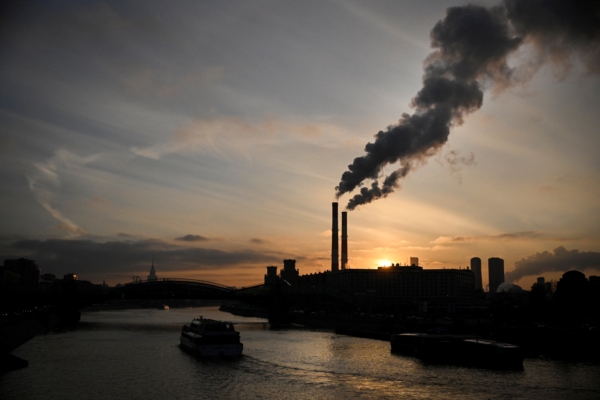
According to the Purchasing Managers’ Index (PMI) released by S&P Global, the manufacturing industry in Russia continues to deteriorate. In December, manufacturing activity contracted at the fastest pace since March 2022, reflecting a simultaneous decline in output and new orders, leading to weakened business confidence.
This indicator reflects a short-term cooling of the economy. Analysts point out that in the context of a wartime economy, Russia is diverting more resources towards the military sector, putting pressure on the civilian sector, resulting in weakening.
Data shows that in December, the Russian manufacturing PMI dropped from 48.3 in November to 48.1. A PMI below 50 indicates contraction, and this marks the seventh consecutive month of contraction for Russia.
The report highlights that manufacturing output has been declining for 10 consecutive months, with the decline accelerating to the most severe level in nearly three years. Companies generally report weak market demand and a decrease in new orders.
Meanwhile, despite sluggish demand, businesses mention that supplier prices and raw material costs are rising, leading to a cost inflation reaching the highest level since March, prompting some manufacturers to raise product prices and pass the increased costs onto customers.
Business optimism for the coming year has dropped to the lowest level since May 2022, indicating a continuing weakening of confidence in the economic outlook.
The latest data from the Russian Federal State Statistics Service (Rosstat) further shows that the civilian economy is facing deeper pressures.
According to official Russian statistics, in November 2025, Russia’s overall industrial output declined by 0.7% year-on-year, with manufacturing decreasing by 1%, marking the first contraction since February 2023. Non-resource industries experienced more pronounced declines, with food production down by 0.8%, the first annual negative growth in 15 years, wood product output declining by 9.1%, chemical products by 1.7%, and a significant 34.1% drop in automobile manufacturing output.
Looking at the first 11 months of 2025, clothing production in Russia saw a 2.4% decline year-on-year, furniture decreased by 7.5%, automobile manufacturing output dropped by 12.6%, reaching the lowest point since 2022.
Some sectors experienced even larger declines: tractor production fell by 61.6%, bulldozers by 53.7%, elevators by 37.2%, and passenger railway carriages halved.
Foreign media analysis suggests that prioritizing resources and labor in the military industry during wartime may squeeze the civilian sector, putting pressure on some basic manufacturing industries.
It is noteworthy that even the military-related manufacturing that has been supporting the Russian economy is showing signs of slowing growth. In November, the output of the category including “metal products,” which includes military equipment, unexpectedly declined by 1.6% year-on-year, while the production growth of tanks and armored vehicles slowed from 41% in October to 6.4% in November.
Elina Ribakova from the Peterson Institute for International Economics stated that the data indicates that Russia’s economy is no longer able to support simultaneous growth in the military complex and the civilian sector.
Under Western sanctions, Russia’s supply chains are shifting from Europe to China. A report released in December by the Atlantic Council Eurasia Center indicates that approximately 90% of the key dual-use goods imported by Russia in 2023 involve Chinese-related supply chains, showing a deepening reliance on China.
Additionally, the war in impoverished regions of Russia has resulted in a distorted phenomenon called “Deathonomics.”
The Atlantic Council’s report highlights the Republic of Tyva near the Mongolian border, one of the regions with the highest casualties in Russia. However, due to substantial casualty compensation and military service bonuses flowing in, it has led to retail and investment growth in the area.
This wealth effect built on human losses reflects a profound distortion in Russian social structure, and military-related income may not necessarily spill over universally to the local population.
Looking ahead, while the Russian government predicts a moderate economic recovery in 2026, international organizations hold pessimistic views. The World Bank expects the Russian economy to stagnate at least until 2028, with some independent economists warning that without structural reforms, Russia could face nearly a decade of near-zero growth.
The Atlantic Council report also points out that Russia’s National Welfare Fund’s liquid assets have shrunk by nearly 60%. Analysts believe that if wartime spending remains high, and against the backdrop of changing external conditions and slowing growth momentum, Russia will face more pronounced fiscal pressures in the future.