
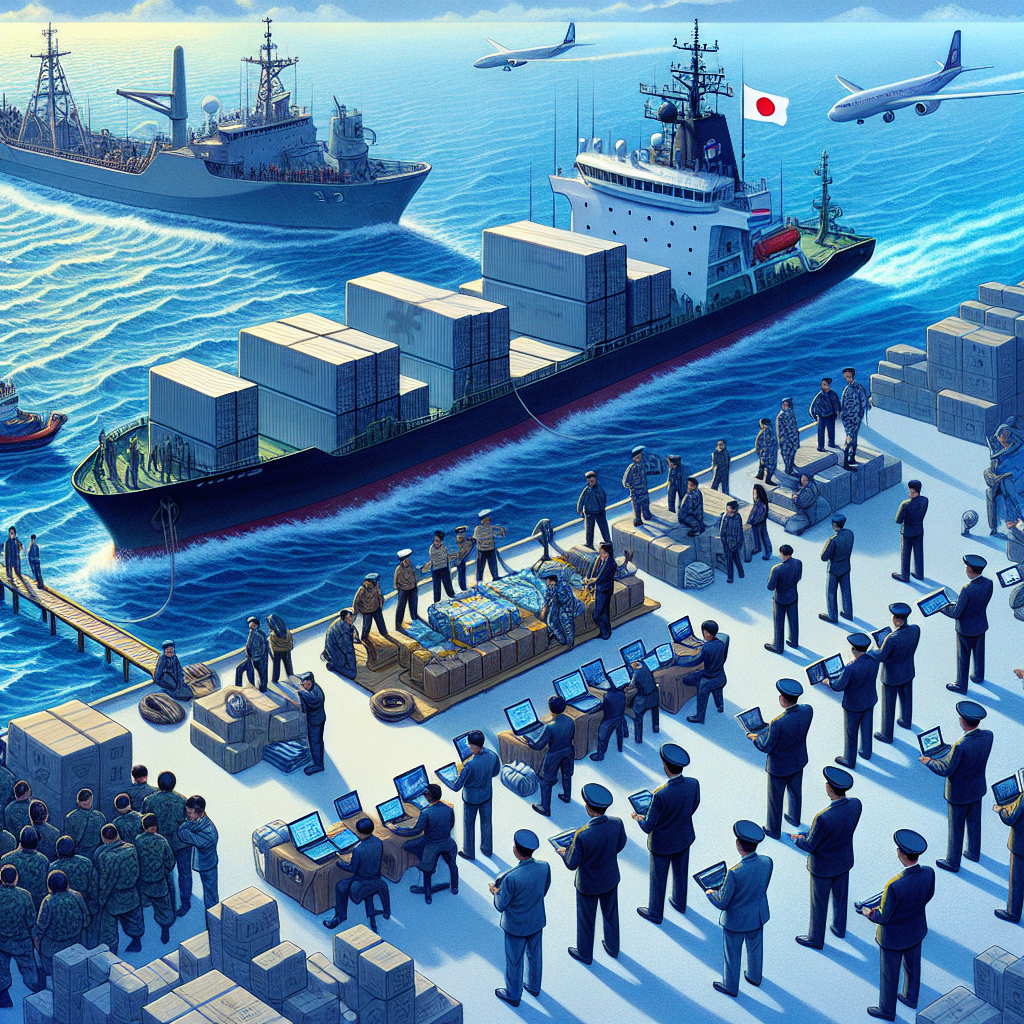
Japan is planning to strengthen its assistance to South American countries in order to combat the illegal fishing activities of Chinese distant-water fishing fleets. The Japanese government has stated that it will provide monitoring equipment to various countries to help enhance their maritime patrol capabilities. This action signifies that the international community is joining forces to combat what is considered a major global maritime security threat posed by China’s distant-water fishing industry.
Many experts have issued warnings, stating that Chinese distant-water fleets not only plunder the fishing resources of other countries on a global scale but also are a part of the CCP’s “civil-military integration” strategy, possessing the capability to provide military intelligence and engage in “gray zone” operations, posing a broader strategic threat.
According to Japanese plans, Japan will provide surveillance drones, inflatable patrol boats, and imaging analysis equipment through the United Nations Office on Drugs and Crime to Ecuador, Peru, Argentina, and Uruguay to strengthen their maritime patrol and law enforcement capabilities. The Japanese Ministry of Foreign Affairs has allocated a budget of approximately 300 million yen (about $1.9 million) for this project.
Japanese officials have noted that this equipment can assist coastal countries in analyzing images captured by drones to identify registration information of suspicious vessels, crew size, and navigation routes, thereby addressing the inadequate maritime patrol and evidentiary capabilities in some South American countries.
In recent years, Chinese distant-water fishing fleets have been frequently spotted in the waters around the Galapagos Islands of Ecuador, and have been accused of sailing south along the coast off Peru after turning off their GPS responders. On the Atlantic side, there have also been multiple confirmations of Chinese fleet activities in the waters around Argentina and Uruguay. Concerned countries suspect that some vessels are engaged in “illegal, unreported, and unregulated” (IUU) fishing activities, and may even be conducting seabed mapping activities, raising security and sovereignty concerns.
The Japanese government has emphasized that these issues are not unique to South American countries. Chinese fishing vessels have also been reported operating illegally in the Oyashio region near the Noto Peninsula in Ishikawa Prefecture, as well as incidents along the Pacific coast of northeastern Japan.
Japanese authorities express their desire to support countries facing similar challenges in improving their maritime law enforcement capabilities.
Prior to Japan taking action, U.S. lawmakers had already initiated efforts earlier this month to combat the increasingly rampant illegal fishing activities of Chinese distant-water fleets globally.
In early December, Gregory Meeks, the chief Democratic lawmaker of the House Committee on Foreign Affairs, along with Young Kim, the chair of the Subcommittee on Asia, the Pacific, and Nonproliferation, introduced the Stop Illegal Fishing Act bill.
The legislation’s proposed sanctions include authorizing the president to freeze assets of shipowners, captains, and high-level operators involved in IUU fishing, as well as denying or revoking entry visas for relevant individuals, and requiring the executive branch to regularly submit enforcement reports to Congress to ensure accountability.
China expert Jia Dun Zhang has issued deeper warnings regarding the intentions of Chinese fishing fleets.
On December 18, Zhang wrote in a submission to The Hill that China currently possesses 57,000 “industrial fishing vessels” and from 2022 to 2024, China had operated in the exclusive economic zones of over 90 countries, totaling more than 22 million hours.
Zhang emphasized that the threat posed by Chinese fishing fleets goes beyond fishery resources. He cited statements from James Fanell of the Geneva Center for Security Policy and Professor Raul Pedrozo of the Naval War College, who believe that the illegal fishing activities of Chinese distant-water fishing fleets are not merely commercial operations but part of a “civil-military integration” plan.
The article pointed out that Chinese vessels are equipped with the BeiDou navigation system, effectively serving as floating maritime surveillance stations for the Chinese authorities to collect information on the locations, deployments, and operational areas of other countries’ military forces, coast guards, and fishing fleets.
Fanell suggested that these fishing fleets include members of the People’s Armed Forces Maritime Militia, allowing for “kinetic operations” to be carried out without triggering full-scale warfare.
Pedrozo highlighted that China is using its maritime militia to coerce and intimidate legal fishermen in open seas and foreign exclusive economic zones to advance its long-term maritime strategic goals in the Yellow Sea, East China Sea, and South China Sea.
Cleo Paskal from the Foundation for Defense of Democracies indicates that Chinese fishing fleets not only deplete fishing resources but may also be involved in other illegal activities such as drug and human trafficking.
Moreover, the human rights issues of laborers on illegal fishing vessels must not be overlooked. Reports have shown that many workers from Southeast Asia endure forced labor, low wages, and abuse under harsh conditions. Japan and the United States’ interventions are not only aimed at protecting marine ecology but also seen as crucial steps in improving international maritime human rights protection.