
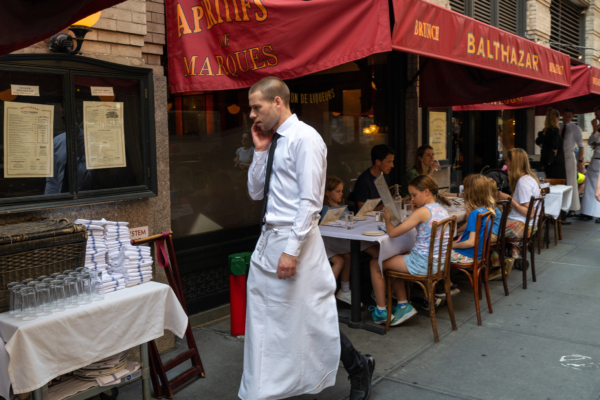
After the federal government introduced the “No Tax on Tips” policy, the New York State government has yet to follow suit, leading to a situation where restaurant and service industry workers still have to pay state income tax on their tips, causing strong dissatisfaction among them. Several English-language media reports have pointed out that workers in the service industry within the state and industry professionals have criticized Governor Hochul for only focusing on maintaining tax revenue, while neglecting the livelihood of grassroots workers, potentially exacerbating the issue of staff shortages in the food and service industry.
According to the new federal regulations, eligible service industry workers can deduct up to $12,500 annually from their tip income on federal tax returns; for married joint filers, the limit is $25,000. Overtime wages also qualify for the same deduction amount. This policy applies to tax years from 2025 to 2028, covering nearly 70 occupations. The policy is seen as an important measure to reduce the burden on grassroots workers and increase their actual income, particularly affecting restaurant servers, bartenders, and hotel staff who rely on tips for their livelihood.
However, the New York State government has not yet adjusted its state tax system accordingly, meaning that even though tips are tax-free at the federal level, tip income still needs to be subject to state income tax. Many interviewed workers in the food and beverage industry expressed to the New York Post that under the high cost of living in New York due to high rents and prices, such a practice essentially “blocks their path.”
Reports cited several bar and restaurant staff members stating that if New York could adopt the tax-free policy, it could save them considerable tax money each year, which could be used to pay rent, medical expenses, and daily bills. Conversely, the state government’s stance may only force workers to consider seeking employment in other states. Some business owners also warned that in the long run, this could further exacerbate the already severe staffing shortages in the food and beverage industry.
With cash transactions gradually decreasing, many workers also mentioned that credit card payments make tip income more easily subject to full tax reporting, further compressing their actual income.
Industry criticisms have squarely targeted the state government for only caring about revenue collection, contradicting its stated policy direction of “reducing the cost of living.” Some interviewees believe that if other states continue to offer more favorable tax environments, New York may be at a disadvantage in attracting and retaining labor in the service industry.
Hochul has recently emphasized “affordability” as a key focus of her administration, proposing measures such as issuing inflation rebate checks and promoting child tax credit offsets, but also supporting the implementation of the Manhattan congestion pricing plan.
New York State Senator George Borrello has proposed legislation suggesting that the state should follow the federal government in providing tax deductions for tip and overtime income.
The New York State government has not yet presented a clear tax-exempt alternative plan or timetable. Governor Hochul’s spokesperson stated that the state government will evaluate the impact of federal tax changes on the state budget in the upcoming budget discussions and continue to seek ways to alleviate the burden on New York residents.
Some Republican officials have criticized the Democratic-led New York State for refusing to cooperate with federal policies due to political positions, resulting in the grassroots workers bearing the actual costs. Governor candidate and Nassau County Executive Bruce Blakeman has accused the governor of blocking substantive tax reductions, potentially causing service industry workers to lose thousands of dollars annually.