
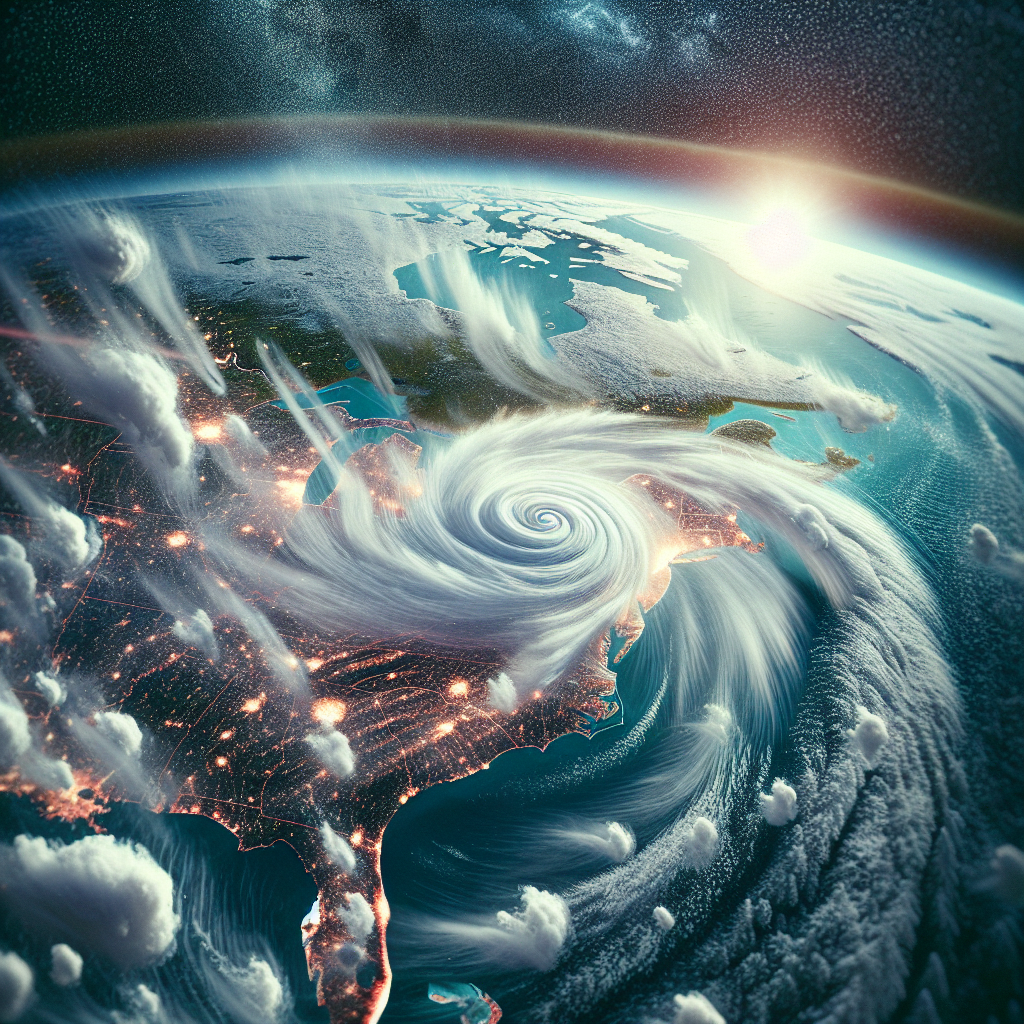
The National Weather Service (NWS) in the United States issued a warning on Sunday, December 28th, stating that a collision between Arctic cold air and warm air will rapidly intensify into a “bomb cyclone” in the Midwest and Great Lakes regions, bringing heavy snow, blizzards, extreme cold, and destructive winds.
According to data released by the National Weather Service on Sunday afternoon, over 8 million people are within the winter storm warning area, with nearly 2 million people under blizzard warnings.
A “bomb cyclone” refers to a rapidly developing low-pressure system that causes a significant drop in atmospheric pressure in a short period of time. This weather system is known for its devastating impact.
According to a report from NPR News quoting Chief Weather Forecaster Bob Oravec, east central Minnesota, northern Wisconsin, and the Upper Peninsula of Michigan are expected to receive 6 to 12 inches (about 15.2 to 30.5 cm) of snow within the next 24 hours.
Parts of the Upper Peninsula of Michigan are forecasted to experience blizzard conditions from Sunday night to Monday evening, with near-zero visibility that could lead to power outages.
Areas along Lake Superior could see over a foot (about 30.5 cm) of snow accumulation, with wind speeds reaching 40 to 65 miles per hour (about 64.4 to 104.6 km/h).
Mayor Paul Schloegel of Marquette mentioned that the Marquette Board of Light & Power is prepared to handle power outages, and public works teams will swiftly clear the roads.
Most of Minnesota has been issued blizzard and winter storm warnings, with the Twin Cities potentially expecting 10 inches (about 25.4 cm) of snow, making travel conditions extremely hazardous until early Monday.
In Havre, Montana, wind chills could drop to minus 15 degrees Fahrenheit (about minus 26 degrees Celsius), while temperatures in Dallas, Texas, plummeted from the 80s Fahrenheit (above 27 degrees Celsius) on Sunday to the 40s Fahrenheit (about 4 to 9 degrees Celsius) on Monday.
Freezing rain in the Northeast could lead to icy roads, with northern New England and northern New York State being particularly affected. Snow accumulation and freezing could exacerbate driving hazards in New York City over the weekend.
Blizzard warnings have been issued in parts of Iowa, Michigan, Minnesota, North Dakota, and Wisconsin in the Upper Midwest.
Snowfall along the Great Lakes could reach 2 feet (about 31 cm) with wind gusts up to 60 miles per hour (about 96.6 km/h), potentially causing tree branches to break and power outages. Senior meteorologist Bill Deger from AccuWeather warned of strong winds scattering outdoor holiday decorations.
Southern thunderstorms will bring another round of cold weather, abruptly ending the record-high temperatures in the Midwest and South, with temperatures possibly dropping to the 20s Fahrenheit, leading to rapidly icy roads. The western region’s atmospheric river weakening will transition to dry and calm weather early this week. Heavy rainfall in the region previously triggered mudslides, widespread power outages, and resulted in several fatalities.
According to a report from USA Today on Sunday, this “bomb cyclone” threatens to disrupt travel plans following Christmas. Significant flight delays were reported at Chicago O’Hare International Airport and Minneapolis-St. Paul International Airport on Sunday, affecting nearly 4,000 flights in and out of the United States.