
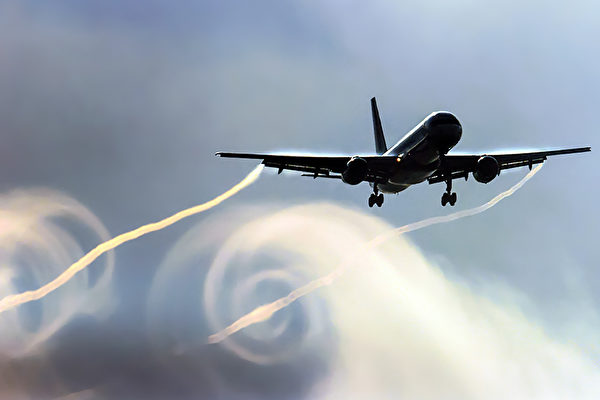
People inevitably encounter turbulence when flying on airplanes. Although most turbulence does not pose a threat to flight safety, the aircraft’s shaking caused by it can make people feel uncomfortable or anxious. Now, the National Aeronautics and Space Administration (NASA) in the United States is developing a new type of wing that is longer and thinner than current wings, which could make future flights smoother, more fuel-efficient, and help reduce the vibrations and discomfort caused by turbulence.
In a press release, NASA pointed out that the airplanes you might fly on in the future could be fundamentally different from today’s aircraft, with longer and thinner wings that provide a smoother flying experience while also saving fuel.
This type of wing would be a revolutionary design for commercial aircraft, but like any groundbreaking technology, it faces its own development challenges, which NASA and experts from Boeing are working hard to overcome.
During flight, wings generate lift, and longer, thinner wings can reduce drag, thereby increasing efficiency. However, such wings may become quite flexible during flight.
Through the “Integrated Adaptive Wing Technology Maturation” collaboration project, NASA and Boeing recently completed wind tunnel testing of a “higher aspect ratio wing model” to explore how to increase efficiency without experiencing wing problems.
Jennifer Pinkerton, an aerospace engineer at NASA’s Langley Research Center, stated, “When wings are very flexible, their vibration amplitudes tend to be larger.” Additionally, high aspect ratio wings are typically more fuel-efficient.
Without proper engineering design, slender wings can bend or experience flutter, causing the aircraft to vibrate and sway in gusty winds.
Pinkerton explained, “Flutter is a very violent interaction. When airflow passes over the wing and interacts with the aircraft structure, the wing’s natural frequency is excited, causing the oscillations to amplify, potentially leading to catastrophic failure.”
Researchers are dedicated to mitigating the effects of gusty winds on aircraft, reducing wing loads during turns and maneuvers, and suppressing flutter. Decreasing or controlling these factors can significantly improve aircraft performance, fuel efficiency, and passenger comfort.
Due to the limited size of wind tunnels, NASA and Boeing enlisted the company “NextGen Aeronautics” to design and manufacture a scaled-down aircraft model proportional to a full-size aircraft for testing the new wing in the wind tunnel.
This model resembles an aircraft split longitudinally, with one side of the wing measuring 13 feet (about 4 meters). The model is mounted on the wall inside the wind tunnel with 10 movable control surfaces on the trailing edge of the wing. Researchers can adjust these control surfaces to control airflow and reduce the forces causing wing vibrations. Instruments and sensors installed inside the model measure the forces acting on the model and its responses.
The first set of tests conducted in 2024 provided baseline readings, which were compared with NASA’s computational simulations, leading to improvements in the model. The second set of tests in 2025 utilized a new configuration and added control surfaces.
The most significant advantage of these new features was evident in tests simulating the wing’s response to gust impacts. Researchers observed a significant reduction in wing vibration.
Following the completion of testing, experts from NASA and Boeing are analyzing the data. Initial data analysis indicates that the control surfaces developed by NASA and Boeing show significant performance improvements.
They will continue to analyze the data and prepare to share the test results with the aviation industry. Airlines and aircraft equipment manufacturers can learn from and benefit from these findings, deciding which technologies can be applied to the next generation of aircraft.
When it comes to turbulence, accidents involving casualties caused by this phenomenon are not uncommon. People often wonder, what is the risk of encountering turbulence in flights? Should they be concerned?
Hassan Vally, an associate professor of epidemiology at Deakin University in Australia, previously stated that accidents causing casualties due to turbulence are very rare, even rarer than other types of transportation accidents, such as car accidents.
However, people’s strong emotional responses can cause fear and alter their perception of risks, making them believe that these rare accidents occur more frequently than they actually do.