
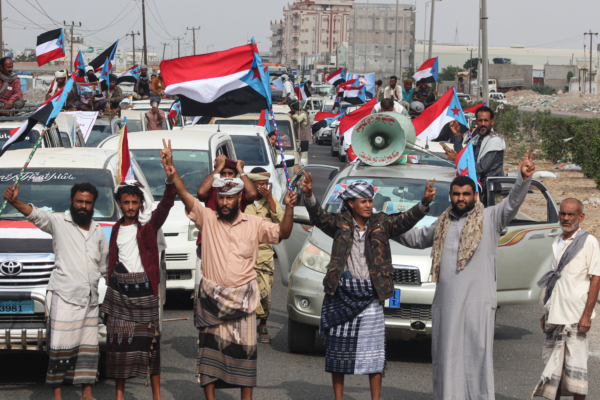
Saudi Arabia has demanded the separatist organization “Southern Transitional Council” (STC) troops in southern Yemen to withdraw from the recently occupied provinces of Hadramout and Mahra.
Saudi authorities have warned that this move constitutes an “unjustified escalation” and poses a risk to Yemen’s security and stability, potentially igniting conflicts within the anti-Houthi alliance.
The STC, supported by the United Arab Emirates (UAE), seeks autonomy in southern Yemen and aims to restore the independence of South Yemen, which was a separate country from 1967 to 1990.
The Saudi Foreign Ministry stated that it hopes for the “public interest to prevail” and urges the STC to end the military escalation in an “urgent and orderly manner,” vacate the two provinces, and transfer control to the Saudi-supported “National Shield Forces.”
Latest reports indicate that Saudi Arabia has issued a final ultimatum to the STC, demanding their withdrawal by December 31. Failure to comply may result in Saudi military actions including airstrikes.
To ease tensions, a joint military delegation composed of Saudi and UAE representatives arrived in Aden on December 12 for mediation efforts.
Saudi Arabia emphasizes that while mediation efforts are ongoing, the situation has not fully returned to normal, emphasizing the importance of cooperation among factions to maintain regional stability.
Initially part of the Saudi-led anti-Houthi coalition that intervened in Yemen’s civil war in 2015, the STC later turned against the Yemeni government and advocated for autonomy in the south.
Recently, the STC has been raising flags symbolizing “South Yemen” in their controlled areas, raising concerns of a potential secession from Yemen and a return to fragmentation.
This military action has not only heightened tensions within Yemen but also tested the relations between Saudi Arabia and the UAE, two Gulf countries.
Despite longstanding cooperation in OPEC and regional security, the two countries have shown divergent positions concerning power dynamics, geopolitical influence, and commercial interests in southern Yemen in recent years.
Since the Houthi organization seized the capital Sanaa in 2014, sparking Yemen’s civil war, over 150,000 people have died, leading to the world’s most severe humanitarian crisis.
In recent times, the Houthis have attacked hundreds of commercial ships in the Red Sea corridor, significantly disrupting global supply chains. Concerns are growing that if divisions within the anti-Houthi camp continue to deepen, it may not only impede fragile peace processes but also introduce new variables to the already volatile Red Sea situation.