
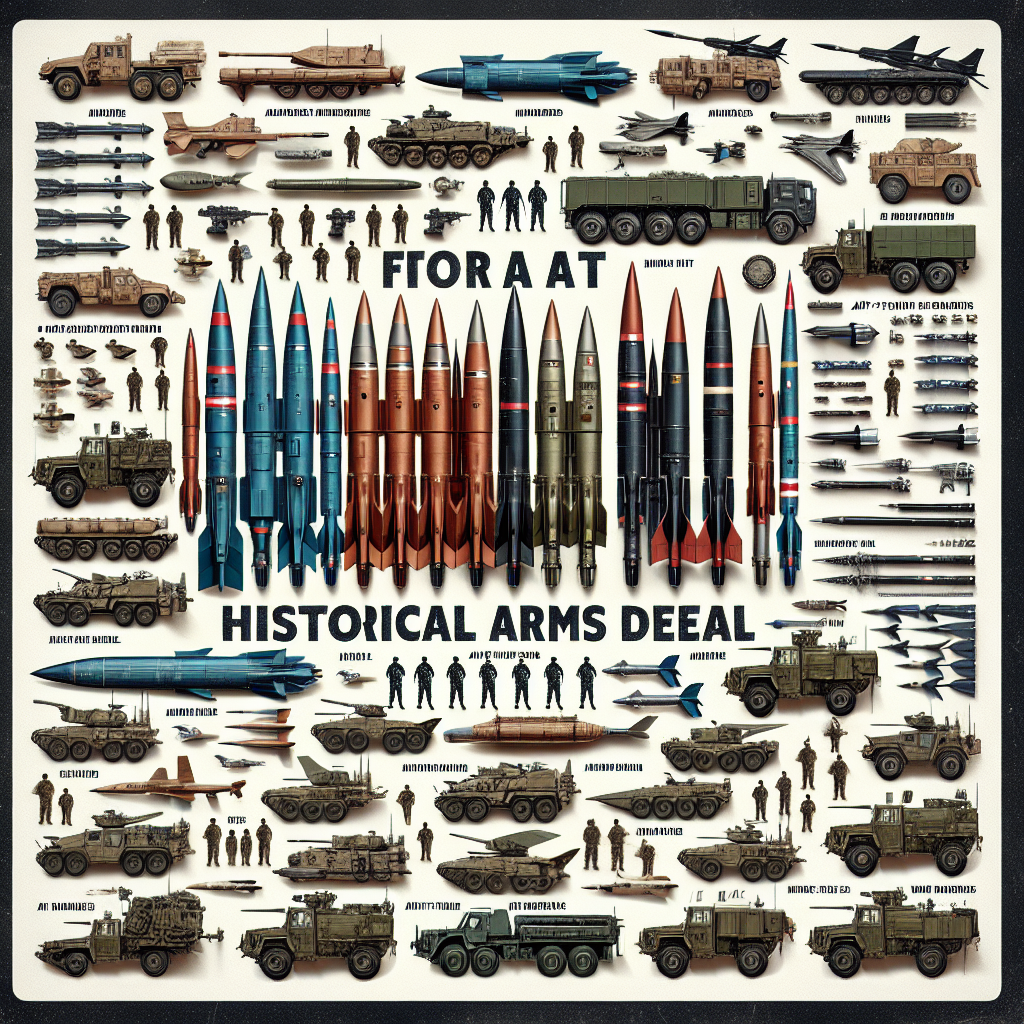
Taiwan’s largest arms deal in history, totaling $11 billion, has officially taken shape. The package includes 82 sets of Harpoon missiles, hundreds of ATACMS missiles, thousands of anti-tank missiles, new self-propelled artillery, and unmanned aerial systems. This isn’t just a simple weapons purchase; it’s a complete asymmetric warfare strategy. What exactly did Taiwan buy? Where can these weapons strike? And how will they impact military deployments in the Taiwan Strait and along the Fujian coast?
On December 18th, the U.S. government announced the latest arms sale to Taiwan, totaling a record-breaking $11 billion, making it the largest arms deal in Taiwan’s history.
The arms package includes a total of 8 weapon systems: Harpoon missiles, M109A7 self-propelled artillery, Javelin missiles, TOW anti-tank missiles, drones, AH-1 attack helicopter spare parts, Harpoon missile renovation kits, and tactical mission software. Let’s take a closer look at what Taiwan actually bought with $11 billion and assess if it’s worth the investment.
The first heavyweight weapon is the well-known Harpoon missile system, with a purchase of 82 sets. In addition to that, it includes 420 M57 tactical missiles and 864 precision-guided rockets. Harpoon’s reputation was solidified on the battlefields of Ukraine.
While the U.S. has many advanced weapons systems, Harpoon was first provided to Ukraine. In the summer of 2022, around July, the U.S. supplied Harpoon multiple rocket launch systems to Ukraine, along with guided rockets with a range of 75 kilometers. Harpoon immediately changed the battlefield dynamics, helping Ukraine win the Kharkiv counteroffensive in 2022 and the victory in the Kherson battle.
Looking at Harpoon’s battlefield performance, for instance, on December 31, 2022, Ukrainian forces used Harpoon to launch a rocket attack on a building in the city of Makiivka, Donetsk Oblast. In this attack, Ukraine claimed to have caused 400 Russian soldier casualties. Russian official data stated at least 89 fatalities.
Footage from after the attack showed the complete destruction of the building and debris everywhere. Despite likely being reinforced with concrete, the building crumbled in front of Harpoon.
In February of that year, surviving Russian soldiers bitterly criticized their commanders for the lack of concern for their lives. Many soldiers from their unit were eliminated by Ukraine on New Year’s Eve at Makivka. Following the attack, they were left with inadequate shelter until they were finally moved to temporary tents on February 5. The Russian soldiers concluded that post-Makiivka, if they didn’t realize they were just pawns, they were foolish.
On July 11, 2022, Ukraine caught Russia off guard with Harpoon. Ukrainian forces launched missile attacks on the Russian-occupied Novokakhovka City, resulting in multiple targets being hit by strong explosions. An ammunition depot was destroyed, and a massive fireball rose from the ground. Allegedly, at least 52 Russian troops were injured, with 200 casualties, including 12 officers. The footage showed the cursing and swearing of Russian soldiers and the spectacular explosion at the ammunition depot.
Through satellite imagery, the complete destruction of the ammunition depot and surrounding area can be observed, with a large crater left on the ground.
Throughout July, as Ukraine staged a counteroffensive in the Kherson region, multiple military positions, ammunition depots, and command centers on both sides of the Dnieper River faced Harpoon strikes. Ultimately, due to supply difficulties and setbacks on the battlefield, Russian frontline troops had to retreat from the Kherson region.
While Harpoon’s basic data may not seem impressive, its precision-guided rocket range is only 75 kilometers. However, its high precision and the Harpoon tactical vehicle’s mobility make it a crucial weapon on the Ukrainian battlefield, decisively altering the situation in 2022.
Inspired by Harpoon’s battlefield success, Taiwan previously ordered a total of 29 Harpoon rocket systems from the U.S. Half of them have already arrived in Taiwan in 2025 for training and assembly, with the remaining 18 sets expected to be delivered between 2026 and 2027. This time, Taiwan went all-in and purchased 82 sets of Harpoon systems, totaling 111 sets, making Taiwan the country with the most Harpoon systems in the world after the U.S. Currently, the U.S. has fewer than 400 Harpoon systems and is continuing to order. Taiwan has 111 sets, Romania has 54, the UAE has 32, and Singapore has 24.
Comparatively, Taiwan’s arsenal is more advanced than Ukraine’s. In this procurement plan, Taiwan also acquired 864 precision-guided rockets. The U.S. currently has a range-extended version of precision-guided rockets with a reported range of up to 150 kilometers. This rocket utilizes a higher-power engine and boasts improved maneuverability. The Harpoon launcher can carry six range-extended, precision-guided rockets. In December 2025, Lockheed Martin successfully conducted test flights of the range-extended, precision-guided rocket, reaching 112 kilometers at the White Sands Missile Range in the U.S. The rocket has yet to be put into service.
In this arms sale, Taiwan also acquired 420 Army Tactical Missile Systems (ATACMS), with a standard range of 300 kilometers. However, according to a report by Liberty Times, a certain number of the ATACMS in this arms sale to Taiwan are the latest M57 series, with a range exceeding the original 300 kilometers, nearing 500 kilometers.
Taiwan’s Army is actively seeking the updated PrSM precision strike missile from the U.S. PrSM is the latest tactical ballistic missile in the U.S. arsenal, with a range of 500 kilometers that can be extended to over 900 kilometers in updated versions, and even has the capability to strike moving maritime targets.
This missile is also launched using the Harpoon launcher. PrSM was delivered to the U.S. Army in 2023. On June 17, 2024, the U.S. military used PrSM to sink a decommissioned Austin-class amphibious landing ship, the USS Cleveland, at a test range. However, there is no mention of PrSM in Taiwan’s current procurement, so the possibility of introducing PrSM in the future remains to be seen.
The introduction of Harpoon holds significant strategic importance for Taiwan’s Army. When launching precision-guided rockets, it can provide fire support against potential People’s Liberation Army beachheads. When launching ATACMS or future PrSM missiles, it poses a significant strategic threat to important military bases along the Fujian coast and naval ports across the strait. The Army’s tactical missiles can be equipped with high-explosive warheads or submunitions.
In the Ukrainian battlefield, the ATACMS Army Tactical Missile had remarkable success. Video footage from May 24, 2024, shows Ukraine launching an Army Tactical Missile against a Russian S-400 air defense missile site. Citing the inability of the S-400 missiles to intercept the ATACMS, the devastating strike wiped out the targets within moments, leaving a widespread area in ruins.
Further examination of post-attack imagery shows the remains of a burnt-out Russian S-400 missile launch vehicle, with its launching platform still upright and charred. Another vehicle seen in the footage continues to burn fiercely, leaving the battlefield in shambles. With just one ATACMS, Ukraine obliterated a full S-400 air defense site, showcasing the embarrassment for Russia, which boasts the world’s most advanced S-400 and could not intercept the comparatively slower ATACMS missiles at Mach 3 speed.
Ukraine frequently used ATACMS to strike Russian pontoon bridges in the eastern part of the country. In one instance, a single ATACMS missile wiped out multiple bridges, leaving no survivors within the several square kilometer radius, destroying newly established Russian Army floating bridges.
In May 2024, Ukraine used an ATACMS missile head to attack Russian forces assembled in Luhansk. The vast coverage of the Army Tactical Missile is demonstrated well, reportedly resulting in over 100 Russian soldier casualties in this attack.
From Taichung to Xiamen, the straight-line distance is only 240 kilometers, and from Taoyuan to Fuzhou, it’s just 200 kilometers. With Harpoon and ATACMS in Taiwan’s arsenal, the entire Taiwan Strait and the coastal areas of Fujian are within range of Taiwan’s Army strikes.
China has multiple military bases along the Fujian coast, such as the Longtian Air Force Base, the closest to Taiwan, along with the Shuimen Air Force Base in Quanzhou and the Navy Base in Fuzhou. Before attacking Taiwan, the Chinese Communist Party’s naval, army, and air forces will undoubtedly gather along the Fujian coast, making those prime targets for Harpoon and ATACMS strikes.
Another highlight of this arms list is the 60 M109A7 self-propelled artillery pieces. Taiwan’s artillery needs a modern update, as the current mainstays are the outdated M109A2 and A5. The M109A2 has been in service in Taiwan since 1982, and the A5 was acquired during the 1996 Taiwan Strait Crisis, with only a few, around 28, in possession. These self-propelled guns have served for at least three to four decades.
The M109A7 is the U.S. Army’s current main artillery piece, featuring a new chassis, similar to the Bradley infantry fighting vehicle’s chassis. It’s equipped with a new diesel engine, producing up to 800 horsepower, reaching a top speed of 70 kilometers per hour and a maximum range of 450 kilometers. It also incorporates a more powerful generator, increasing its power output by 2.8 times, allowing for the installation of updated information systems, communication command systems, and fire control systems.
The M109A7 also introduces an automatic loading system for faster firing and reduces the crew to four members. It utilizes the M284 155mm main gun, with a range of up to 30 kilometers for standard artillery shells. Additionally, it can use the “Excalibur” laser-guided artillery shell with a range of up to 70 kilometers.
In this arms sale, Taiwan plans to acquire 120 M109A7 self-propelled guns in two batches, along with over 4,000 PGK precision-guided kits, significantly enhancing Taiwan’s amphibious landing support capability. Additionally, Taiwan procured 60 M992A3 tracked ammunition resupply vehicles, 13 M88A2 battlefield recovery vehicles, and 42 sets of Artillery Tactical Data Link systems. Another highlight is 4,080 PGK precision guidance kits.
Many might be familiar with the Swedish “Excalibur” guided artillery shell, but due to export laws, Sweden may not be able to export military technology to Taiwan. Therefore, Taiwan turned to purchasing the PGK kits used by the U.S. The kit, named M1156, is the U.S. Army’s in-service precision-guided equipment, comprising a fuze head, four stabilizing fins, and a GPS guidance antenna. This kit can be integrated onto any existing 155mm artillery shells, providing the M109A7 self-propelled gun with precision strike capabilities.
The PGK kit had entered service in 2013 and has been produced by Northrop Grumman since, with over 25,000 kits manufactured by 2018. It is a slightly less expensive precision guidance system compared to the Excalibur guided artillery shell, but with a somewhat lower hit rate. The entire kit can attach to any existing 155mm artillery shell. In 2014, the kit was demonstrated on a German PzH2000 self-propelled gun, hitting 90% of targets within a 5-meter radius at a distance of 27 kilometers.
PGK precision guidance kits are widely in use, not only by the U.S., but also by Australia, Canada, and the Netherlands, with prices around $20,000 per set. The Netherlands purchased 3,500 M1156 kits for $70 million in 2018. In 2024, Norway followed suit, procuring over 8,000 kits. These kits can also be used by the older versions of the M109A2 and A5 in Taiwan.
Taiwan’s artillery urgently needs modernization. Approximately ten years ago, Taiwan sought to purchase the M109A6 to no avail due to various reasons. This acquisition of the M109A7 resolves the pressing issue for Taiwan’s artillery, coupled with the precision guidance kits, enhancing Taiwan’s beach landing support capabilities.
Also included in this arms sale is the ALTIUS-600 anti-armor attack drone. According to previous plans, Taiwan planned to procure 2,032 drones, but the specific number in this deal has not been disclosed yet. Developed by the U.S.’s Anduril Industries, this drone can be launched from sea, ground, or air platforms. The small drone weighs a maximum of 12 kilograms, with an empty weight of only 3 kilograms and a flight time of four hours, cruising at a slow speed of 60 to 90 kilometers. The ALTIUS-600 drone features swarm combat capabilities, with multiple drones operating together to launch saturation attacks.
Procuring thousands of expendable drones aligns with the U.S.’s asymmetric warfare requirements, especially when combined with the significant number of Javelin and TOW anti-tank missiles to obscure the People’s Liberation Army’s amphibious armored units.
The final centerpiece of this arms deal is the abundance of anti-tank missiles, with strikingly large numbers. This includes 1,050 Javelin missiles and 1,545 TOW-2B missiles. The TOW anti-tank missile is currently the mainstay anti-tank missile in the U.S., featuring a tandem warhead design that can penetrate composite armor, with a range of up to 4,500 meters. Currently, Taiwan’s Army mounts TOW anti-tank missiles on Humvee chassis as mobile launchers. Taiwan’s bulk purchase of TOW anti-tank missiles will primarily be used for beach landing operations to strike PLA amphibious tanks or attack nearshore landing craft.
Over the years, Taiwan has acquired large quantities of anti-tank missiles. Older purchases included around 2,000 TOW-2A missiles, and recent acquisitions have seen Taiwan signing contracts for 1,700 TOW-2B anti-tank missiles. Coupled with the current purchase of 1,500 TOW-2B missiles, Taiwan will have over 5,000 TOW anti-tank missiles.
Javelin missiles, a more recent introduction in the past decade, previously saw an acquisition of 400 missiles, now increased by 1,000, totaling around 1,500. Therefore, Taiwan currently holds roughly 6,500 various anti-armor missiles, all prepared for potential PLA beachhead assaults.
In summary, this $11 billion arms deal for Taiwan holds significant strategic implications. It is the most expensive arms sale in Taiwanese history, covering 8 weapon systems, with the core being 82 sets of Harpoon multiple rocket systems and their complement of over 400 tactical ground missiles, precision-guided rockets, and other ammunition.
The Army plans to acquire 120 M109A7 self-propelled guns split into two batches, alongside over 4,000 PGK precision-guided kits, greatly enhancing Taiwan’s amphibious assault capabilities. Additionally, over 2,500 Javelin and TOW anti-tank missiles, 2,000 attack drones, provide Taiwan with immense attacking capabilities against beachfront scenarios and even deep strikes into the Fujian coast.
While these weapons may or may not see battlefield action, they significantly bolster Taiwan’s military deterrence and elevate the cost of any potential military adventurism by the Chinese Communists.
United States-produced Harpoon missiles, precision-guided rockets, anti-tank missiles, self-propelled artillery, attack drones, and other cutting-edge armaments will soon become key assets in Taiwan’s defense strategy, bolstering its ability to resist potential threats.