
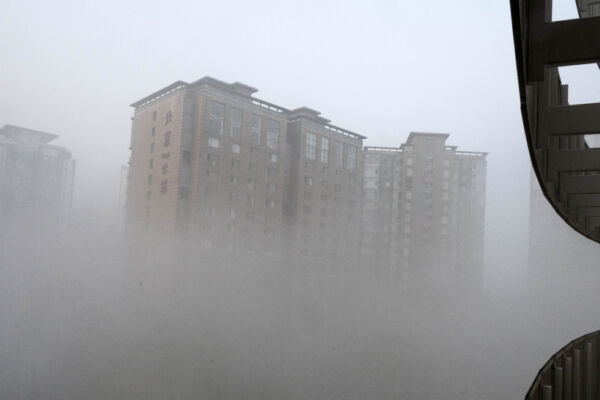
China’s real estate market continues to struggle, despite various stimulus measures taken by authorities in recent years. On December 24th, Beijing announced new policies for the housing market, relaxing conditions for non-Beijing residents to purchase homes and supporting housing needs for families with multiple children, sparking discussions and debates.
On Wednesday, December 24th, four departments in Beijing – the Municipal Commission of Housing and Urban-Rural Development, the Municipal Development and Reform Commission, the People’s Bank of China Beijing Branch, and the Beijing Housing Provident Fund Management Center jointly issued a notice titled “Notice on Further Optimizing and Adjusting the City’s Real Estate Related Policies,” which took effect immediately.
The first major change is the relaxation of conditions for non-Beijing residents purchasing homes. The required years of social security or individual income tax payment for non-Beijing families to buy residential properties within the fifth ring road has been reduced from 3 years to 2 years, and for properties outside the fifth ring road, it has been reduced from 2 years to 1 year.
The second change is to support the housing needs of families with multiple children. Families with two or more children can now purchase an additional residential property within the fifth ring road. Beijing residents with multiple children can buy up to 3 residential properties within the fifth ring road, while non-Beijing residents with multiple children who have paid social security or individual income tax continuously for 2 years in Beijing can purchase up to 2 residential properties within the same area.
The notice also mentions adjustments to individual housing loan policies, where banks and financial institutions will no longer differentiate between first and second homes in terms of loan interest rates. The minimum down payment ratio for the second home housing provident fund loan has been adjusted from no less than 30% to no less than 25%. Additionally, the approval process for real estate development projects acquired through land bidding and listing has been changed from city-level classified approval to district-level filing.
Subsequently, the topic labeled “Beijing eases housing purchase conditions for non-Beijing residents” trended on Weibo.
Netizens commented, expressing concerns such as, “Consumer spending is already an issue, not to mention such big property purchases, it will only stimulate some wealthy or middle-class individuals to switch houses, and there won’t be much improvement.” Another said, “The real estate market has long been in a state of collapse, yet there are still restrictions in place.”
A finance and economics blogger known as “Liu Hongming Steady Investment” remarked, “Many people are puzzled as to why Beijing’s property purchase policy is being adjusted slowly. They worry that with significant relaxation, there will be a flood of funds entering the real estate market. Personally, I feel it’s just apprehension surrounding the policy release. When talking with people living in Beijing, especially about housing, most conversations revolve around whether you’ve sold your house in such and such area.”
Chinese real estate economist Deng Haozhi posted, “1. Beijing has already loosened its property purchase restrictions twice this year, unprecedented in history. If the real estate market is doing well, why the need for consecutive adjustments? If this is how Beijing is handling it, one can imagine what other cities are facing. It’s clear that the real estate market is being pessimistically depicted.
“2. Beijing continues to ease purchase restrictions, and there is a high probability that Shanghai and Shenzhen will follow suit. But what about other cities beyond these three? In reality, cities have limited options, so I urge for macro-level support to be provided as soon as possible.”