
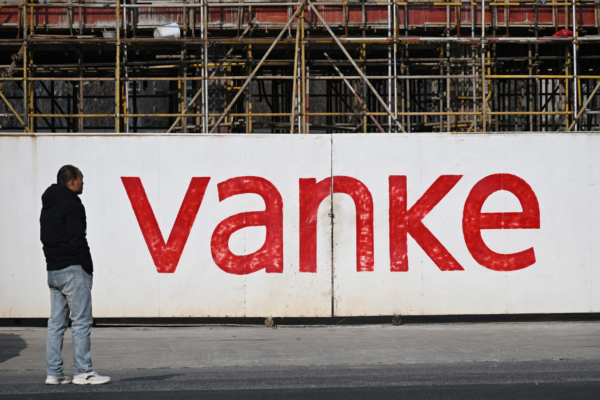
China’s real estate market continues to be in crisis, with even the once considered “model of stability” Vanke Corporation now at the center of the storm. On December 23, S&P Global Ratings downgraded Vanke Corporation’s long-term issuer credit rating from “CCC-” to “SD” (Selective Default), and removed it from negative credit watch.
A 20 billion yuan corporate bond issued by Vanke matured on December 15 and remains unpaid, with the grace period ending on the evening of December 22.
According to Bloomberg, on December 23, S&P downgraded Vanke’s long-term rating from CCC- to SD. The Selective Default rating implies that S&P believes Vanke has defaulted on some specific debts.
Through a bondholders meeting, Vanke extended the grace period for this bond to January 28, 2026. This means Vanke must renegotiate with creditors by no later than January 28 next year and seek to reach a deferred payment agreement. Failure in negotiations could lead to default risk and possibly trigger an overall debt restructuring.
S&P believes that without this extension, Vanke might not be able to fully repay investors on the original due date, resulting in investors not receiving principal and interest on time, thereby considering it a default.
Following the rating downgrade, Vanke’s A-share stock price hit close to a ten-year low, and several domestic bonds were temporarily suspended from trading due to significant declines.
S&P also confirmed Vanke Hong Kong’s rating as “CCC-” with a negative outlook, suggesting possible debt restructuring or default risks in the next six months, as the parent company’s ability to support is now very limited.
In the turmoil of China’s real estate crisis over the past few years, Vanke’s self-sustaining capability has been severely affected. The company revealed that in the first three quarters of 2025, its contracted sales decreased by 44.6% year-on-year, revenue dropped by 26.61% year-on-year, and it recorded a net loss of 28.02 billion yuan. Operational cash flow was negative, making it challenging for the company to ease liquidity pressure through sales receipts.
Despite the largest shareholder, Shenzhen Metro Group, providing over 30 billion yuan in loan support, it is still not enough to cover the massive short-term debt gap. S&P also noted that Vanke’s “lack of a real controlling party” in its ownership structure limits its ability to obtain stronger, more direct external support.
Vanke faces significant short-term debt repayment pressure. An article by Netease’s property expert indicates that in the upcoming six months, Vanke will see about 9.4 billion yuan of bond maturities, with 4.8 billion yuan concentrated between late December 2025 and January 2026. However, its financial data is not optimistic – as of the end of the third quarter of 2025, Vanke’s merged currency funds were 65.677 billion yuan, but the freely usable funds at the parent company level were only 8.58 billion yuan. Cash-to-short-term debt ratio is as low as 0.43, far below the safety level.
The article suggests that the “SD” rating implies Vanke’s international financing channels are essentially closed, and issuing foreign bonds in the future will be extremely difficult. Failure to reach extension agreements within the grace period for other bonds could trigger cross-default provisions on overseas bonds.
As this Shenzhen-headquartered company listed in Hong Kong, like the entire industry, bears a heavy debt burden, imminent debt repayment pressure combined with continuously declining stock prices exacerbate Vanke’s already massive debt pressure, posing a severe test to its repayment ability.
The article concludes that Vanke, as the third-largest real estate enterprise after Evergrande and Country Garden, is on the brink of a “financial explosion”.