
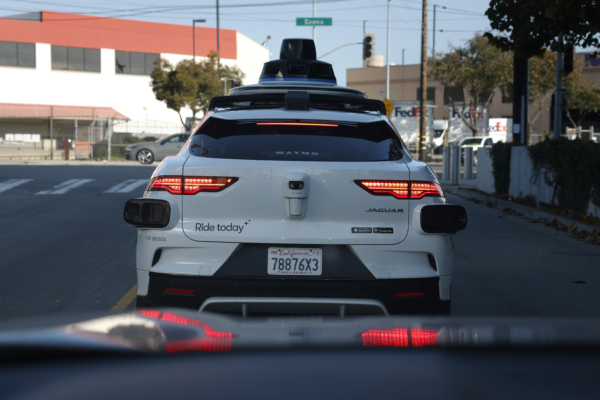
On Saturday (December 20), a large-scale power outage in San Francisco unexpectedly turned into a “survival exercise” for autonomous driving technology. Waymo, owned by Google, was collectively paralyzed due to signal light failure, while Tesla smoothly navigated through the chaos with its FSD (Full Self-Driving) technology.
The incident, caused by a fire at a substation, resulted in power outages affecting approximately 30% of the city’s areas, 130,000 households, and businesses. As downtown traffic descended into chaos, Tesla CEO Elon Musk seized the opportunity to showcase the superiority of its fully autonomous driving technology, highlighting that a vision-based approach trained on real-world data outperforms competitors relying on maps and order in extreme conditions.
After the power outage, images from the scene showed signal lights out, causing numerous Waymo self-driving vehicles to collectively freeze at intersections, with their hazard lights on and unable to move forward, leading to traffic gridlock in multiple areas. Waymo was subsequently forced to suspend services, acknowledging that the system took too long to assess road conditions in the event of large-scale infrastructure failure.
Waymo spokesperson Suzanne Philion responded, stating that due to the extensive power outage and signal light malfunctions, vehicles had “longer-than-normal dwell times” while evaluating intersection conditions. She emphasized that suspending services was to “prioritize passenger safety and ensure emergency responders could pass smoothly”.
In response to the struggles of its competitors, Musk expressed confidence in Tesla’s self-driving technology on the X platform.
“When San Francisco’s power outage paralyzed traffic signals, Waymo came to a complete halt,” he said, “while Tesla’s Robotaxi was unaffected by the power outage in San Francisco and continued to operate.”
To further demonstrate, the official Tesla account @Tesla_AI released a video showing a Model Y navigating through dark streets. The footage revealed that despite the surrounding streetlights, traffic signals, and building lighting being completely off, Tesla vehicles with FSD could navigate with the proficiency of a skilled human driver, smoothly and confidently driving in chaos, accurately identifying intersection boundaries and other vehicles’ movements in the dark.
Musk later commented on the comparative video, stating, “Tesla handles chaos with ease, like taking a stroll in the park.”
He further delved into the essence of the differences between the two companies, saying, “This is the result of training artificial intelligence (AI) in billions of real miles of road conditions, rather than sheltering it in environments filled with perfect data and idealized simulations.”
He further analyzed, “Waymo bets on maps and order, while Tesla bets on handling chaos—and it has won. When the lights go out, the distinction between the two is no longer theoretical but the actual traffic situation.”
This event sparked discussions among the public regarding the “infrastructure dependency syndrome” of self-driving technology. Following this news and a series of positive impacts in recent days, Tesla’s stock price rose by 1.56% on Monday, closing at $488.73.
(This article referenced reports from Fox, AP, and The Guardian)