
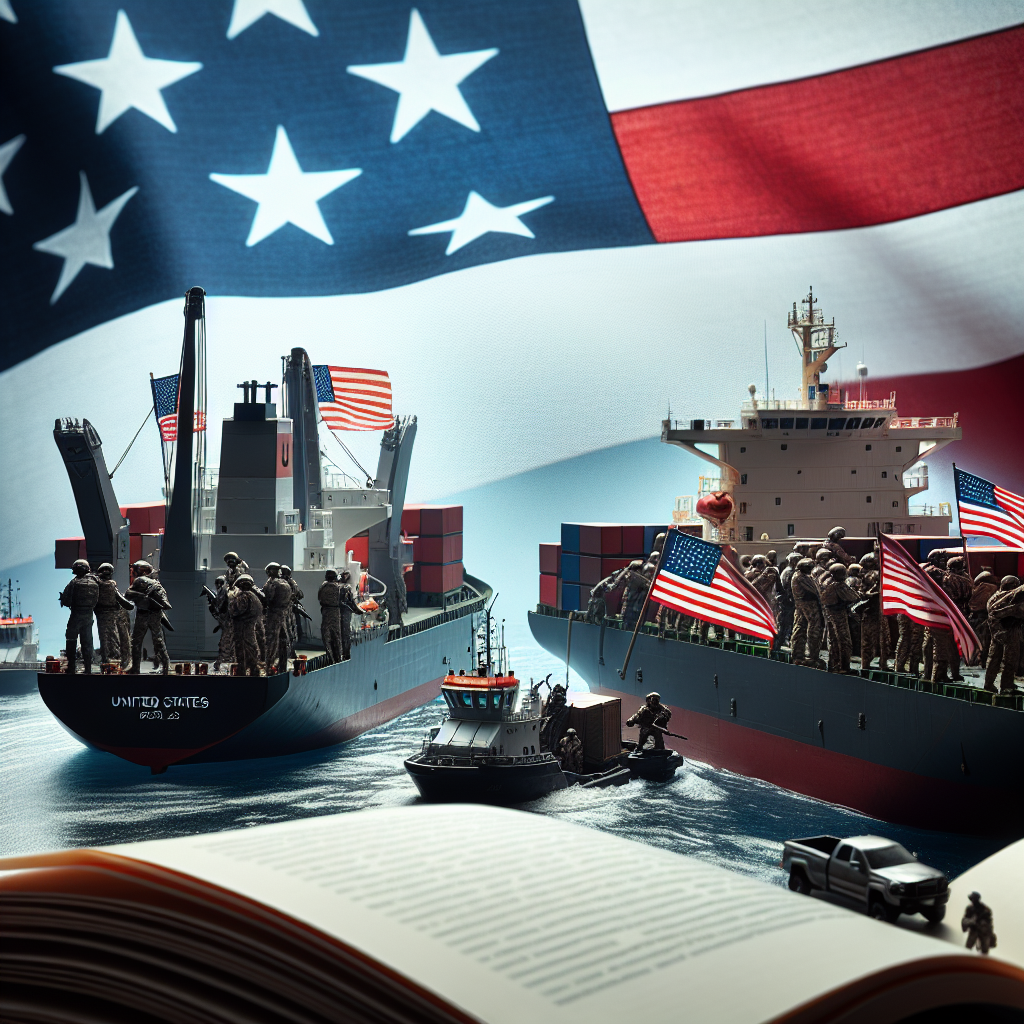
In breaking news from December 23, 2025, under the order of US President Trump (Donald Trump), the United States has blocked Venezuelan waters, prohibiting sanctioned oil from entering or leaving the country. The US military has intercepted two Venezuelan oil tankers and is currently pursuing a third vessel. The loading of Venezuelan oil has slowed down, with more ships turning back or halting their voyages.
According to Reuters, tracking data and sources revealed that on Monday, December 22, the volume of oil loaded on Venezuelan tankers significantly decreased, with most ships transporting oil only between domestic ports in Venezuela.
US authorities reported that earlier this month, the US Coast Guard seized a super tanker carrying Venezuelan oil that was under sanctions. Last Saturday, on December 20, the US Coast Guard intercepted the “Centuries” tanker near the Venezuelan coast in international waters. White House spokesperson Anna Kelly stated that the vessel was transporting sanctioned Venezuelan oil but was not listed on the sanctioned vessels list.
The US government has not provided the latest information regarding these vessels. Trump’s pressure on Venezuelan President Maduro includes increasing military presence in the region and launching over twenty military strikes on drug trafficking vessels.
Since the US Treasury’s sanctions on the Venezuelan national oil company (PDVSA) and two subsidiaries of the Russian oil company Rosneft in 2020, this vessel interception incident has dealt the most severe blow to PDVSA, forcing them to reduce production and exports.
Due to US actions and the effects of the Russia-Ukraine conflict, Brent crude futures rose by 2.17% to $61.78 per barrel on Monday, while US WTI crude increased by 2.2% to $57.77 per barrel.
As of Monday, PDVSA had delivered 1.9 million barrels of heavy crude oil from the “Azure Voyager” sanctioned vessel, under the Aruba flag, at Jose Port. Internal company documents indicate no immediate plans for other super tankers heading to Asia to load oil.
In recent days, the number of tankers loaded but not yet departed has increased, leading to millions of barrels of Venezuelan oil being stranded on ships. Customers are requesting greater discounts and contract modifications to account for the risky journey out of Venezuelan waters.
Reuters reported on Monday that according to LSEG shipping monitoring data, some tankers near the Venezuelan coast either carrying oil for export or importing naphtha oil have also turned back or halted their voyages, awaiting clear loading instructions from ship owners.
Following a cyber attack on the Venezuelan national oil company last week, they are slowly restoring some online systems and reinstating paper records. Sources mentioned that the company has not fully recovered its centralized management system, causing many employees to not receive their salaries on time.
PDVSA and the Venezuelan Ministry of Oil did not respond to Reuters’ requests for comments. Venezuelan Foreign Minister Yvan Gil stated on Monday that the US seizure actions violate international law and constitute “piracy.”
The Chinese Foreign Ministry said on Monday that the recent US interception actions violate international law.
A satellite image obtained by TankerTrackers.com showed the empty super tanker “Bella 1,” flying the Panamanian flag, drifting in the northeastern Caribbean Sea on Monday. The US Coast Guard attempted to intercept the “Bella 1” as it approached Venezuela on Sunday.
A US official told Reuters on Sunday that the tanker has not been boarded for inspection yet, and interceptions can take various forms, including approaching or flying near the target vessel.
According to maritime sources, the first oil tanker seized by the US earlier this month, the “Skipper,” arrived in waters near Galveston Port, Texas on Sunday, preparing for oil cargo transfers.