
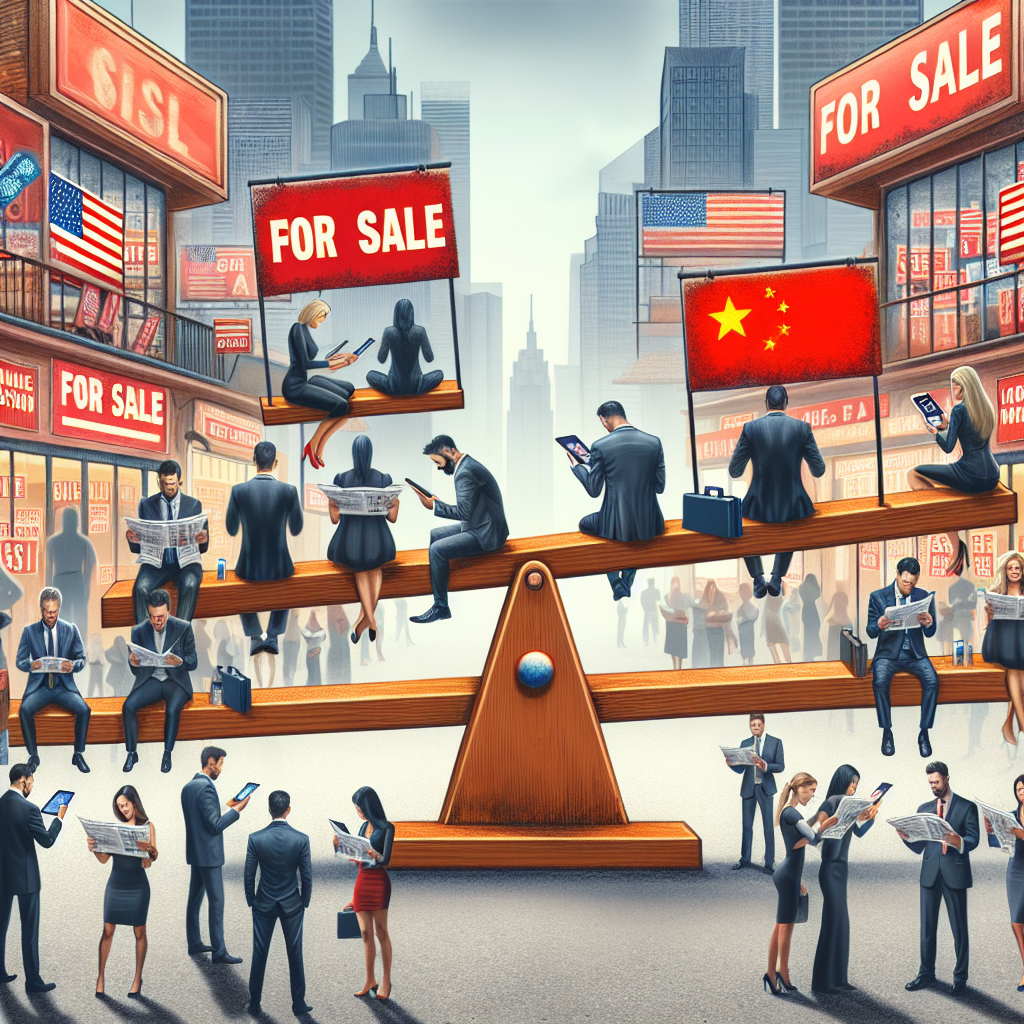
According to a report by the Financial Times on Tuesday, December 16, amid a weakened Chinese economy, intensifying local competition, and fluctuations in US-China relations, global businesses are seeking to sell their operations in China to private equity partners in the country.
Insiders revealed that companies like Decathlon, Haagen-Dazs, Peet’s Coffee, Costa Coffee, Lawson convenience stores, and GE Healthcare are weighing various options for their operations in China, including selling all or part of their businesses there.
Sources mentioned that Peet’s and the parent company of Costa Coffee are evaluating different options for their Chinese divisions. Haagen-Dazs has been considering selling its approximately 400 ice cream stores in China since the summer.
Decathlon is looking to sell 30% of its business in China, but there is currently limited interest from potential buyers. Medical equipment giant GE Healthcare is also rumored to be interested in selling its business in China.
Starbucks had already sold 60% of its Chinese business in November to BoYu Capital, a private equity investment firm based in Hong Kong founded by Jiang Zemin’s grandson Jiang Zhicheng in 2010.
An executive from a private equity firm told the Financial Times that many multinational companies’ global boards had considered completely withdrawing from the Chinese market in 2023 when US-China relations hit a low point and amid the conflict in Ukraine. However, many companies ultimately chose not to do so due to the high opportunity cost of exiting the Chinese market.
He believes that partnering with local private equity firms could help indigenous managers make more decisive decisions to adapt to the constantly changing market environment in China.
Shaun Rein, founder of the China Market Research Group, stated that due to the long-term downturn in the Chinese real estate market, consumers in smaller cities are becoming more pessimistic, exacerbating the challenges faced by foreign brands.
Various indicators point to a deterioration in the Chinese economy. According to the latest economic data released by the CCP in December, consumer spending in China significantly weakened in November, while investment and the property sector showed sluggish performance. Retail sales growth hit the lowest level since the outbreak of the COVID-19 pandemic.
Many foreign companies are concerned about the outlook for the Chinese market. A survey by the American Chamber of Commerce in Shanghai in September revealed that only 41% of surveyed companies had a positive outlook on their businesses in China, the lowest in history. Respondents ranked tense US-China relations as the top challenge, followed by increasingly fierce domestic competition.
Frank Tang from Fountainvest Partners, a private equity investment firm, told the Financial Times, “The Chinese market changes rapidly and is highly competitive, making it a challenging time for foreign brands; if they do not make changes, their operations in China may not survive for long.” Fountainvest Partners currently collaborates with brands like Papa John’s and Dairy Queen in China.