
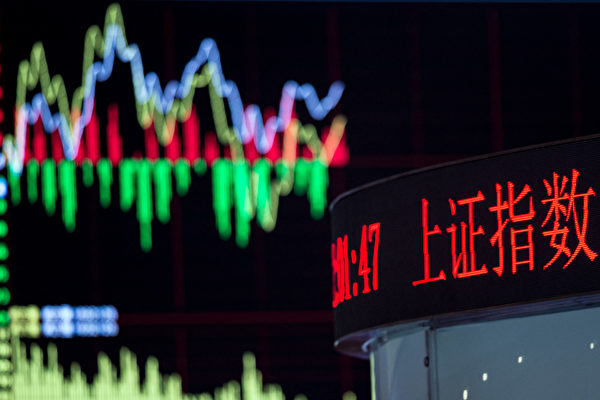
On December 16th, A-shares experienced another round of sharp decline, with all three major indexes closing lower. Over 4300 stocks floated in the red across the market, while technology stocks collectively tumbled.
By the closing bell, the Shanghai Composite Index fell by 1.11% to 3824.81 points, the Shenzhen Component Index dropped by 1.51% to 12914.67 points, and the ChiNext Index declined by 2.1% to 3071.76 points. Meanwhile, the SSE 50 Index bucked the trend with a 0.54% increase, the STAR Market Index fell by 2.02%, and the STAR 50 Index dropped by 1.94%. The CSI 300 Index also decreased by 1.20%.
Among tradable A-shares, 1090 stocks saw gains, accounting for 20.02% of the total, while 4302 stocks experienced declines. The total trading volume of Shanghai, Shenzhen, and the STAR Market combined amounted to 1.743 trillion yuan, a decrease of approximately 46 billion yuan compared to the previous day.
In terms of fund flows, main funds saw a net outflow of 70.117 billion yuan throughout the day, marking the sixth consecutive trading day of net outflows. Specifically, the ChiNext board saw a net outflow of 20.842 billion yuan, the STAR Market saw 7.87 billion yuan, and the main funds of CSI 300 constituent stocks witnessed a net outflow of 20.182 billion yuan.
Among the industries experiencing net outflows of main funds, 26 industries were affected, with the electrical equipment sector leading in terms of net outflow, followed by the electronics industry. On the other hand, five industries saw net inflows of main funds, with the commerce and retail industry leading in net inflows at 3.818 billion yuan, followed by the food and beverage industry with net inflows of 3.02 billion yuan.
Technology stocks collectively plummeted, with Moore Threads falling by over 7%, Tianfu Communication dropping by nearly 5%, New Yisheng, and Cambrian plunging by over 4%, and ZJXC shedding more than 3%. In contrast, the retail sector was active, driven by concepts such as unmanned driving and digital currencies, while some commercial aerospace concepts continued to show strength.
The topic labeled “Why did A-shares fall across the board” briefly trended as the second most searched topic on Weibo.
Financial blogger “Mark Talks ETFs” remarked, “Why did A-shares fall across the board? It seems like it just started dropping these past two days. In reality, most stocks have been in a downturn for four months. The truth is, at the end of August, major sectors like securities firms, computer software, military industries, and pharmaceuticals had already peaked collectively. In the latter half of September, high-tech stocks like semiconductors surged, in essence, it’s a carefully planned ‘bull trap.’ Now, we are just witnessing the final chapter of this drama.”
Another financial blogger, “I Don’t Want to Buy Baijiu,” summarized A-share performance in December: nearly 4000 stocks fell on December 2nd, 3876 stocks on December 3rd, almost 4100 stocks on December 4th, 4058 stocks on December 9th, 3834 stocks on December 10th, 4378 stocks on December 11th, 2612 stocks on December 12th, 2968 stocks on December 15th, and as of December 16th, 4513 stocks have fallen. “I Don’t Want to Buy Baijiu” commented, “This is the real power, facing adversity near the freezing point every day.”
Meanwhile, the primary stock indices in the Hong Kong Stock Exchange experienced another decline, with the Hang Seng Tech Index plunging by as much as 2.7% intraday. By the closing bell, the Hang Seng Index fell by 1.54%, the Hang Seng Tech Index dropped by 1.74%, both hitting recent lows.
Large tech stocks, major financial stocks, and medium-capitalization stocks collectively declined, while gold stocks, semiconductor stocks, oil stocks, and automotive stocks, among other popular sectors, also saw widespread losses.
Shantou-W fell by 6%, Alibaba by nearly 3%, JD.com, NetEase, and Xiaomi Group all dropped by over 2%, Baidu and Meituan fell by more than 1%, Tencent Holdings dropped by 1.08%, with intra-day prices breaking below 600 Hong Kong dollars per share. Gold stocks also adjusted across the board, with Tongguan Gold falling by 6.92%, Zijin Gold International by 6%, Chifeng Gold dropping by over 5%, Zhufeng Gold falling by over 3%, and Zijin Mining losing 4.41%.