
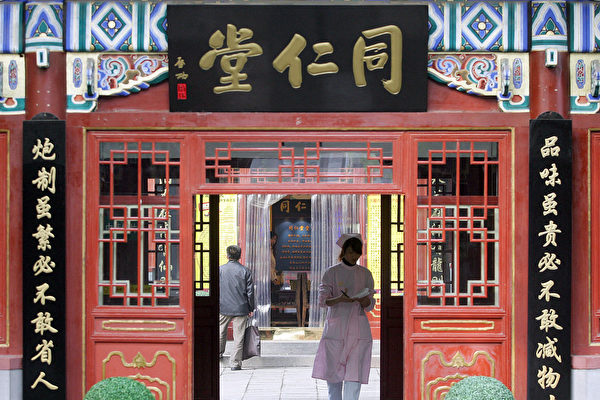
In recent days, a product claiming to be “99% pure Antarctic krill oil” has been found to have discrepancies in its key ingredients compared to what is labeled, putting the century-old renowned brand Tongrentang under public scrutiny. The product prominently features the name “Beijing Tongrentang” in its packaging and promotion, raising concerns about its actual source, authorization, and product authenticity among regulatory authorities and the market.
The Shanghai Consumer Rights Protection Committee recently stated that they had commissioned the East China Sea Fisheries Research Institute of the Chinese Academy of Fishery Sciences to test 15 popular Antarctic krill oil products on the market. The test results revealed that one product labeled as “Beijing Tongrentang 99% pure Antarctic krill oil” had a phospholipid content labeled at 43%, but the actual test result was 0. The committee pointed out that phospholipids are typically considered one of the core components of krill oil, and have decided to summon the relevant producers and distributors of the product for an explanation regarding the test results.
Zhang Hong, a Beijing industry insider who has long been monitoring the health product market, expressed to reporters that if the test results are accurate, the significant gap between the product labeling and actual ingredients will directly affect consumers’ trust in the brand and category. “Especially for products endorsed by the venerable brand Tongrentang, such discrepancies have a more pronounced impact on brand reputation,” he said.
Zhang Hong believes that Beijing Tongrentang should provide a more comprehensive response to the incident and strengthen self-examination of related products within their system. He emphasized the need for clearer explanations to the public regarding product management and brand authorization issues, particularly within the Tongrentang system.
After the incident came to light, Beijing Tongrentang issued a statement on December 15 through its official WeChat account, stating that the product in question was produced by Anhui Habo Pharmaceutical Co., Ltd. and distributed by Beijing Tongrentang (Sichuan) Health Pharmaceutical Co., Ltd. Tongrentang stated that the product had not been authorized to use the “Beijing Tongrentang” name, and they had ordered the cessation of distribution. Legal proceedings have also been initiated to hold the relevant companies accountable.
According to information cited by The Paper, the Shanghai Consumer Rights Protection Committee will summon the aforementioned producers and distributors for clarification on the true status of the products and assign responsibility. However, the results of the related investigations have not been made public yet.
Public records indicate that Beijing Tongrentang (Sichuan) Health Pharmaceutical Co., Ltd. is controlled by Beijing Tongrentang Health Pharmaceutical Co., Ltd., which in turn is jointly owned by China Beijing Tongrentang (Group) Co., Ltd. Zhang Hong pointed out that this structure places the companies involved within the Tongrentang system, but there are still issues with clarity at the product management and brand authorization levels that require a more detailed explanation to the public.
During an investigation by the “Investigating Report” column, calls were made to the official contact number listed on the Tongrentang Group website, with staff stating that the group was not associated with the product in question and bore no responsibility for it. The krill oil product was also not found in Tongrentang’s official sales channels.
The incident has once again sparked discussions in the market regarding Tongrentang’s labeling and authorization models. Ms. Li, a consumer in Hong Kong, stated that over the years, there have been a variety of health products and wellness products featuring the keyword “Tongrentang” on e-commerce platforms, making it challenging for ordinary consumers to distinguish the relationship between these products and the official brand of the group. She remarked, “I am not clear about the different production and distribution entities within Tongrentang, making it difficult for consumers to discern.”
Public records indicate that in recent years, Beijing Tongrentang has been actively expanding into overseas markets, with stores mainly located in Hong Kong, Macau, Southeast Asia, Europe, and America. Hong Kong and Macau have been particularly concentrated regions for their overseas network. In countries such as Singapore, Malaysia, Thailand, Japan, South Korea, as well as in the United Kingdom, France, the United States, Canada, Tongrentang has established presence through joint ventures, partnerships, or licensing agreements.
Ms. Li, who moved from Beijing to Hong Kong, informed reporters that she has been purchasing traditional Chinese medicine products from Tongrentang for a long time, such as Liuwei Dihuang Pills, Qiju Dihuang Pills, and Jia Wei Xiaoyao Pills. “If there are issues, and they merely shift responsibility without directly addressing consumer concerns, it’s difficult to rebuild trust.”
Legal scholar Mr. Xia pointed out that when an established brand is divided into multiple layers of equity and authorization structures, the legal division of responsibility does not necessarily equate to the market-level risk isolation. He emphasized that when problems arise at any link, the public often attributes the overall responsibility to the brand itself.
According to public financial reports, Tongrentang’s revenue and net profit attributable to shareholders showed a year-on-year decline in the first three quarters of 2025. In August of this year, Tongrentang underwent a change in leadership. The new management’s ability to balance performance pressures with brand governance has also become a focal point of market attention.
Currently, regulatory authorities are continuing to summon and investigate the products involved, with legal proceedings already underway. The final characterization of the incident is pending further official announcements.