
After nearly two decades of leftist rule, Bolivia’s geopolitical direction is rapidly being reshaped. The new conservative and pro-business president, Rodrigo Paz, was sworn in last month, clearly shifting the country away from its close alliance with left-wing allies such as China and Venezuela, towards deepening cooperation with the United States and Western partners in an attempt to comprehensively realign the country’s position in the political, economic, and security fields.
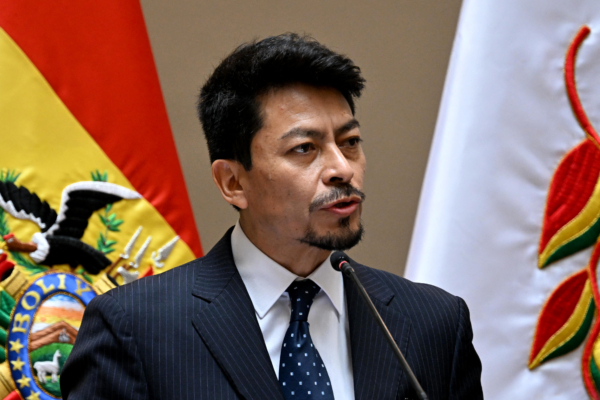
Bolivia’s Foreign Minister, Fernando Aramayo, visited Washington this week. In an interview with Fox News, he stated that the new government is readjusting its bilateral relationship with the United States and plans to attract American investment and technology to reduce its heavy reliance on China.
Aramayo emphasized that Bolivia hopes to establish a new partnership with the United States based on “common values and long-term interests”, aiming to enhance Bolivia’s democratic promotion and regional influence in South America.
During his visit, Aramayo also announced the restoration of diplomatic relations with Israel, reversing the previous left-wing government’s policy of cutting ties due to the Gaza conflict. This move is seen as a clear signal of the Paz government’s alignment with American allies.
Paz’s election signifies the end of the long-standing rule of the left-wing “Movement for Socialism” (MAS). Led by Evo Morales and Luis Arce for nearly two decades, the party faced internal divisions in recent years due to economic deterioration, corruption controversies, and accusations of enabling drug cartels. Public backlash ultimately led to the conservative faction regaining power.
Bolivia, which has the world’s largest lithium reserves, has long attracted significant investments, primarily from Chinese state-owned enterprises. Aramayo stated that the new government will promote legal reforms to attract American funds and technology in order to “break China’s monopoly on resource development in Bolivia”.
He pointed out that the United States possesses mature technology in sustainable resource extraction, and Bolivia aims to enhance its domestic capacity through technology transfer, shifting the development of strategic resources like the Uyuni salt flats towards “multilateral cooperation instead of dependence on a single country”.
Aramayo also acknowledged that Bolivia, like Washington, is concerned about the geopolitical influence behind Chinese investments in Latin America, emphasizing that Bolivia is seeking “credible and responsible investors”.
He highlighted that political turmoil in some South American countries over the years has led to the rapid growth of transnational drug trafficking networks, which have also adversely affected Bolivia. Aramayo frankly stated that the “drug interest group” formed during the previous government’s tenure still influences the country’s operations.
He noted that the new government will collaborate with neighboring countries to strengthen border security, combat transnational crime, and thereby restore public trust in national institutions.
The United States has recently increased pressure on Venezuelan President Nicolás Maduro, including efforts to combat drug-trafficking vessels and detain oil tankers suspected of evading sanctions. In response, Aramayo only remarked that “every country has the right to protect its own interests”.
He added that many South American countries are deeply concerned about the situation in Venezuela, and Bolivia will support efforts to facilitate a “democratic transition” in Venezuela, working alongside regional partners to restore the “legitimacy and credibility” of local government institutions.