
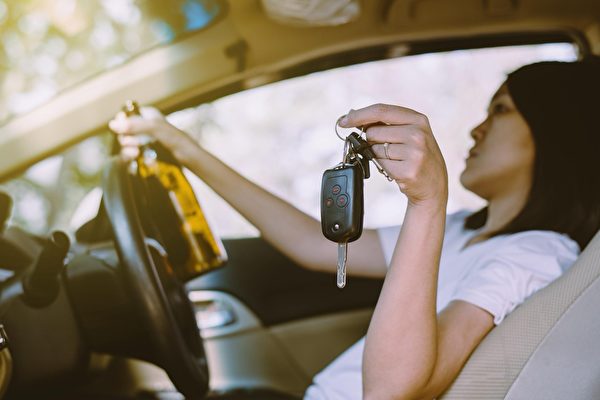
California sees around 4,000 deaths due to traffic accidents annually, with approximately 30% of them related to drunk or drugged driving. California has some of the most lenient penalties for drunk driving in the United States, allowing those with records of driving under the influence to continue driving almost unpunished, leading to a significant increase in the number of road deaths related to repeat drunk driving offenders.
According to a report by CalMatters, in California, drunk drivers usually have their licenses suspended for three years only after their third offense; whereas in New Jersey, it’s eight years, in Nebraska it’s fifteen years, and in Connecticut, it could lead to permanent revocation. In California, some drivers continue to hold their licenses even after being recorded for DUI six times, with some even having 15 DUI records.
Sylvester Conway had two prior convictions for drunk driving. In 2019, he was arrested by the California Highway Patrol for DUI in Fresno County, three days after which he was released. Despite a bench warrant issued against him, Conway failed to appear in court.
California law dictates that the alcohol concentration in a driver’s blood cannot exceed 0.08%; for those under 21 years old, it must be below 0.05%; for rideshare drivers or those with commercial licenses, it should not surpass 0.04%.
In April 2021, Conway’s alcohol concentration was nearly twice the legal limit when he was caught driving in the wrong direction on a highway, signing a DUI citation and promising to appear in court, which he failed to do. In August of the same year, Conway was arrested again for DUI, leading to an arrest warrant due to his third court absence.
In February 2022, 67-year-old Conway was drunk driving and speeding on his way to a casino when his sedan overturned, resulting in the death of passenger Khayriyyah Jones. This incident led to Conway facing murder charges in Madera County. Conway has three pending DUI cases in Fresno County, and three active arrest warrants.
Over the past decade, the number of deaths in California due to drunk driving accidents has surged by over 50%, doubling the rate in other parts of the United States. In 2024, over 1,300 people in California died in DUI accidents, with thousands more injured, and repeat DUI offenders are often the main culprits.
In California, many drivers can continue to drive for years even after their licenses are suspended. Despite receiving a stack of fines or even getting caught for DUI again, they are rarely penalized until tragedy strikes.
In 2021, pediatric physical therapist Sarah Villar was fatally hit by a drunk driver in San Benito County while walking her dog, someone who had been convicted of DUI three times in 2018, 2019, and 2020, all classified as misdemeanors, serving only a few weeks in prison.
In his eulogy for Sarah, her father Dave Villar stated, “If I walked out my front door today, walked onto my porch, and shot at my neighbor every day until I killed someone. When would I become a menace to society? When would I be a danger to my community? I think it’s after that first shot, but our system says it’s after the last shot.”
Dave condemned, “You should be ashamed of a justice system that allows tragedies to happen.” California’s drunk driving regulations fail to distinguish between drivers who can learn from their mistakes and those who continue to endanger lives, missing opportunities to prevent tragedies.
Perpetrators of accidents in California often receive mild legal consequences – DUI resulting in death is not considered a “violent felony”; oddly, causing “serious bodily injury” from a DUI is treated as a felony. In some cases, a DUI driver breaking someone’s leg (fracture) may face a longer sentence than if they had caused a fatality.
In 2024, six bipartisan state lawmakers introduced the AB2210 bill aimed at expanding the use of Ignition Interlock Devices (IIDs), with 34 states already requiring first-time DUI offenders to have these devices installed in their vehicles, also known as alcohol locks. California’s Department of Motor Vehicles (DMV) research shows that IIDs are 74% more effective in reducing DUI recidivism than license suspension.
AB2210 proposes that first-time offenders must have IIDs for up to six months; for second, third, and fourth-time DUI offenders, the duration increases to 12, 24, and 36 months, respectively. However, the DMV stated it lacks the time and resources to enforce this provision, with some advocacy groups suggesting that low-income drivers can’t afford the device fees (labeling it as “racist”).
After passing the State Assembly’s Public Safety Committee, the bill was shelved.