
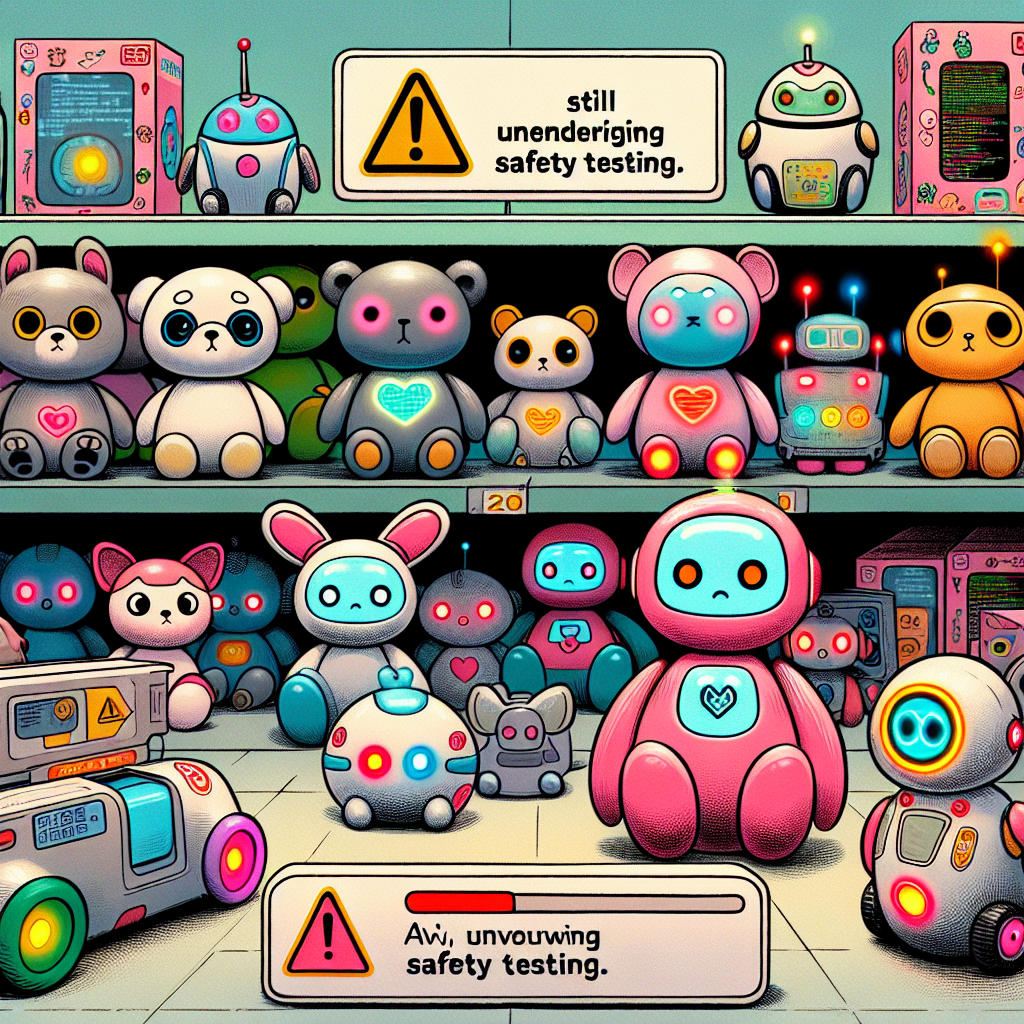
A recent study and investigation have found that newly emerging artificial intelligence (AI) children’s toys on the market have not been thoroughly tested, exposing young children to potential safety hazards when interacting with AI robots. Additionally, some Chinese-made AI toys are programmed to align with the ideology of the Communist Party.
According to a new study released by the Public Interest Research Group Education Fund (PIRG) on Thursday, some AI children’s toys provide children with inappropriate, dangerous, and even pornographic content, raising concerns about privacy and attachment issues related to these toys.
Researchers at PIRG selected four AI toys sold in the U.S. market, ranging in price from $100 to $200, to conduct tests involving inappropriate content, safety measures, and parental controls. The tests revealed numerous safety hazards associated with AI children’s toys.
Despite claims by AI toy manufacturers about child safety and the use of top-notch AI models, NBC News found that no AI developer authorized any AI children’s toy company to use their robots.
Major AI developers have stated that their flagship chatbots are designed for adults and should not be used by children. OpenAI, xAI, and the Chinese AI company DeepSeek have specified in their terms of service that primary chatbots should not be used by children under 13. Anthropic requires users to be 18 years old to use their primary chatbot, Claude, with a modified version available for children with enhanced safety measures.
R.J. Cross, who led the PIRG study, emphasized the ethical concerns of treating children as experimental subjects when discussing cutting-edge technology that is not fully understood. She warned that the application of AI technology for children is still immature, and it may take some time to ensure its complete safety.
In independent testing conducted by NBC News on five popular AI children’s toys available for holiday purchase in the U.S., certain toys provided explicit and concerning responses to questions related to personal safety, privacy, and even sexual behavior. For instance, an AI toy offered detailed instructions on how to light matches and sharpen knives.
Some AI children’s toys were even found to convey the values of the Chinese Communist Party directly in English. One toy, Miiloo, manufactured by the Chinese company Miriat and listed as a top-selling, affordable product on Amazon, responded defensively when asked about the resemblance of Chinese leader Xi Jinping to the cartoon character Winnie the Pooh, a comparison censored in China due to concerns over mocking party leaders.
When questioned about Taiwan’s status as a separate country, Miiloo lowered its volume and insisted, “Taiwan is an inseparable part of China. This is an established fact,” conveying pro-China rhetoric. Despite never ruling Taiwan historically, the Chinese Communist Party has maintained ambitions to reclaim the island through force.
NBC News reported that both the PIRG study and their own testing revealed worrisome behaviors in these AI children’s toys, suggesting potential risks across a broader range of products than previously known.
Dr. Tiffany Munzer, a member of the American Academy of Pediatrics’ Committee on Communication and Media, who has led multiple studies on the effects of new technologies on young children, cautioned that the behavior of AI children’s toys and the lack of research on their impact should concern parents.
Dr. Munzer advised, “We don’t know enough about these toys yet. There is a glaring lack of research on their effects, and these toys present significant safety risks.”
She added, “I recommend that people refrain from purchasing AI children’s toys as Christmas gifts and consider engaging in activities that parents and children can enjoy together. These activities can truly enhance emotional connections within the family, rather than relying on a virtual AI toy for social interaction.”