
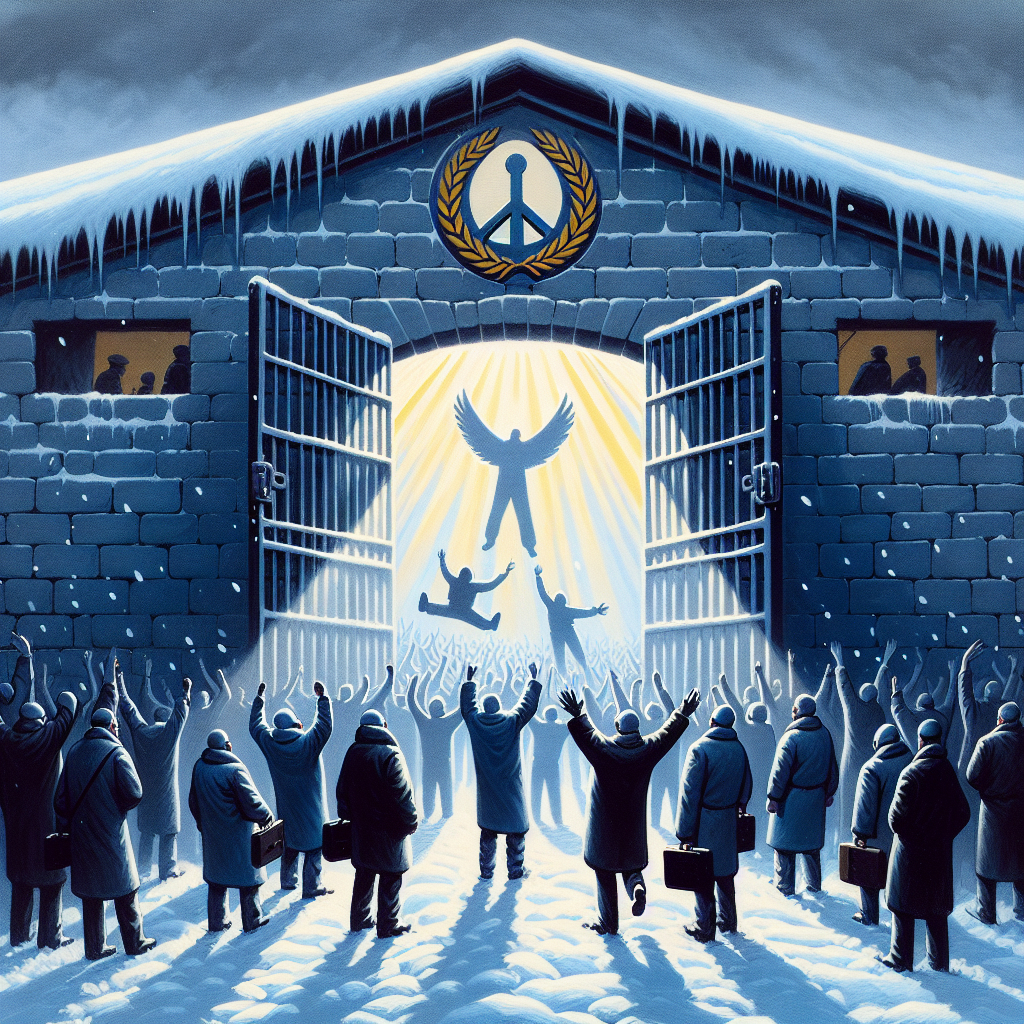
On December 13, 2025, Belarusian President Alexander Lukashenko ordered the release of 123 political prisoners, including Nobel Peace Prize laureate Ales Bialiatski and prominent opposition figure Maria Kalesnikava. This decision came after the visit of a special envoy from U.S. President Donald Trump to Minsk, where significant sanctions relief was announced.
The release of prisoners in Belarus was achieved following two days of talks with John Coale, the U.S. special envoy for Belarus issues.
In exchange, the U.S. agreed to lift sanctions on Belarus’ potash fertilizer industry. Potash is Belarus’ main export product and its rich mineral resource.
According to the exile human rights center “Viasna,” the released individuals include Nobel Peace Prize laureate Bialiatski, sentenced to 10 years, and Kalesnikava, who became a public figure during the 2020 protests and was initially sentenced to 11 years of imprisonment.
“Viasna” stated that Bialiatski was forcibly deported to Lithuania after his release.
Ukrainian President Volodymyr Zelenskiy announced that five Ukrainian citizens were among those released as part of the U.S.-brokered agreement.
Kalesnikava’s sister expressed great joy on her sister’s release and thanked the U.S. and Trump for their efforts in leading this process.
In Minsk, Trump’s envoy Coale informed reporters, “Under President Trump’s instructions, the U.S. will lift sanctions on potash.” He added that with the normalization of bilateral relations, more sanctions would be lifted.
U.S. officials stated that engaging with Lukashenko was aimed at partially distancing him from the influence of Russian President Vladimir Putin.
Due to Russian and EU sanctions, Belarus’ economic dependence on Russia has intensified. Bloomberg reported analysts indicating that Belarus is starting to see value in restoring some relations with the Western world.
Exiled opposition leader Sviatlana Tsikhanouskaya expressed gratitude for Trump’s efforts, emphasizing that the U.S. actions were humanitarian, while EU sanctions should be maintained to drive systemic change in Belarus.
Tsikhanouskaya emphasized, “We have highlighted to our American partners that our goal is to achieve irreversible change in Belarus… Political stability can only be achieved by ending repression.”
This release marks the largest scale under Lukashenko since the Trump administration began engaging with him. Lukashenko had previously referred to these political prisoners as “thugs” and questioned why they should be released.
While U.S.-Belarus relations thaw, tensions between the EU and Belarus remain high. The EU accused Belarus of launching hybrid attacks against Lithuania, including incidents like hot air balloon intrusions, leading Lithuania to declare a state of emergency. EU Commission President Ursula von der Leyen stated that the EU is “preparing further measures” to impose sanctions on Belarus.
(This article referenced reports from Reuters and Bloomberg.)