
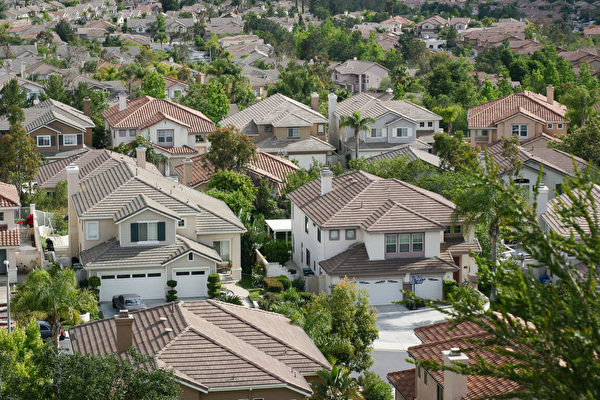
According to the daily data from the real estate platform “Parcl Labs,” housing prices in the United States have finally dropped compared to last year, albeit only slightly. Parcl Labs’ data mainly includes high-frequency listings of single-family homes, apartments, and townhouses, both new and resale.
Since mid-2023, housing prices nationwide in the United States have not seen a decrease. In March 2022, the Federal Reserve announced its first interest rate hike post-COVID-19 to curb inflation. Subsequently, as the Federal Reserve continued to raise interest rates, mortgage rates also significantly increased.
Data provided by the Mortgage News Daily in the United States states that the average interest rate for popular 30-year fixed-rate mortgages rose from 3.9% in March 2022 to slightly above 7% by June 2023.
Jason Lewris, co-founder of Parcl Labs, stated, “After experiencing a period of rapid price increases in the housing market from 2020 to 2022 during the pandemic, recently, we have seen a national softening in prices. The sharp increase in mortgage rates from 2022 to 2023 has impacted affordability: buyers unable to afford homes due to high prices, resulting in decreased home sales, and sellers having to adjust their expectations. Historically, factors such as impacts on credit or affordability, weakened demand, slow inventory absorption, when combined, often lead to a national decline in housing prices.”
According to data from the real estate website Realtor.com, active listings in November were nearly 13% higher than in November 2024, while new listings only increased by 1.7%. At the same time, sellers are withdrawing properties from the market at an unusually high rate.
Although housing prices across the United States have fallen by less than 1%, larger decreases have been observed in cities like Austin, Texas; Denver, Colorado; Tampa, Florida; Houston, Texas; Atlanta, Georgia; and Phoenix, Arizona, ranging from 3% to 10%.
Conversely, some regions have seen housing price increases. Cleveland, Ohio, saw a rise of 6%; New York City and Chicago, Illinois, both increased by 5%; Philadelphia, Pennsylvania, climbed by 3%; while Pittsburgh, Pennsylvania, and Boston, Massachusetts, each saw a 2% increase in housing prices.