
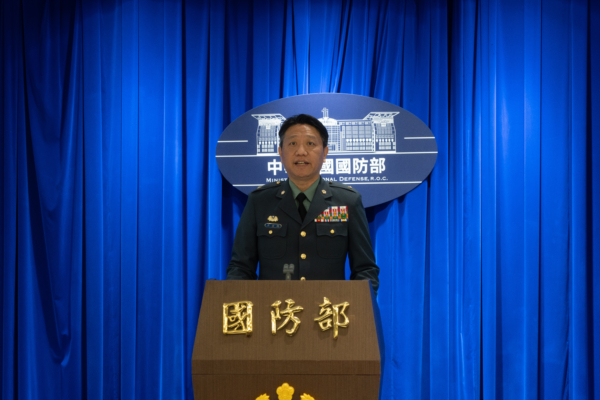
The Ministry of National Defense of the Republic of China announced that it will launch the “Emergency Loans for Military Officers and Soldiers” program, scheduled to take effect in January next year. Experts pointed out that the introduction of this mechanism is an effective way to prevent the Chinese Communist Party from infiltrating the military with money and help reduce cases of military espionage.
On December 10th, the Ministry of National Defense of the Republic of China stated that the “Emergency Loans for Military Officers and Soldiers” program will provide a legal channel for officers and soldiers to access small loans to relieve temporary financial needs, allowing them to focus on their military training duties without financial pressure that could lead to criminal activities.
Peng Jieshen, a former instructor from the Republic of China Marine Corps and a former lecturer at the Thunder God Consulting Company, expressed to The Epoch Times that the relief program issued by the Ministry of National Defense aims to prevent the Chinese Communist Party from tempting military officers and soldiers with loans or money to become spies. The program includes various emergency relief options for military officers, their spouses, or immediate family members, such as medical care for injuries or illnesses, disaster relief, post-natal care, long-term care, funeral expenses, and small-scale relief. The maximum amount for small-scale relief loans is 200,000 New Taiwan Dollars (NTD), while other categories offer up to 600,000 NTD, with the possibility of borrowing up to 1.2 million NTD in case of multiple emergencies.
Peng Jieshen stated that the relief program by the Ministry of National Defense is indeed an effective method to prevent the infiltration of the military by the Chinese Communist Party through financial means. It also eliminates various operational issues associated with handling spy cases within the military, allowing military officers and soldiers to focus on their training duties and serving as an incentive for military recruitment.
He also pointed out that espionage cases in Taiwan are rampant and preventing them requires careful measures. He proposed the following six recommendations:
1. The recruitment of military personnel should be selective to avoid indiscriminate recruitment and potential infiltration by spies or undesirable elements. The focus should be on selecting candidates with no ties to gangs, drug use, alcoholism, promiscuity, or mental instability to maintain the military’s integrity.
2. The Ministry of Defense should hold lower-level unit political warfare guidance officers accountable for implementing anti-spy policies. These officers should not only promote anti-communist patriotism within the military but also monitor the behavior of subordinates to detect any deviations.
3. The military should expand its counterintelligence teams to prevent espionage activities before they occur. These teams should monitor locations such as temples, gangs, money lenders, internet cafes, pawnshops, karaoke bars, and restaurants with suspicious activities to thwart espionage attempts.
4. The military should establish a system of defense cells to enhance security. The presence of defense cells, who discreetly observe and report any threats or suspicious behavior within their units, can significantly contribute to early detection and prevention of espionage.
5. In cases where spies are apprehended, regardless of their rank, the judicial system should ensure fair sentencing without leniency for senior officials and harsher penalties for lower-ranking personnel involved in espionage activities.
6. To minimize the presence of potential spies, Peng Jieshen suggested reducing sentences for self-confessed spies, offering rewards for internal and external whistleblowers leading to successful convictions, and incorporating their contributions to promotions and evaluations in the military.
By implementing these recommendations and ensuring transparency in anti-espionage measures, the Republic of China’s military can effectively safeguard national security and uphold the integrity of its defense forces.