
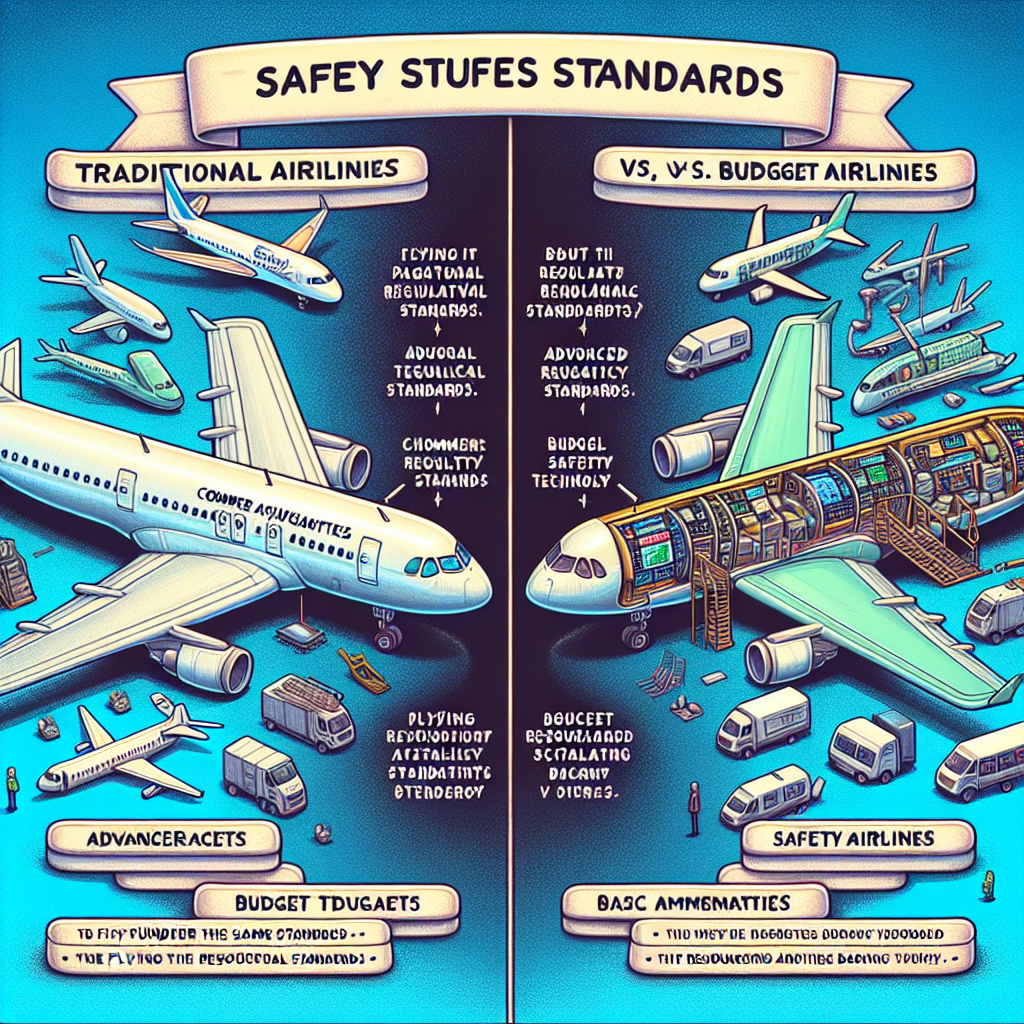
Low-cost airlines, also known as budget airlines, offer cheaper tickets compared to traditional airlines, thus attracting specific customers. But some may wonder, are the flight safety standards of budget airlines as low as their ticket prices? Is flying on a budget airline more risky? Addressing these questions, experts have provided detailed explanations.
Ash Jurberg, a freelance writer who has visited over a hundred countries, wrote in The Huffington Post that flying on a budget airline is not about risking safety for cheap tickets. He emphasized that despite the possibilities of flight delays, crowded seats, and chaotic boarding processes, flight safety is not a concern.
Jurberg pointed out that many passengers may not realize that aviation safety regulations are non-negotiable. Regardless of ticket prices, aviation authorities enforce the same standards for every airline.
To delve deeper into the safety issues of budget airlines, opinions of several other travel experts were consulted.
George Novak, President and CEO of the National Air Carrier Association in the United States and former Federal Aviation Administration (FAA) lawyer who had worked on aviation safety in over 80 countries, affirmed that in most markets, low-cost airlines are equally safe as full-service airlines.
In the U.S., all airlines operating under Part 121 regulations (covering all commercial airlines operating large aircraft on scheduled routes) adhere to the same FAA regulations. Novak stated that there are no exceptions in terms of scale, revenue, or ticket pricing structures.
He stressed that these regulatory protections extend globally, requiring even small airlines in remote regions to comply with minimum safety standards. “The International Civil Aviation Organization conducts stringent safety audits on civil aviation agencies worldwide,” he added.
Dean Van Es, CEO of Fast Cover travel insurance company, mentioned that budget airlines make money by implementing cost-cutting measures, such as adding more seats on planes, operating point-to-point routes, and avoiding expensive hubs. However, these measures do not compromise flight safety.
In addition to those measures, budget airlines may reduce in-flight comfort and amenities, charge for meals, shorten aircraft turnaround times, and accelerate boarding processes to cut costs.
Jurberg emphasized that insurance companies provide compelling independent evidence because their profits depend on accurately assessing risks. He noted that during dozens of travel insurance purchases, he was never asked which airline he would be flying with, indicating that airlines are not considered a risk factor by insurers.
Chrissy Valdez, Senior Operations Director of Squaremouth, the largest travel insurance company in the U.S., stated that insurance companies do not inquire about the airline when travelers purchase insurance because it is not seen as a risk factor.
In essence, insurance companies believe the difference between budget airlines and traditional airlines lies in their operational methods, not in safety risks.
Travel blogger Jessica Kameko Rooks pointed out that as budget airlines attract a diverse range of passengers, from those flying budget airlines for the first time to those mainly focused on low-cost tickets, passengers might encounter unfamiliar travel etiquette.
She explained that this could lead to a perception of a “rougher” travel experience on budget airlines, but it does not reflect the safety standards of these airlines.
Jurberg noted that when passengers experience basic services, chaotic boarding processes, and the lowest prices, they naturally assume that corners are being cut in every department. People tend to judge safety based on what they see, but true safety is achieved through strict regulation.
Rooks added, “The fear of budget airlines prevents many from booking trips they could afford. Once travelers realize that ‘budget’ does not equate to unsafe, they will understand that the world is more accessible than they imagined.”