
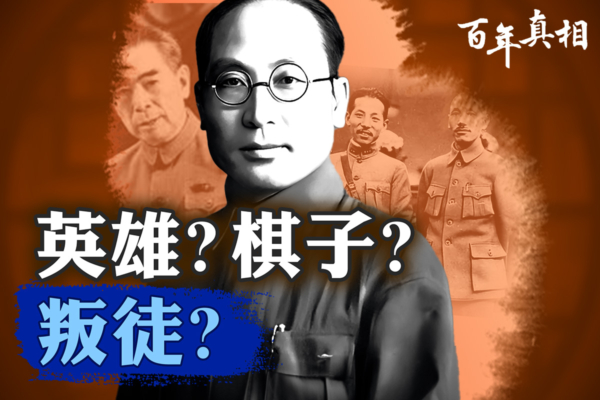
Yan Baohang: Zhang Xueliang’s close friend, Chiang Kai-shek’s confidant, yet passed earth-shattering intelligence to the Chinese Communist Party. His betrayal altered history, but his life ended in tragedy.
He deceived Chiang Kai-shek and his wife, sent millions of Kwantung Army intelligence to the Soviet Union, but met a tragic end. Was Yan Baohang a hero or a traitor?
On May 22, 1968, in the dimly lit hall of Beijing’s Rejuvenation Hospital, an elderly man in tattered prison uniform lay weakly on a waiting room bench, with no one rushing to his aid, as if time had frozen there.
At the verge of death, this seventy-year-old man reflected on his life, “Why did Premier Zhou never speak for me, he knew I was innocent.” “Will Madam Chiang forgive me? She once trusted me so much.” “Will General Zhang Xueliang hate me?”
“Is there really a God? Am I a traitor like Judas?”
This man is the once influential Yan Baohang, close friend of General Zhang Xueliang, a Communist Party agent recommended by Zhou Enlai to join the CCP while being in the inner circle of Chiang Kai-shek’s wife.
Today, let’s delve into the tumultuous life of Yan Baohang, filled with the tragedy of betrayal.
In 1918 in Fengtian, now Shenyang, 21-year-old Yan Baohang had just graduated from the top educational institution in Northeast China, Fengtian Normal School. At the Christian Youth Association, he met the person who would change his destiny – Northeastern warlord General Zhang Xueliang.
Zhang Xueliang and Yan Baohang, five years his junior, hit it off immediately. Sharing similar interests, they quickly became inseparable friends.
Coming from a humble background, Yan Baohang established a school for underprivileged children in Fengtian, supported by Zhang Xueliang. The general not only visited personally but also made generous donations, even raising funds in the Northeast Three Provinces for the school. He once told Yan Baohang, “Virtue is never solitary; there will always be neighbors.” This sincere trust deepened their friendship rapidly.
In 1927, recommended by the Christian Youth Association and financially supported by Zhang Xueliang, Yan Baohang went to study sociology at the University of Edinburgh in the UK, initially planning to stay for four years.
The following year, when Zhang Xueliang announced the Northeastern Restoration and pledged allegiance to the Nationalist Government, Yan Baohang received an invitation to return early to China and became the general secretary of the Fengtian Christian Youth Association. He was the first Chinese to hold this position.
At that time, Yan Baohang was a devout Christian who had read the Bible thoroughly, been baptized, and had his children baptized according to Christian traditions at their births.
However, as the situation in Northeast changed, he became increasingly involved in social activities, organizing students to assist the police in drug searches, publicly burning confiscated opium, earning him the nickname “today’s Lin Zexu” among the people of Shenyang.
His Christian identity served as a pass for him to enter the upper echelons of the Nationalist Party. After the Northeast Incident of 1931, he organized the “Northeast People’s Anti-Japanese Salvation Society” in Beiping (now Beijing) to support the resistance against the Japanese. His organizational skills and devout faith caught the attention of Chiang Kai-shek and Soong Meiling.
In 1934, Chiang Kai-shek initiated the “New Life Movement,” and Soong Meiling took charge as the movement’s director. She invited Yan Baohang, also a devout Christian, to serve as the secretary and executive officer of the New Life Movement Promotion Association.
Yan Baohang accepted the appointment and entered Chiang Kai-shek’s inner circle. He shared an office with Chiang Kai-shek and gained the trust of Soong Meiling, who even gifted him with an American-made Ford sedan.
Yan Baohang was appointed by Chiang Kai-shek as “Chairman’s Camp Deputy Lieutenant Senator,” equivalent to a deputy officer. At the time, even the wives of officials and dignitaries had to register and make phone calls to see Madame Chiang Soong through him before seeking approval from Soong Meiling.
In the eyes of others, he was a prominent figure by Chiang’s side, including being a good friend of General Zhang Xueliang. Even the head of the Nationalist government’s intelligence agency regarded him highly.
Kuomintang elder Chen Cheng once said, “If Yan Baohang is a Communist, then all of us are Communists.”
During his time with the Christian Youth Association, Yan Baohang read extensively about communism, Lenin, and the Soviet Union, attracted by the content depicting “abolishing poverty, equality for all.”
In 1937, during the Second United Front between the Nationalists and Communists, Yan Baohang’s life took an irreversible turn. With the persuasion of Zhou Enlai, he secretly joined the Communist Party. Zhou Enlai instructed him to continue operating as a non-party member, codenamed “Yan Zheng,” working directly under Zhou’s leadership. Thus, Yan Baohang’s espionage career officially began.
In May 1941, Yan Baohang attended a small dinner party with senior Nationalist officials. Amidst the mingling, he heard about Germany’s plan to attack the Soviet Union around June 20. His heart raced upon hearing this news, but he remained calm, subtly inquiring with Sun Ke, son of Sun Yat-sen, to confirm it. He discreetly left the gathering ahead of time to relay the information to Zhou Enlai and Soviet military attaché Rogachev.
On June 22, the German army indeed attacked the Soviet Union. Marshal Zhukov mentioned that “intelligence from China” enabled the Soviet army to prepare urgently, avoiding a disastrous outcome. Shortly after, Rogachev informed Yan Baohang, “Your intelligence was the first, Comrade Stalin knows about you.” Subsequently, the Soviet Communist Party also expressed gratitude to the CCP Central Committee.
In 1944, Yan Baohang once again took action, gathering detailed deployment information of the Japanese Kwantung Army in Northeast China and sending it to the Soviet Union, aiding the Soviet army in destroying over a million Kwantung Army troops in 1945.
He even hid a secret radio transmitter for communication with the CCP. His eldest daughter Yan Mingshi served as the radio operator for this station.
During that time, many Northeasterners sought refuge in Chongqing, among them were those without means for food and shelter, whom Yan Baohang frequently accommodated. His home was often full of people.
Yan Baohang’s reputation for being generous and righteous attracted people from all walks of life, earning his house the nickname “Yan Family Old Shop.”
However, this was just the surface. Little did many know that the Yan family was also one of the bases of the Southern Bureau of the CCP at that time. Zhou Enlai held multiple secret meetings on the second floor, and figures like Dong Biwu and Ye Jianying also hosted conferences and worked there.
There were suspicions within the Kuomintang regarding Yan Baohang.
His open associations with left-wing figures, sending all four of his children to Yan’an, naturally raised suspicions within the Nationalist government.
One day, Liu Zhi, the commander of the Chongqing garrison, summoned Yan Baohang to headquarters and bluntly asked, “I am a soldier, speaking straightforwardly, you sent four out of your six children to Yan’an, are you a Communist?” Yan Baohang retorted, “Do I look like a Communist to you?… It was their own decision as adults, I can’t shackle them with chains to restrict their freedom of movement, besides, they went to join the Anti-Japanese efforts.”
After the CCP took power, Yan’s family found many documents from the Nationalist era in the Chongqing Archives, including records written by military intelligence regarding his activities under the name of “Yan Baohang.” This proved that the Military Intelligence Bureau had been aware of him, but ultimately did not dare to act against him.
Years later, Zhang Xueliang told Yan Baohang’s third daughter, Yan Mingguang, “Your father’s and my lives were spared by Madame Chiang. Someone accused your father, and Madame Chiang said Yan Baohang is a devout Christian, how could he be a bad person, you cannot touch him.”
In 1945, after the victory of the War of Resistance against Japan, the civil war between the Nationalists and Communists was imminent. Yan Baohang stood at the crossroads of history and chose a deeper betrayal. He used his position to incite a shocking conspiracy known as the “Xiaoguan Tragedy.”
The so-called “Xiaoguan Tragedy,” according to the official CCP narrative, occurred in June 1946 during the nationwide anti-war, pro-peace and democracy movement when nine representatives of the Shanghai People’s Association for Peaceful Petitions headed to Nanjing for a petition. When the delegates arrived at the Xiaoguan Railway Station in Nanjing, they were surrounded and attacked by hundreds of undercover Nationalist agents, severely injuring individuals like Ma Xulun and Lei Jieqiong. Subsequently, the CCP used this incident to defame the Nationalists, inciting the people against the Nationalist government.
However, the historical truth is that Yan Baohang deliberately provoked disguised Nationalist agents at the Xiaoguan Railway Station, sparking the conflict.
This assertion is supported by evidence, as many years later, an article introducing Yan Baohang by the CCP revealed that shortly after Yan Baohang and others were taken to the hospital, Zhou Enlai rushed to offer condolences. Zhou told Yan, “Comrade Baohang, you have completed the mission the Party entrusted to you!” Subsequently, Mao Zedong and Zhu De also sent condolence messages.
What mission did Yan Baohang complete? – Using the “Xiaoguan Incident” to incite Chinese intellectuals and the public, who were unaware of the truth, to resent and even hate the Nationalist regime. Unfortunately, those like Lei Jieqiong, who were injured, remained in the dark until their deaths.
After the CCP seized power, Yan Baohang served as the Deputy Director of the Office of the Foreign Ministry, overseeing the compilation of historical and literary materials. His identity as a CCP agent was not publicly disclosed, only his party membership status was made known within the Foreign Ministry.
He handled matters discreetly but could not escape the storm of the Cultural Revolution.
In November 1967, the seventy-two-year-old Yan Baohang was seized by the Red Guards, branded as a member of the “Northeast Gang, a defector, and counter-revolutionary element,” and imprisoned in the Qin Cheng Prison.
When he was captured by the Red Guards, he asked his wife to seek help from Zhou Enlai. However, Zhou Enlai never spoke a word in his defense.
In fact, Zhou Enlai was the one who understood Yan Baohang’s value to the intelligence community of the CCP the most because he had been commanding him directly all along.
In 1937, when Yan Baohang applied to join the CCP, the higher-ups of the Comintern did not agree, and there were discussions within the CCP, deeming his social relations complex and unreliable. However, Zhou Enlai’s response was, “Your relations may be complex, but can you do what Yan Baohang can do?”
In 1962, during a tense period in Sino-Soviet relations, Zhou Enlai mentioned in a central meeting that it wasn’t just the Soviet Union helping the CCP, but the CCP also helped the Soviet Union by providing precise intel about Hitler’s planned attack on the Soviet Union. However, he then added, “I forgot who gave me that intelligence.”
Yan Baohang wrote a lengthy letter to Zhou Enlai, detailing the circumstances at that time. However, Zhou Enlai never publicly acknowledged Yan Baohang’s contributions to the CCP, and after Yan was thrown into prison, he never sought to vindicate him.
While in prison, Yan Baohang endured torment. In May 1968, at the age of 73, he passed away from a cerebral hemorrhage at the Rejuvenation Hospital, dying alone on a bench, with the authorities instructing, “Do not preserve the ashes.”
His family only learned of his death three years later. He was eventually exonerated by the CCP a decade after his passing.
During the Cultural Revolution, his youngest son, Yan Mingfu, was detained on charges of “colluding with foreigners” at the Qin Cheng Prison, imprisoned alongside his father. His elder daughter Yan Mingshi was severely persecuted, his elder son Yan Mingxin sent to labor camps, and his second son Yan Mingzhi died suddenly of a heart condition during the persecution.
Thus, Yan Baohang was deceived by the utopian lies of Communism, betrayed his faith, disappointed his friends and superiors’ trust, served the CCP faithfully, yet ended up in ruins with a shattered family, a tragic outcome.
In 1995, Russia awarded Yan Baohang’s descendants with the “Fifty Years of Victory in the Great Patriotic War” medal.
He was finally buried in the Revolutionary Martyrs’ Cemetery of Babaoshan by the CCP, in a empty grave without his remains.
Well, that concludes today’s program. Thank you for watching, and we’ll see you next time.
Subscribe to the “One Hundred Years of Truth” Clean World Channel:
https://www.ganjing.com/channel/1f702725eeg3uz4eAgKxHgadC1kh0c
Subscribe to the YouTube channel:
https://www.youtube.com/channel/UCJ0WwxWijk8NemAqLtqj4Sw
Subscribe to the Telegram group:
https://t.me/bainianzhenxiang
-Production of the “One Hundred Years of Truth” program team