
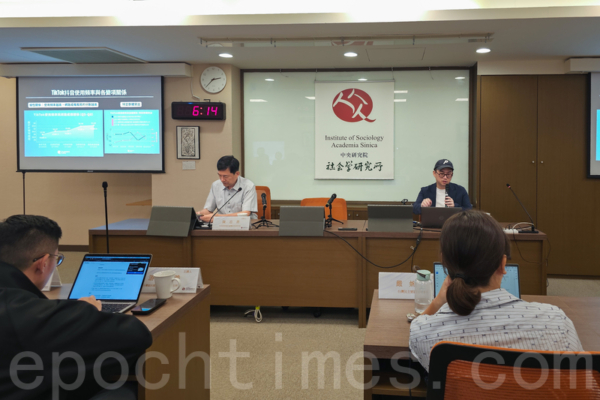
On July 22nd, the Taiwan Institute of Sociology at Academia Sinica held a forum where Eric Hsu, a researcher from the Taiwan Democracy Laboratory, gave a talk on the role and impact of the TikTok platform in Taiwanese society amid the Chinese Communist Party’s united front efforts against Taiwan.
Eric mentioned that there are many questions surrounding TikTok, whether it be its potential cybersecurity issues, its role in CCP’s united front strategy, its algorithm operations, and the short video content it offers that may potentially alter the Taiwanese people’s perceptions or their information consumption habits.
The Taiwan Democracy Laboratory conducted two studies, including a survey on TikTok adolescent users in Taiwan in 2025, and a nationwide quantitative survey on TikTok users in Taiwan. The reports released were titled “2025 TikTok Adolescent User Survey – Nationwide Online Survey Data Announcement” and “Where Does the Shake Go? – Active Use of TikTok and the Reconception of Taiwan’s Democratic Politics”.
In the TikTok adolescent user survey, Eric explained that the study collaborated with local cultural and educational non-profit organizations in Taiwan, recommending various school teachers who had previously worked with the organization as contact points. Researchers randomly selected three schools in northern, central, and southern Taiwan (including complete middle schools, comprehensive high schools, and regular high schools) and enlisted teachers’ help in recruiting participants.
The study involved a total of 16 interviews with adolescents who had TikTok or Douyin habits and were willing to be interviewed. Out of these, 14 were female and 2 were male; there were 5 students from the first year of high school, 6 from the second year, and 5 from the third year, representing various groups. Interviews took place from December 2024 to January 2025, with each lasting approximately 60 minutes. Prior to the interviews, complete parental consent and informed consent procedures were carried out to safeguard the interviewees’ rights.
The research found that TikTok attracted adolescents primarily due to its diverse and trending content, easily consumable information, social networking purposes, unique user social mechanisms, and precise algorithms.
However, Eric questioned whether TikTok’s algorithm was truly without issues. They discovered that after pushing a lot of entertainment content, TikTok consecutively showed two to three political contents to adolescent users. These political contents were often observed before the 2024 Taiwan elections, discussing topics such as war, pro-China sentiments, corruption in specific Taiwanese parties, and chaos in the parliament.
In terms of the role of TikTok in CCP’s united front strategy, the study revealed that the CCP used Taiwan’s domestic issues to incite negative emotions and division, aiming to diminish people’s confidence in Taiwan’s democratic system. They emphasized dissatisfaction with Taiwan’s current living conditions, enhanced “closeness” between the societies and people of the two sides, and inserted images of brutal war scenarios, actively shaping a positive image of cross-strait unification.
Young TikTok users in Taiwan believed that even in the event of unification, it might not impact the general public significantly. They found war terrifying, feared for the safety of their loved ones, and might choose to surrender. This stemmed from their lack of a clear overall view of the CCP threat, sensitivity, and resistance to the threat, raising concerns. Additionally, adolescents generally opposed the banning of TikTok, considering platform usage as a matter of personal discipline and choice.
Eric highlighted that adolescent TikTok users acknowledged the presence of many negative contents on the platform, including cyberbullying, promoting suicide and self-harm, as well as content related to child exploitation, which are topics that Taiwan should discuss more seriously.
Regarding the nationwide quantitative survey of TikTok users in Taiwan, the study found that active users had significantly higher proportions of accessing political viewpoints from social media platforms such as key opinion leaders (KOL), fan pages, and specific political figures, with a higher level of trust in them.
In the category of “most supported party,” the Democratic Progressive Party (DPP) was the most supported party among both active and non-active TikTok users, with percentages of 20.9% and 26.1% respectively, while the support percentage among active users was significantly lower. Interestingly, the choice of the Taiwan People’s Party as the most supported party was significantly higher among active users, at 11.6%, compared to 6.4% among non-active users.
According to the “2025 TikTok User Survey – National Online Survey Data Announcement,” when asked about the continuous escalation of the CCP’s infiltration and united front strategies against Taiwan, respondents believed that the Kuomintang was the party most likely to benefit from this.
The report warned that the short video format information dissemination driven by TikTok had significantly changed public information consumption habits. The fragmented and rapid information dissemination pattern also reinforced manipulation techniques such as the spread of conspiracy theories, influencing audiences’ “cognitive biases” more surreptitiously through storytelling.
Eric stated that the report “Where Does the Shake Go? – Active Use of TikTok and the Reconception of Taiwan’s Democratic Politics” mentioned that internet addiction and frequency of use showed a significant linear positive correlation, with the higher the frequency of TikTok use, the higher the risk of addiction.
They found that active TikTok usage behavior could make users more pro-CCP, indicating that TikTok had a significant influence on altering political attitudes.