
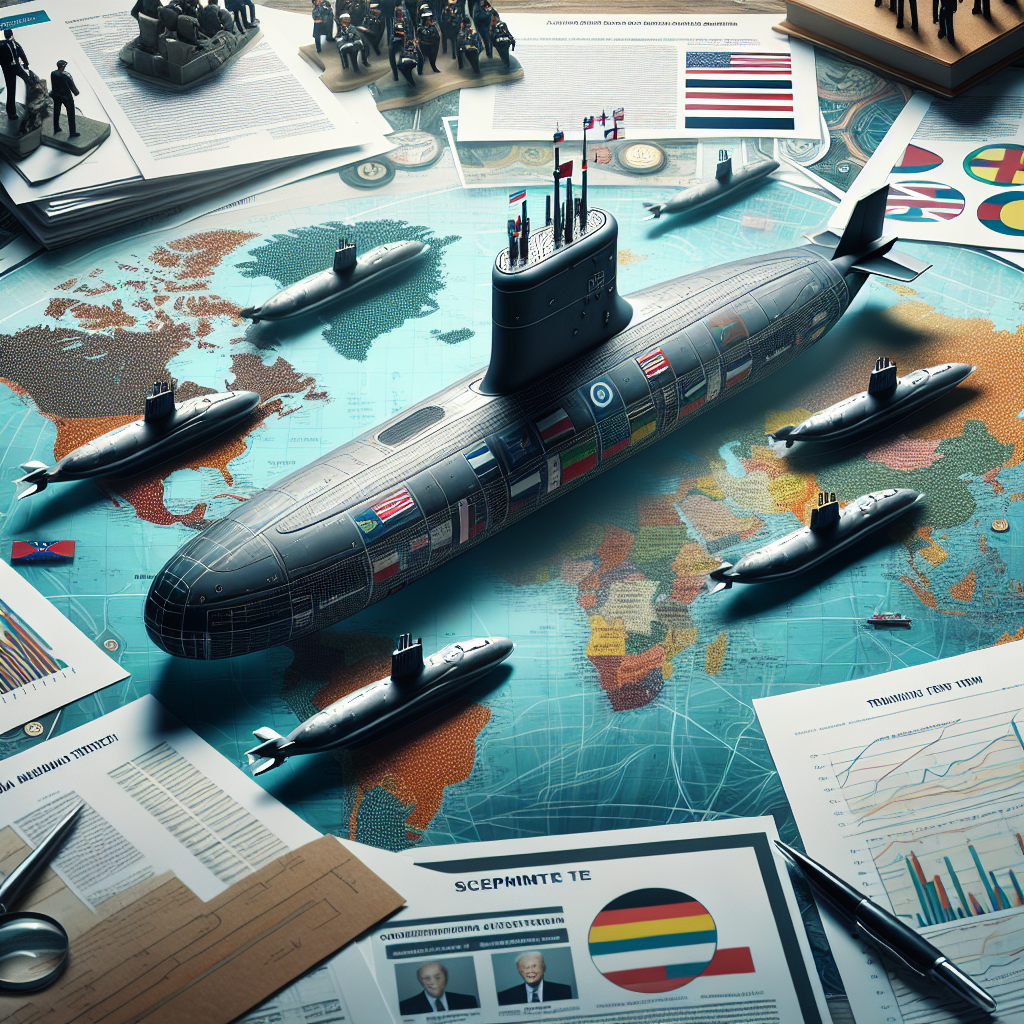
The US Department of Defense has officially initiated a comprehensive review of the “AUKUS” nuclear submarine agreement, evaluating whether this trilateral military plan signed by Biden in 2021 still aligns with the Trump administration’s “America First” policy. The agreement aims to assist Australia in constructing a nuclear-powered submarine fleet with the support of the US and the UK to enhance deterrence against the Chinese Communist Party in the Indo-Pacific region.
According to the AUKUS agreement, Australia will acquire up to five Virginia-class submarines from the US starting from 2032. Subsequently, the UK and Australia will jointly design and build a new generation of submarines with US assistance. The UK expects to receive the first batch of vessels by the late 2030s, while Australia is set to take delivery in the early 2040s.
The Financial Times first revealed this review, followed by Reuters and Bloomberg confirming the news. The US Department of Defense stated that the review aims to confirm if AUKUS aligns with President Trump’s “America First” policy, which includes ensuring the readiness of US military, demanding allies to share collective defense responsibilities, and strengthening the defense industrial base.
The review is led by Elbridge Colby, a defense department policy advisor who has been skeptical of AUKUS and warned about the limited resources of US submarines. He cautioned that allocating attack nuclear submarines (SSNs) to allies might weaken the US deterrent capabilities against the Chinese Communist Party in the “first island chain.”
Colby previously expressed on social media that possessing fewer SSNs at crucial times and locations in a conflict with China would be a reckless move. He emphasized that US SSNs are indispensable in defending Taiwan in any conflict scenario.
The Pentagon spokesperson mentioned that the review will continue for about 30 days, and any policy adjustments will be officially announced through proper channels.
In response to the US review, both Australia and the UK have expressed their commitment to continue fulfilling the AUKUS agreement. Australian Defense Minister Richard Marles expressed confidence in the progress of the AUKUS agreement and underscored Australia’s ongoing cooperation with the US during the formal review period under the Trump administration.
Marles emphasized that AUKUS is a long-term plan spanning decades that aligns with the strategic interests of the three countries. He reiterated that governmental changes are common, and he is confident that the agreement will be realized.
In 2023, Australia pledged to invest $368 billion Australian dollars (approximately $239.3 billion USD) over the next 30 years in collaboration with the US and UK to advance the largest defense project in history.
Australia has already paid the first $500 million USD in 2025 to enhance US submarine production capacity, with an additional $2 billion USD to be provided this year. The UK also indicated an understanding of the need for the US to reassess policies.
A British official told the Financial Times that the Labor Party government conducted an internal review of AUKUS last year and reaffirmed the strategic importance of the UK-US relationship, announced increased defense budgets, and confirmed their commitment to AUKUS.
Earlier this month, UK Prime Minister Keir Starmer announced plans to build up to 12 new nuclear-powered attack submarines as part of the AUKUS program to address growing security threats.
John Lee, an expert on Indo-Pacific issues at the Hudson Institute, noted that the Pentagon’s review primarily focuses on auditing US capabilities to assess whether there is still room to sell up to five nuclear-powered submarines while the US falls short of production targets.
Lee added that Australia’s current defense spending and its ambiguous stance on contributing to a Taiwan Strait conflict are also factors to consider. Should Australia not raise defense spending to 3% of GDP, rapid weakening of its navy could occur.
Charles Edel, Chair of Australian studies at the Center for Strategic and International Studies (CSIS), emphasized the importance of AUKUS in enhancing deterrence through greater participation. He highlighted the critical nature of seeking US support for Australia during Prime Minister Anthony Albanese’s upcoming meeting with former President Trump at the G7 summit in Canada.
Edel stressed that while Australia’s defense spending is gradually increasing, it is still insufficient compared to other democratic countries to support both AUKUS and the development of existing conventional forces.
Campbell told the Financial Times that AUKUS is the most significant military and strategic cooperation among the US, Australia, and the UK in decades. He emphasized the importance of supporting efforts to strengthen coordination, increase defense budgets, and achieve consensus goals. Any actions from within the bureaucratic system that undermine AUKUS could lead to a trust crisis among the closest security and political partners.