
Due to massive human plastic waste entering the oceans, large areas of plastic garbage patches have formed on several major oceans globally, with some of these patches covering areas as large as 1.6 million square kilometers. In order to address the issue of plastic waste accumulating in the oceans, Japanese scientists have invented a type of plastic that can quickly degrade completely in the ocean, offering hope to reduce the amount of garbage in the oceans.
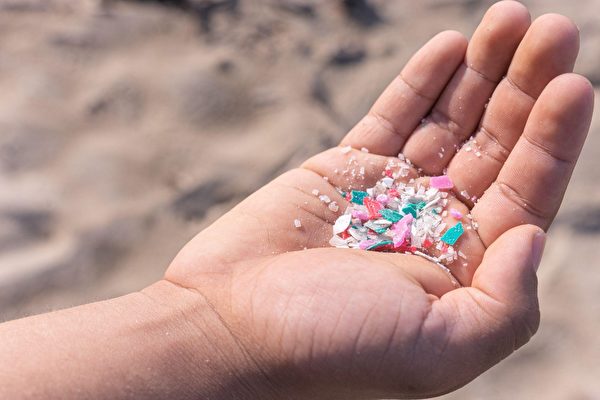
The United Nations Environment Programme predicts that plastic pollution will double by 2040, with 23 to 37 million tons of plastic waste being discharged into the world’s oceans each year. The plastic micro-particles (plastic fragments smaller than 5 millimeters) produced from the breakdown of these plastics are entering the bodies of humans and animals through the food chain. Studies have indicated that these plastic micro-particles are posing risks to human reproductive ability, intelligence, and health.
To tackle this issue, scientists have been exploring various biodegradable plastics, but most of them face challenges such as slow degradation rates, high production costs, or insufficient plastic strength. For example, polylactic acid (PLA) is biodegradable but not water-soluble, making it difficult to effectively break down once it enters the ocean.
In a recent development, a research team at the RIKEN Center for Emergent Matter Science (CEMS) of RIKEN, Japan, has created a new type of durable plastic that does not harm the marine environment. This plastic can be used in 3D printing, medical, and health-related fields. The research findings have been published in the journal “Science” and have received support from events such as World Environment Day (June 5th) for promotion.
This innovative durable plastic is made from sodium hexametaphosphate (SHMP) and guanidine monomer (guanidinium methanediamine), primarily forming non-covalent structures through hydrogen bonds in the salt bridges (SB). Simply by removing the salt content inside and undergoing a drying dehydration process, molecular plastic (SP) can be formed.
The research team placed a small piece of molecular plastic in a saltwater container and stirred for an hour, causing the plastic to seemingly “disappear.” This is because the saltwater reverses the molecular plastic back into a mixture of sodium hexametaphosphate and guanidine monomer. Researchers found that these recovered molecular plastics could ultimately recycle 91% of hexametaphosphate salt and 82% of guanidine salt powder, demonstrating high-efficiency recycling.
Furthermore, the researchers conducted decomposition tests by placing molecular plastics in soil. Results showed that this new plastic sheet could completely degrade within 10 days (approximately 200 hours), providing the soil with phosphorus and nitrogen chemical elements, acting similarly to fertilizer. The principle lies in the soil containing a small amount of salt content that can reverse the molecular plastic. These tests showcase its simple and highly effective recycling and reusability characteristics.
The researchers also conducted multiple tests on the quality and properties of this molecular plastic. The results revealed that this type of molecular plastic possesses strong characteristics similar to traditional plastics, with excellent thermal reshaping (above 120°C), optical transparency (97%), non-toxicity, and flame resistance. Most importantly, this material can be rapidly decomposed by microorganisms in marine environments.
Moreover, through testing different types of molecular plastics (SP), researchers discovered the ability to adjust hardness and tensile strength according to requirements, with performance comparable to or even better than traditional plastics. This implies that this new type of plastic can be customized to fulfill various functionalities.
Currently, the research team is dedicated to developing optimal coating technologies to enable this material to have the same practicality as conventional plastics after coating treatment.
Takuzo Aida, a professor of supramolecular chemistry at the University of Tokyo (UTokyo) and a member of RIKEN, Japan, expressed to Reuters that their research has garnered wide attention, especially from the packaging industry. He mentioned that “as scientists, it is our responsibility to ensure we leave the best possible environment for the children, as they do not get to choose the planet they will live on.”
He further stated to RIKEN’s press office, “In the past, people believed that the chemical bonds in molecular plastic could become weak and unstable due to reversibility. However, our new material proves just the opposite.” The material remains stable unless exposed to highly saline seawater and electrolyte solutions.
He added, “With this new material, we have created a new type of robust, stable, recyclable plastic that importantly does not generate harmful plastic micro-particles affecting the health of organisms.”