
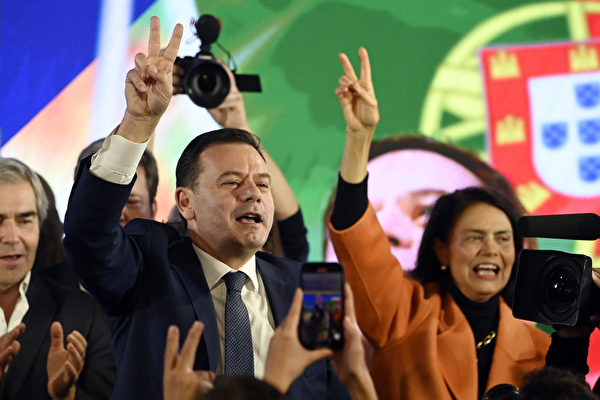
On Sunday, May 18th, the Portuguese Parliament held early elections. Exit polls show that the center-right party is leading in votes but has not secured a majority of seats. The far-right party may become the second largest party.
According to reports from Agence France-Presse, based on exit polls by RTP, the Portuguese public broadcaster, the center-right Democratic Alliance is expected to receive a vote share ranging from 29% to 34% in Sunday’s election.
Although Prime Minister Luís Montenegro’s alliance is projected to receive the most votes, they still fall short of obtaining a parliamentary majority. The divided situation in the Portuguese Parliament is likely to persist.
The far-right party “Chega”, led by André Ventura, is poised to challenge the Socialist Party for the position of the second largest party in parliament, with both parties projected to receive between 20% and 26% of the votes.
Pedro Pinto, a “Chega” parliamentarian, remarked on the exit poll results, saying: “We don’t yet know if we are the second or third largest party. But we know that the previous system has been shaken… We represent an alternative to the governing party.”
Analysts suggest that the election results reflected public dissatisfaction with the recent political situation in Portugal, with the rise of far-right parties garnering attention.
This election comes only 14 months after the last legislative elections. Previously, Prime Minister Luís Montenegro of the Social Democratic Party, who had been in office for less than a year, was ousted in March due to being embroiled in a conflict of interest scandal that sparked controversy.
The scandal stemmed from Montenegro’s establishment of the data protection consulting firm Spinumviva in 2021. In 2022, he transferred ownership of the company to his wife and son. The opposition accused Spinumviva of signing contracts with private businesses, including casinos and hotels, from which Montenegro benefited.
Facing increasing criticism and scrutiny, Montenegro called for a vote of confidence in parliament. Ultimately, he lost the parliamentary vote of confidence, leading to the early parliamentary elections held in Portugal on May 18th.