
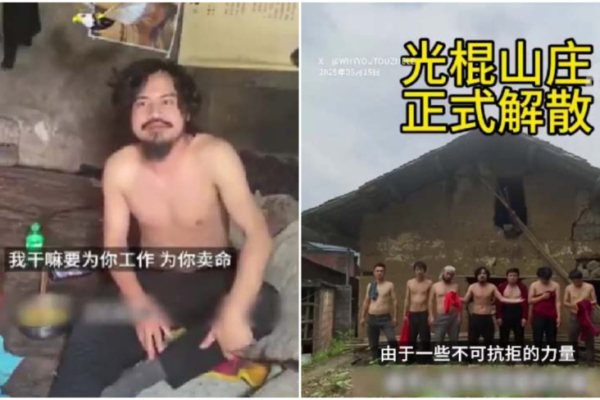
Recently, in China, a trend known as “lying flat” has gained traction among young people as a form of passive resistance against the backdrop of a declining economy and social injustices within the country. The phenomenon has been exemplified by the emergence of the “Chongqing Bachelors’ Villa,” founded by several unmarried middle-aged men, which garnered popularity for its promotion of a lifestyle that rejects the societal pressures of marriage and work.
On May 15th, the mainland Chinese internet celebrity known as “Chongqing Bachelor Brother” suddenly announced the dissolution of the “Bachelors’ Villa” due to “uncontrollable factors,” sparking widespread discussions online. The group had emphasized the concept of “lying flat,” advocating for a retreat to the mountains to live a simple and content life devoid of societal expectations.
The content produced by “Chongqing Bachelor Brother” focused on showcasing the “lying flat” lifestyle, including activities such as growing vegetables and raising livestock. Their message was clear – in the current challenging environment, why work tirelessly for a society that offers little in return, especially for individuals like themselves who are detached from the traditional markers of success such as homeownership and family obligations?
The videos of the “Bachelors’ Villa” resonated with the trend of “lying flat” among the younger generation in China, symbolizing a quiet resistance against societal norms that pressure individuals into traditional paths like marriage and career pursuits.
In recent years, the concept of “lying flat” has gained popularity across various sectors of Chinese society, prompting concerns from the Chinese Communist Party (CCP) leadership. The dissolution of the “Chongqing Bachelors’ Villa” has been met with mixed reactions, with discussions suggesting that the authorities perceive grassroots movements like these as a potential threat or challenge to their control.
Many online comments highlighted the fear of authorities towards any form of collective action or organization that veers away from the conventional narrative dictated by the CCP. The increasing prevalence of individuals choosing to embrace the “lying flat” lifestyle reflects broader societal shifts driven by economic uncertainties and social pressures.
In mainland China, especially in rural areas, a significant number of unmarried individuals, commonly referred to as “bachelors,” face challenges in finding partners due to economic considerations such as the need for stable housing and financial security. The demographic shifts in China, including an aging population and rising unemployment rates, have contributed to a growing trend of young people opting out of marriage and parenthood due to concerns about the associated costs and uncertainties.
According to statistics released by the Ministry of Civil Affairs of the CCP, the number of registered marriages in China has been declining steadily, with a significant drop of 20.5% in 2024 compared to the previous year. Simultaneously, the number of divorces has seen a slight increase, indicating shifting attitudes towards relationships and family dynamics among the younger population.
Facing demographic challenges, the CCP, which once enforced strict population control measures, is now actively promoting marriage and childbirth through various incentives and policies. The recent revision of the “Marriage Registration Regulations” eliminates the requirement for household registration documents for marriage and divorce, aiming to streamline the process and encourage more young people to tie the knot.
Additionally, numerous regions in China have introduced supportive policies to incentivize marriage and childbirth, offering subsidies, extended parental leave, and cash rewards to couples who adhere to the desired demographic goals set by the government. However, many Chinese netizens argue that these financial incentives are insufficient to alleviate the pressure faced by young people considering marriage, highlighting the deeper societal issues at play.
In conclusion, the evolving dynamics of relationships, marriage, and family structures in China reflect not only individual choices but also broader socioeconomic challenges and government interventions shaping the lives of young people in the country. The phenomenon of “lying flat” and the declining marriage rates underscore a growing disillusionment with traditional expectations and a quest for alternative paths to fulfillment and happiness in a rapidly changing society.