
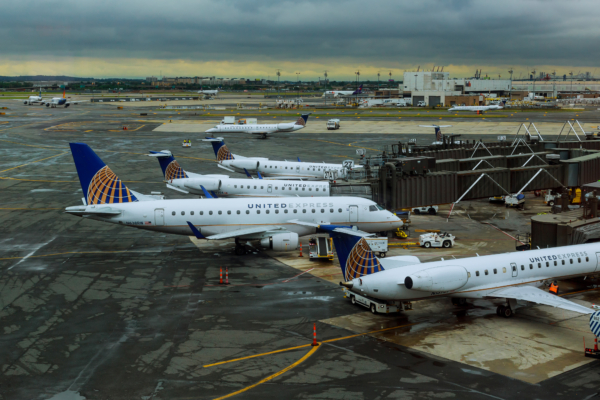
The Federal Aviation Administration (FAA) in the United States announced on Monday (May 12th) that due to issues with air traffic control staffing, runway construction, and equipment updates at Newark Liberty International Airport, they are considering proposing a reduction in the number of flight operations.
FAA also implemented a new ground delay program at Newark on Monday due to the staffing issues in air traffic control.
Before the two-day meeting with airlines to discuss the flight reduction issue starting on Wednesday, FAA issued a notice stating, “The airport appears to be unable to cope with the current volume of flight operations, so FAA believes that the proposed measure will reduce the number of excess flights, flight delays, and cancellations to an acceptable level.”
FAA will propose during the runway construction at Newark Airport that the hourly arrival and departure flights shall not exceed 28 flights each.
The FAA meeting will only discuss the operating plans of domestic airlines.
This restriction will be in effect until June 15th and on weekends from September to the end of the year. FAA will also separately propose a planned arrival and takeoff rate limit of 34 per hour during the construction period, until October 25th.
Previously, Newark experienced a series of telecommunication disruptions.
FAA said on Sunday that Newark’s facilities for guiding aircraft experienced new telecommunication issues, leading the agency to temporarily slow down the flights entering and leaving the airport.
Last year, FAA transferred control of Newark’s airspace to Philadelphia to address the shortage of air traffic controllers and traffic congestion in the New York City area. Currently, FAA is 3,500 controllers short of its target staffing.
Issues at the Philadelphia Terminal Radar Approach Control facility led FAA to issue a temporary ground stop order to ensure that redundant systems operate as designed.
Last Friday, the Philadelphia facility experienced a 90-second radar and telecommunication disruption, the second such disruption in two weeks following a major disruption on April 28. The recent events highlight the aging infrastructure of the air traffic control network. Earlier, Transportation Secretary Sean Duffy proposed investing billions of dollars in maintenance over the next three to four years.
FAA stated last week that they will take immediate action to address the ongoing issues. These problems have caused hundreds of flight disruptions, particularly for United Airlines, the largest carrier at the airport.
Currently, United Airlines has significantly reduced flights and is hoping for new restrictions to be imposed by FAA at Newark to address the ongoing delays.
(Translated from reports by Reuters)