
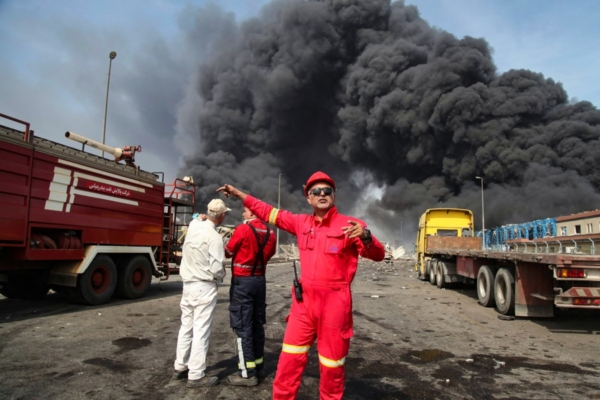
Iran’s largest container ship hub, Bandar Abbas port, witnessed a massive explosion on Saturday (April 26), leading to a fire that has claimed the lives of 28 people and left around 800 others injured. As of Sunday, efforts to completely extinguish the fire were still ongoing. Reports suggest that the explosion might be related to chemicals used in manufacturing missile propellants imported from China, although Iranian authorities have denied these allegations.
From Saturday night into Sunday, helicopters and planes have been flying over the Shahid Rajaee area of Bandar Abbas port, spraying water in an attempt to contain the blaze. Smoke continued to billow from the explosion site on Sunday, with twisted metal debris and building rubble scattered around.
Earlier on Sunday afternoon, the head of the Iranian Red Crescent Society told national media that the fire had been 90% extinguished. Officials mentioned that port activities in the unaffected part of Shahid Rajaee have resumed.
Iranian state media reported that the explosion shattered windows several kilometers away, damaged metal bars on containers, and severely affected the goods inside.
Meanwhile, national television reported that the fire had been brought under control and was expected to be fully extinguished later on Sunday.
Though Iranian authorities have not released the investigation report on the explosion, the incident is reportedly linked to a batch of chemicals used in manufacturing missile propellants. Private security company Ambrey revealed that the port received missile fuel chemicals in March, part of ammonium perchlorate cargo shipped from China to Iran. The Financial Times first exposed this in January. These chemicals, used for replenishing Iran’s missile inventory, were connected to the direct attacks launched by Iran against Israel during the Gaza conflict, depleting their missile stockpile.
Ambrey stated, “It is reported that the fire resulted from improper handling of a batch of solid fuel for Iran’s ballistic missiles.”
On Sunday, Iranian Defense Ministry spokesman Reza Talaeinik denied reports of Iran importing missile fuel through the port. He told Iranian national television over the phone, “The port has never imported or exported any goods for fuel or military purposes, past or present.” He dismissed foreign reports about missile fuel as unfounded.
Analysis of ship tracking data by the Associated Press showed that a vessel believed to carry these chemicals appeared near the port in March, aligning with information provided by Ambrey. Iran has not acknowledged this transportation.
Given the safety alert on global ports following the massive explosion in Beirut port in 2020, it remains unclear why Iran did not remove these chemicals from the port. The Beirut explosion, ignited by hundreds of tons of highly explosive ammonium nitrate, resulted in over 200 deaths and over 6,000 injuries.
Videos related to the explosion at the Iranian port on Saturday showed red smoke emerging before the blast, indicating the presence of chemical compounds, similar to the Beirut explosion.
On Saturday night, the Iranian state news agency IRNA reported that the Iranian Customs Administration believed the explosion was linked to “dangerous goods and chemicals stored in the port area,” without disclosing further details.
Images captured by aerial drones released by Iranian media after the explosion displayed fires in multiple areas of the port. Authorities subsequently warned of air pollution caused by chemical substances like ammonia, sulfur dioxide, and nitrogen dioxide in the air.