
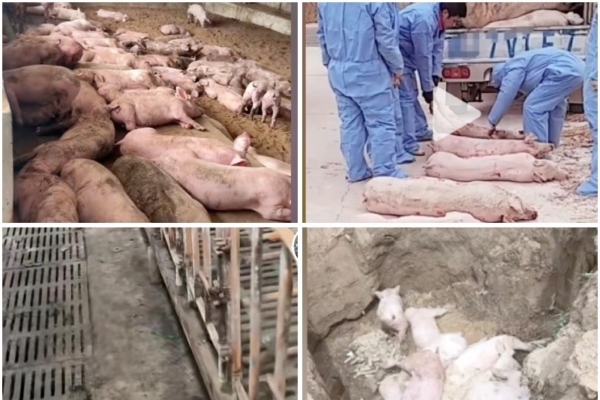
Recently, amidst the outbreak of avian flu in mainland China, reports of African swine fever outbreak in pig farms in several provinces have emerged, leading to farmers having to resort to deep burial, disinfection, and clearing of their farms, resulting in heavy losses. The outbreak has also affected many Southeast Asian countries, with some countries reporting infections in half of their pig farms.
In Kaifeng, Henan Province, a pig farmer with twenty years of experience issued urgent notifications for two consecutive days (14th and 15th), reminding fellow farmers to prioritize biosecurity measures. She emphasized that in 2025, ensuring the prevention of diseases is crucial for financial prosperity. The sudden and deadly virus affecting pigs has caused significant losses for customers. The mutated virus leads to sudden death from low appetite in pigs of all ages, including sows, fattened pigs, and piglets, making swift preventive measures imperative to prevent further spread.
She stressed the importance of biosecurity measures, cautioning that the outbreak has now spread beyond Henan, Shandong, Hebei, and Anhui provinces to include Yunnan, Guizhou, and Sichuan. Proper disinfection at pig pen entrances with alkaline solution, strict control of access for vehicles and personnel unrelated to pig farms, and thorough disinfection of feed and equipment are essential steps to prevent disastrous consequences.
On March 16th, a professional pig farmer in Shanxi with 25 years of experience, Mr. Yang, shared in a video that reports of severe outbreaks are prevalent in certain regions where mortality rates among purchased piglets exceed 50%. The ongoing epidemic of African swine fever has led to devastating losses for many farmers, emphasizing the importance of disease testing for all purchased piglets.
The manager of a large-scale pig farming corporation also highlighted the alarming spread of African swine fever nationwide, transcending regional boundaries. Standard prevention measures like iodine oral administration every three days are proving insufficient in combatting the epidemic. Veterinarian Guo, in a video posted on March 13th, discussed the significant impact of African swine fever on the swine industry, with global reports of the disease outbreak in countries like Malaysia, South Korea, and Laos.
He concluded that various regions in China have also been affected by the epidemic, with sporadic cases still reported in Xinjiang, Henan, and other areas despite the lifting of restrictions in eight provinces. The recent outbreak of African swine fever at a pig farm in Hong Kong in January led to the emergency culling of over 5800 pigs, underscoring the urgent need for enhanced preventive measures.
Another pig farmer in Henan, known as “落葉,” shared in a video on March 12th his seventh day of grappling with the African swine fever outbreak on his farm, noting daily deaths and ongoing treatment efforts. Against the backdrop of increasing losses, he vowed not to sell any infected pigs and stressed the need for immediate burial, disinfection, and containment strategies to prevent the virus from spreading further.
As of now, African swine fever only affects pigs and has not shown any signs of human transmission. Infected pigs exhibit acute fever and organ bleeding, particularly in the spleen, leading to high mortality rates and substantial financial losses for pig farmers. With no effective vaccines or treatments available, preventive measures such as isolation, disinfection, and humane culling remain the primary methods for mitigating the impact of the disease.