
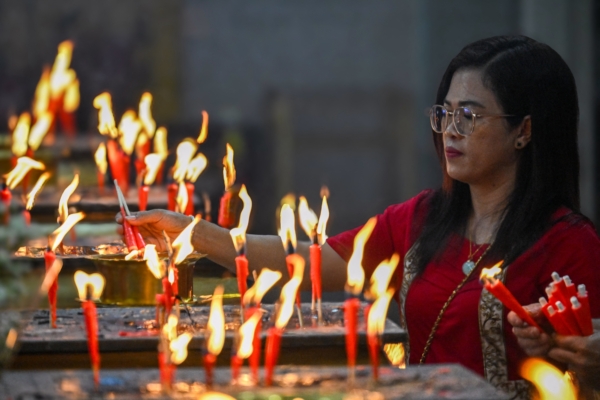
The Chinese lunar new year, also known as the Spring Festival, is the oldest and most important traditional holiday in Chinese culture. It is a time for family reunions and bidding farewell to the old year while welcoming the new one. Whether in China or abroad, people of Chinese descent attach great importance to this festival. Traditionally, individuals overcome obstacles to return home and join their families, households are filled with the hustle and bustle of hanging lanterns, pasting couplets, decorating with auspicious words, and setting off fireworks to usher in the new year with a joyous atmosphere.
According to Chinese customs, on special days like the first and fifteenth day of the lunar new year, people, especially those in Southeast Asia, visit temples and burn incense to pray for blessings and safety. This tradition is steadfastly maintained by the Chinese diaspora worldwide, including in the current year.
With the arrival of the Year of the Snake in 2025, thousands of Chinese people from around the world flocked to local temples on the first day of the new year (January 29th) to burn incense and seek blessings.
Despite the challenges faced by the Chinese population under the communist regime and the atheist indoctrination, where some have drifted away from traditional beliefs in karma, temple visits, and praying to deities, prioritizing secular materialism and utility for their actions, the deep-rooted connection between Chinese traditional culture and spiritual beliefs still persists among the common people. Many seek peace, health, and happiness in life by maintaining this connection with the divine.
In fact, China’s culture of worship has a long history, and seeking blessings during the new year is a way of inheriting the traditional worship culture. Traditionally, worship involves showing respect, gratitude, reflecting on shortcomings, and making wishes. Making wishes typically involves pledging to do more good deeds, accumulate merits, in exchange for blessings from the divine.